
President Donald Trump, never one to shy from a provocative declaration, has just unveiled his audacious vision for America’s stance against Iran: “We’re low-keying it.” This isn’t a tactical retreat; it’s a dangerous plunge into the murky depths of shadow warfare, a strategy fraught with peril and devoid of accountability.
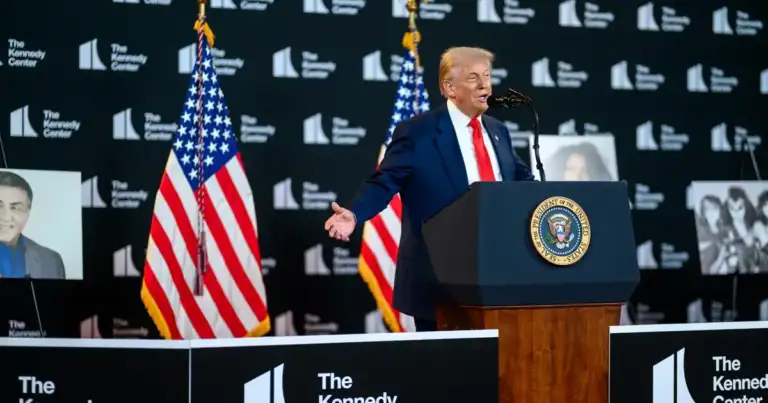
Speaking with characteristic bombast in Phoenix, Arizona, on August 8, 2026, Trump laid out this startling new approach. He asserted that the US has been “too loud, too overt” with Iran, a claim that rings hollow given his own history of maximalist rhetoric.

This announcement came amidst a cauldron of rising tensions, fueled by alleged Iranian provocations in the volatile Strait of Hormuz. The pundit class immediately scrambled to interpret “low-keying it” as an unequivocal pivot towards more covert operations and targeted economic pressures.
This suggests a potential shift to back-channel diplomacy rather than overt military threats. It isn’t just a change; it’s a wholesale repudiation of the previous “maximum pressure” campaign, a strategy Trump himself championed.
The Treacherous Lure of the Shadows
His loyalists champion this as a sophisticated, pragmatic move, a clever gambit to avoid costly, overt military engagements. They argue a “low-key” approach allows for more effective, surgical responses, sidestepping public grandstanding and denying adversaries easy targets for public reaction. They genuinely believe it projects strength through calculated unpredictability – a superior tactic to transparent threats.
But let’s be blunt: history isn’t littered with ‘clean’ covert operations. They are almost universally a prelude to unforeseen, often disastrous, consequences, leaving a trail of instability and resentment.
The US has, of course, used clandestine tactics before. The Obama administration’s Stuxnet cyberattack on Iran’s nuclear program stands as a prime example, a complex digital weapon designed to cripple centrifuges.
This proposed strategy might mimic those pre-Trump era tactics, but the geopolitical landscape has shifted dramatically. The stakes are infinitely higher now, with an active, simmering conflict threatening to boil over at any moment.
To believe that such actions can be neatly contained in today’s interconnected world is naive at best, dangerously delusional at worst. The line between covert action and outright war is razor-thin, and easily crossed.
“We’ve been too loud, too overt. It’s time to be smarter. We’re going to low-key it with Iran, but they’ll know we mean business.” – President Donald Trump, August 8, 2026.
The superficial reasoning is simple enough: public threats invite public reactions. Covert actions, in theory, limit direct confrontation.
But secrecy is a double-edged sword; it can just as easily breed profound suspicion, fuel paranoia, and lead to catastrophic miscalculation on all sides. When no one knows the rules of engagement, everyone assumes the worst, paving the way for inevitable escalation.
The High Stakes of Ambiguity
Critics across the political spectrum are already sounding the alarm bells. Democrats and even some establishment Republicans rightly fear a profound lack of transparency.
They warn of a dangerous surge in covert actions undertaken without any meaningful congressional oversight – a recipe for executive overreach and potential constitutional crisis. This deliberate ambiguity, far from deterring, could instead embolden Iran, leaving US allies confused and vulnerable.
A clear, consistent policy is not merely preferable; it is absolutely vital for effective deterrence. A “low-key” approach, by its very nature, invites miscalculation and unintended escalation.
Iran’s state media, never one to miss an opportunity, has already interpreted Trump’s remarks as a glaring sign of American weakness, a chink in the armor. Some Iranian hardliners will undoubtedly seize upon this as an open invitation to test US resolve, pushing the boundaries in ways that could ignite a wider regional conflagration.
Meanwhile, key US allies in the Middle East are understandably on edge. Nations like Israel and Saudi Arabia rely heavily on overt American deterrence to maintain regional stability.
They fear that reduced visible support and a shift to a “low-key” strategy leaves them dangerously exposed, forcing them to consider their own, potentially destabilizing, unilateral actions.
The past month alone saw at least three separate incidents in the Strait of Hormuz, where Iranian naval vessels brazenly harassed commercial shipping. Furthermore, an alleged cyberattack targeted a critical Saudi oil facility, an act US intelligence, according to a recent Washington Post report, squarely attributed to Iran.
These are not minor skirmishes; they are deliberate provocations that demand a clear, forceful response, not a retreat into the shadows.
European allies, while perhaps cautiously welcoming less overt rhetoric, will remain deeply wary of destabilizing covert actions that could unravel years of delicate diplomacy. They also rightly fear a fundamental lack of clear US foreign policy direction, a vacuum that other, less benign, global powers would be eager to fill. This isn’t a path to peace; it’s a recipe for global unease and increased geopolitical instability.
What “Low-Key” Truly Means for Americans
This proposed strategic shift carries massive, far-reaching implications for everyday Americans. On one superficial level, less public saber-rattling might appear to reduce the immediate threat of a large-scale, conventional war, potentially stabilizing global oil prices and lessening the likelihood of a draft or increased military spending. This is the soothing narrative offered by proponents of secrecy.
However, the downside is far more insidious and troubling. A move towards covert operations almost inevitably leads to a less visible, but exponentially more dangerous, proxy conflict.
The consequences for regional stability, for civilian populations caught in the crossfire, and for American personnel operating in the shadows, are utterly unpredictable. When wars go “low-key,” they don’t disappear
Source: Google News