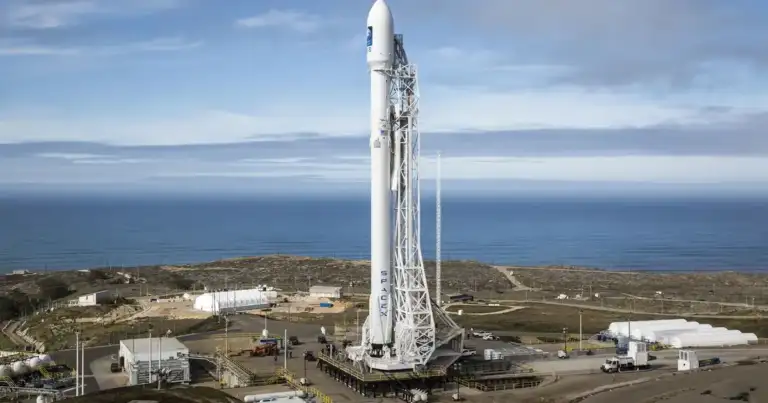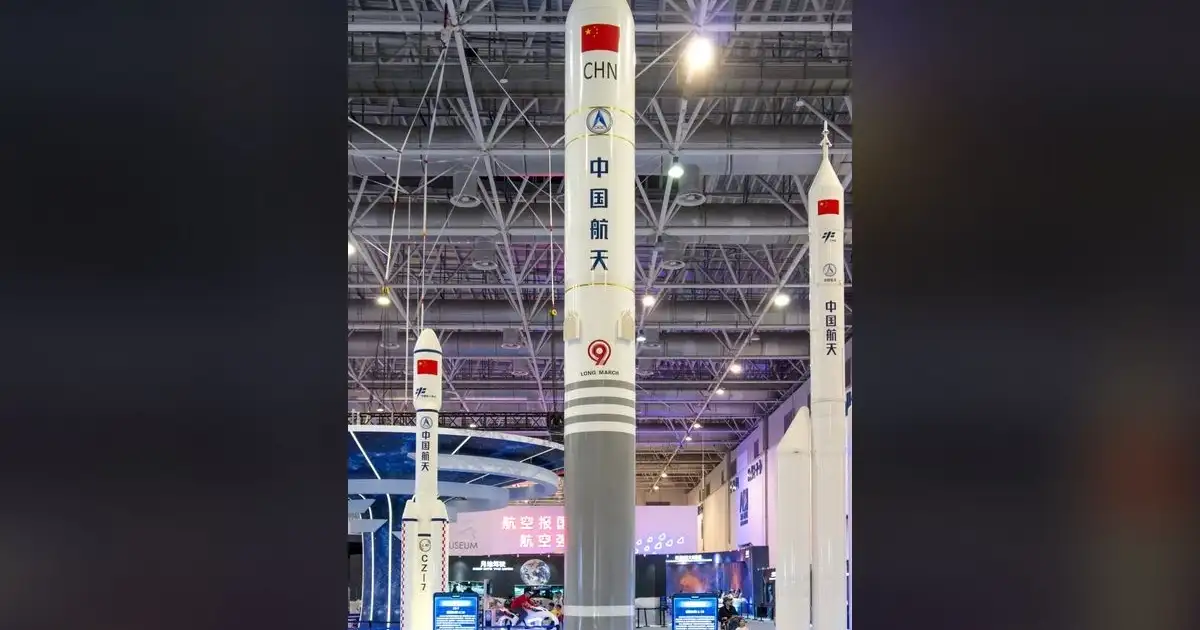

In a spectacular, fiery display that ripped through the sky above Hainan Island, China’s bold ambitions to dominate the cosmos just slammed into a very hard wall. The catastrophic explosion of a Long March 5B rocket on August 11, 2026, wasn’t merely a setback; it was a brutal, public implosion of Beijing’s meticulously planned race for space supremacy.
This wasn’t some minor technical hiccup; this was a colossal failure. Just two minutes after lifting off from the Wenchang Spacecraft Launch Site on Hainan Island, the heavy-lift rocket — carrying a critical experimental module for China’s Tiangong space station — disintegrated into a fireball.

The rocket’s disintegration was spectacular and terrifying. Debris reportedly rained down into the South China Sea.
While Beijing’s state media initially attempted to downplay it as a mere “launch anomaly,” the brutal truth quickly emerged: a total, undeniable loss. Mercifully, no ground casualties were reported, but the damage to China’s space program is far from negligible.
Tiangong Station: Timeline in Tatters
This explosion doesn’t just mean “trouble” for China’s Tiangong space station; it means its meticulously crafted timeline is now in tatters. The lost experimental module wasn’t just “vital” – it was the very cornerstone for expanding the station’s critical research capabilities.
Replacing it will inevitably trigger significant delays, potentially pushing the station’s full operational status to late 2027 or even further into the future. This isn’t merely a “hit”; it’s a devastating blow to Beijing’s ambitious schedule.
The China National Space Administration (CNSA) is, predictably, investigating, though their initial suspicions point to either a catastrophic engine malfunction or a fundamental structural failure. Whatever the root cause, this isn’t just a setback for space station construction; it’s a direct, undeniable blow that reverberates through their entire lunar exploration strategy.
State-run Xinhua News Agency offered its typically understated assessment: “An anomaly occurred during the flight of the Long March 5B carrier rocket. The specific cause is under investigation.”
An “anomaly”? Let’s be brutally honest. This isn’t some minor hiccup; this is a very public, incredibly expensive failure that lays bare profound vulnerabilities in China’s most powerful heavy-lift rocket. It’s an embarrassment, plain and simple.
Crewed Missions Face New Scrutiny
While mercifully no taikonauts were aboard this specific flight, the Long March 5B is far more than just a cargo carrier; it’s the very workhorse designed to launch the modules that sustain China’s crewed missions.
This incident will, and must, trigger intense safety reviews. These aren’t just bureaucratic hurdles; they are absolutely necessary, yet they inevitably consume precious time.
What does this mean for the future? Expect significant delays for crewed flights to the Tiangong station. Beijing simply cannot, must not, gamble with another such incident when human lives are on the line.
The Long March 5B is engineered to hoist a colossal 25 metric tons to low-Earth orbit – an astounding feat on paper. But its reliability, once a source of national pride, is now under intense, unforgiving scrutiny.
China absolutely needs this heavy-lift capability; it’s the indispensable backbone for their grandest space ambitions, from lunar missions to pioneering deep-space scientific endeavors. A shaky rocket isn’t just a technical problem; it translates directly into shaky, uncertain ambitions.
Scientific Research Suffers a Setback
The experimental module wasn’t just a piece of hardware; it was a floating laboratory, packed with advanced scientific instruments and crucial research facilities. Its catastrophic loss means that specific, groundbreaking scientific experiments are now indefinitely delayed.
This isn’t just an “impact” on data collection; it’s a gaping hole. Microgravity research, space biology, and cutting-edge materials science will all acutely feel this pinch.
Imagine: years of meticulous work by brilliant scientists and dedicated engineers, literally vanishing in a puff of smoke.
An unnamed CNSA spokesperson offered a carefully worded statement: “We regret the loss of the experimental module, a vital component for our Tiangong space station. Our engineers are working tirelessly to understand the root cause and ensure the safety and reliability of future missions.”
But “regret” simply isn’t enough. The global scientific community, not just China’s, desperately needs concrete answers – not platitudes.
They need a demonstrably reliable platform for their invaluable research. This explosion casts a chilling, undeniable shadow over both their hopes and Beijing’s promises.
The Global Space Race Heats Up
This failure isn’t just a technical glitch; it’s a strategic misstep that hands a clear, if temporary, advantage to China’s rivals. While SpaceX and NASA relentlessly push their own ambitious agendas, China’s recent string of successes had elevated it to a formidable, undeniable rival.
Now, its technological prowess isn’t just “questioned”; it’s under intense international scrutiny. Perceptions of China’s reliability on the global stage will undoubtedly suffer.
And let’s not forget the financial sting: each Long March 5B launch costs tens of millions of dollars. The lost module itself represented a substantial, irreplaceable investment.
This isn’t just a “blow”; it’s a tangible, multi-faceted financial and reputational wound for Beijing.
With a space budget second only to the United States, China pours enormous national resources into its cosmic ambitions. Failures of this magnitude don’t just “erode” that investment; they actively undermine it, chipping away at both financial capital and, crucially, public and international confidence. Dr. Chen Guang of Tsinghua University, as expected, attempted to soften the blow with a dose of nationalistic reassurance.
Dr. Chen Guang stated: “This is a temporary setback, not a defeat. Space exploration is inherently challenging. China’s commitment to its space program remains unwavering, and lessons learned from this incident will only strengthen our resolve and improve our technology.”
With all due respect, Professor, let’s not sugarcoat it. A fiery, public explosion of your most powerful rocket is far more than a “temporary setback.” It’s a colossal problem.
While spaceflight is indeed inherently risky, this incident doesn’t just underscore those universal dangers; it starkly exposes a serious, systemic engineering challenge specifically for China. It’s a moment for genuine introspection, not just resolve.
Environmental and Public Health Risks
Beyond the immediate spectacle of lost hardware, a grim reality looms: significant environmental concerns. Many Long March rockets, including potentially this one, utilize hypergolic propellants – substances that are not only highly toxic but also intensely corrosive.
Their uncontrolled release into our atmosphere or precious ocean is unequivocally dangerous. While the CNSA asserts that monitoring is underway, independent verification remains frustratingly pending.
Marine ecosystems, particularly in the South China Sea where debris fell, could face localized, acute risks. And let’s be clear: this isn’t just an abstract ecological threat; these impacts ripple through to human health over the long term. These potent chemicals don’t simply vanish into thin air or water.
This incident serves as a stark, undeniable reminder: space exploration, for all its wonder, carries profound real-world consequences. Even when failures occur in seemingly remote ocean areas, the fallout – from debris to toxic fuels – matters deeply.
It affects our planet, and by extension, it affects us all. China has an absolute obligation to be transparent about these risks, not just to its own citizens, but to the global community. Because make no mistake, the world is watching, and it expects answers.
China’s space program has just learned a brutally expensive lesson: ambition, when unchecked or flawed, comes with a staggering price. This fiery explosion will not only undoubtedly delay the Tiangong station’s completion but will also force a painful, fundamental reevaluation of their entire heavy-lift rocket program.
The global space race, already a high-stakes drama, just ratcheted up the tension immeasurably. The question now isn’t if China
Source: Google News