
Joe Rogan, the podcast juggernaut, has once again barreled headfirst into a self-inflicted controversy, this time triggering a firestorm of outrage after clips surfaced showing him laughing at a video detailing Indigenous petrol sniffing. This isn’t just a minor misstep; it’s a colossal fumble on the biggest stage, a brazen display of insensitivity that has drawn a swift and brutal public flogging from every corner of the arena.
Critics aren’t mincing words, slamming his reaction as dismissive, dehumanizing, and utterly tone-deaf to a deeply serious health and social crisis plaguing vulnerable communities. This isn’t a game to be laughed at; it’s a stark reality, and Rogan’s casual disregard has ignited a blaze that even his massive platform may struggle to contain.

The Fumble on the Field: Rogan’s Reckless Play
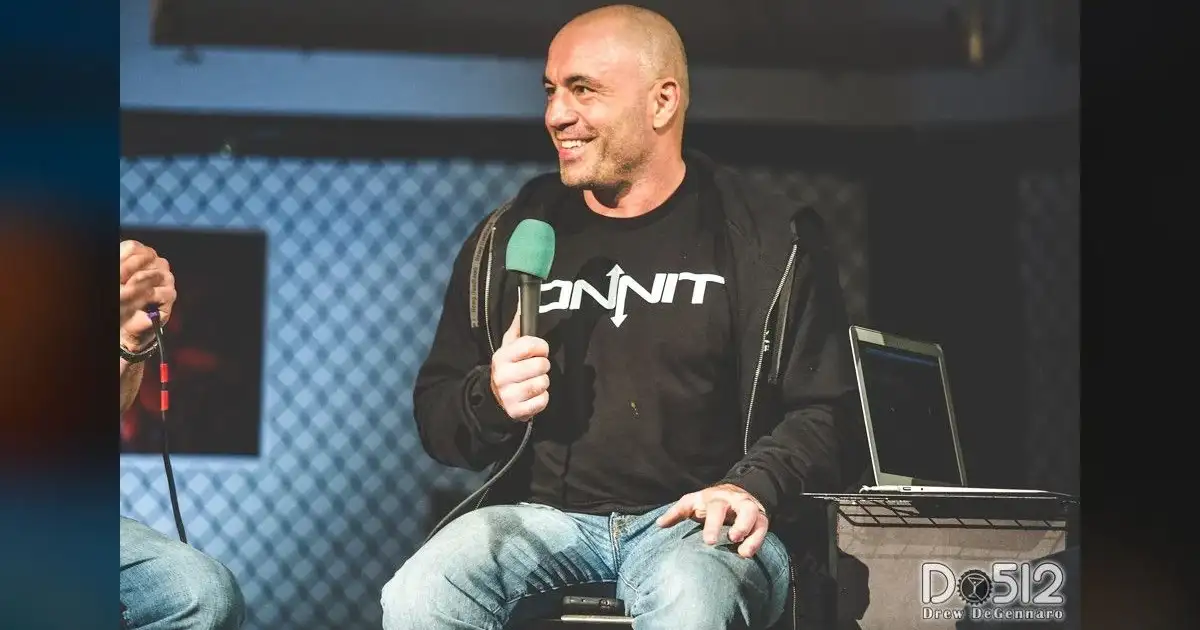
The incident, a textbook example of a player losing situational awareness, occurred on “The Joe Rogan Experience” around August 12-13, 2026. Rogan was broadcasting live, reportedly watching what was intended as an educational video. This segment wasn’t about lighthearted banter; it meticulously detailed the severe health, psychological, and societal impacts of petrol sniffing – a devastating form of substance abuse that disproportionately ravages Indigenous communities across the globe, from Australia to Canada.
The video laid bare grim realities: brain damage, organ failure, and the erosion of family structures fueled by intergenerational trauma. Yet, Rogan’s response was not one of solemn reflection or even quiet discomfort.
Instead, his laughter echoed through the studio, a jarring, almost mocking soundtrack to genuine suffering. This was an undeniable, outright dismissal of profound human pain, broadcast to millions.
Immediate Flag on the Play: The Backlash Hits Hard
The backlash hit immediately, like a blindside tackle Rogan never saw coming. Social media exploded on August 13-14, turning into a digital war zone where fury and condemnation reigned supreme.
Indigenous leaders and organizations, accustomed to fighting for recognition, moved with lightning speed. They publicly called out Rogan, unequivocally describing his actions as dehumanizing, disrespectful, and a painful perpetuation of harmful stereotypes.
This wasn’t merely a handful of disgruntled fans venting online. This was a coordinated, powerful defense against a clear offensive foul.
The outrage wasn’t manufactured; it was organic, fueled by generations of systemic marginalization. It stemmed from the raw sting of seeing their struggles trivialized by a figure with immense cultural influence. The message was clear: this transgression would not be ignored, nor would it be easily forgotten.
The Pressure Mounts: Indigenous Rights Groups Demand Accountability
The heat on Rogan has only intensified over the past 48-72 hours, with key players in Indigenous rights entering the arena, ready to apply maximum pressure. The National Congress of American Indians (NCAI), the oldest, largest, and most representative American Indian and Alaska Native organization, issued a blistering formal statement. They were swiftly joined by the Native American Rights Fund (NARF), a non-profit law firm dedicated to protecting Native American rights, which added its formidable legal and moral weight to the condemnation.
Both organizations didn’t just condemn Rogan’s actions; they meticulously highlighted the profound historical trauma faced by Indigenous communities – the forced displacement, the residential schools, the broken treaties – arguing that substance abuse, including petrol sniffing, is not a moral failing but a direct, tragic consequence of these deep, unaddressed wounds. To laugh at such a symptom, they asserted, is to mock the very history of oppression.
“Rogan’s laughter trivializes immense pain and reveals a shocking lack of empathy that is frankly unacceptable from someone with his platform,” stated a representative from the NCAI. “His show reaches millions, and with that reach comes a heavy responsibility to not perpetuate the very dehumanization our communities have fought against for centuries.”
These groups aren’t just seeking an apology; they’re demanding a genuine acknowledgment of the harm caused, a recognition that this isn’t just about a “joke” gone wrong, but about respect for human dignity and the lived realities of Indigenous peoples. This isn’t merely about one video; it’s about drawing a line in the sand for fundamental human decency.
Spotify Under the Spotlight: Will the Platform Finally Draw a Line?
The spotlight isn’t just scorching Rogan; it’s shining brightly and uncomfortably on Spotify, his exclusive home and the platform that shelled out an estimated $200 million for his content. Critics are renewing their calls for the streaming giant to act, demanding answers about its content moderation policies and questioning its commitment to ethical broadcasting. Spotify’s responsibility in this unfolding drama is undeniable; they are the stadium where Rogan plays, and they profit handsomely from every controversial snap.
Rogan has a well-documented history of controversy, from spreading vaccine misinformation to past instances of using racial slurs. Each incident has tested Spotify’s resolve, pushing the boundaries of what they tolerate for listenership.
This latest incident adds even more weight to persistent calls for accountability. Is Spotify truly committed to fostering respectful content, or are their stated values merely lip service when confronted with their biggest star’s transgressions?
The platform faces a critical decision: does it stand as a free-for-all forum, a Wild West of content where anything goes? Or does it possess a moral compass, a commitment to basic human decency that extends even to its most lucrative assets? The answer, as Gus Callahan sees it, will define Spotify’s brand for years to come.
Political Sideline Commentary: Lawmakers Weigh In
Even some US lawmakers have joined the fray, stepping off the political sidelines to voice concerns. Those representing states with significant Indigenous populations are speaking up, acutely aware of the issues facing their constituents.
They are urging Rogan to address the damage he has inflicted and to use his massive platform more responsibly, not as a vehicle for casual cruelty. This isn’t just entertainment anymore; when politicians get involved, it signals the issue has transcended the podcast studio and become a matter of public and political consequence.
The political pressure adds another layer to the mounting crisis, making it harder for Rogan or Spotify to simply ride out the storm. These lawmakers understand that ignoring the voices of Indigenous communities is not only morally reprehensible but also politically unwise.
The Silent Treatment: Rogan’s Calculated Play
As of August 16, 2026, Rogan remains conspicuously silent. No public apology, no statement on his podcast, no acknowledgment on his social media channels.
This silence, to many seasoned observers, is not an oversight; it’s a calculated, cynical play from Rogan’s well-worn playbook. He’s betting the news cycle will churn, outrage will dissipate, and public attention will move on.
Others, however, see it as pure arrogance, a defiant refusal to acknowledge the harm he has caused.
It
Source: Google News