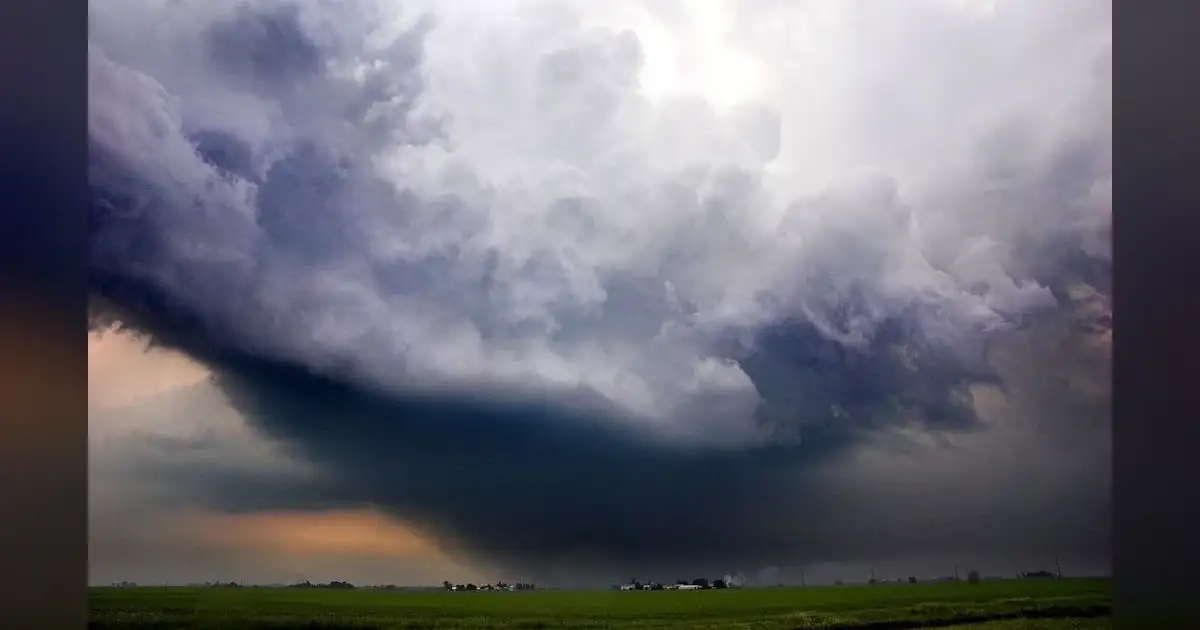

Another day, another ‘unprecedented’ weather event, right? Not quite. This isn’t just another ‘severe storm’ warning; this is an “extremely dangerous” tornado outbreak tearing through America’s heartland, a tempest so potent it just forced the unprecedented evacuation of a major airport control tower, grounding flights and signaling a chilling reality check for millions.
The severe weather system didn’t just ‘intensify’ on April 16th, 2026; it exploded, carving a path of destruction through Oklahoma, Arkansas, and Missouri. Forecasters, usually prone to understatement, are now grimly warning the worst is yet to come, relentlessly moving east.

Then came April 17th, and the situation stopped escalating and simply hit. A confirmed, destructive tornado bore down on St. Louis Lambert International Airport (STL), triggering an emergency evacuation of its iconic control tower—a move almost unheard of outside of disaster movies.
The Sky Shuts Down
Air traffic controllers, the unseen maestros of the skies, didn’t just ‘move’—they scrambled to a hardened ground facility as every single flight in and out of STL was instantly grounded. The ripple effect was immediate: chaos for thousands of travelers, their plans shattered, their patience tested.
Let’s be clear: full control tower evacuations are not a drill. They are exceedingly rare, a last-resort measure invoked only when a confirmed, destructive tornado poses an immediate, existential threat to the airport itself. These aren’t bunkers; they’re vulnerable, tall structures, and when the people inside them run, it’s for a damn good reason.
When the tower clears, operations do shift to a ground-level contingency center, a kind of emergency fallback. It maintains essential communication and radar, yes, but let’s not sugarcoat it: the entire system, the intricate dance of air travel, effectively grinds to a halt. It’s less a seamless transition, more an emergency stop.
Rhonda Hamm-Niebruegge, the St. Louis Lambert International Airport Director, confirmed the evacuation with the kind of measured tones you’d expect from someone managing a crisis. Her statement, however, underscores the gravity of the situation:
Safety is our absolute priority. Our air traffic controllers performed exceptionally, moving to our contingency facility to maintain essential operations while ensuring their own safety.
— Rhonda Hamm-Niebruegge, St. Louis Lambert International Airport Director
A perfectly professional statement, but read between the lines: they just ran for their lives, and the system held by a thread.
The impact was not just immediate; it was devastating. STL reported over 200 flight cancellations, with another staggering 350 flights facing soul-crushing delays on April 17th alone. The total economic hit to air travel from this single incident? Easily in the tens of millions, a price tag for a few hours of nature’s wrath.
Beyond the Headlines: Why We’re Jaded
And yet, the public, bless their jaded hearts, seems to greet these headlines with an almost reflexive eye-roll. There’s a cynicism, a deep-seated weariness born from an endless barrage of “doomsday” warnings that often amount to nothing. We’ve become desensitized, immune to the constant alerts, convinced it’s all just background noise.
Scroll through Reddit, and you’ll find the media torched for peddling “fear porn.” The armchair meteorologists—and even some legitimate critics—are quick to point to NOAA stats, claiming a staggering 75% of tornado warnings ‘flop.’ This isn’t just breeding complacency; it’s actively cultivating a dangerous distrust, a casual dismissal of genuine threats.
And airport evacuations? Many mock them as “staged theater,” another overblown spectacle. “Why clear a control tower,” they scoff, “for a tornado that never directly hits the tarmac?” This isn’t just distrust; it’s a dangerous delusion, a public convinced that safety protocols are just for show.
But here’s the inconvenient truth: Is a control tower evacuation “staged theater” when air traffic controllers are literally running for cover? This isn’t some abstract threat, not some simulation. This is critical infrastructure shutting down, an actual, forced shift of essential personnel. This, folks, is not a drill.
The National Weather Service isn’t crying wolf here. They issued multiple PDS (Particularly Dangerous Situation) Tornado Watches, a designation they don’t hand out lightly. These watches, spanning vast regions from northern Texas all the way through the Ohio Valley, aren’t just warnings; they’re a red flag signaling that long-track, violent tornadoes are not just “highly likely,” they are expected. As Bill Bunting, Chief of Operations for the Storm Prediction Center, put it:
This is a particularly dangerous situation, and we urge everyone in the watch areas to have a plan and be ready to act immediately.
— Bill Bunting, Chief of Operations for the Storm Prediction Center
Consider the sheer scale: over 30 million people are currently under some form of severe weather alert. And approximately 5 million of them are directly under those specific, terrifying PDS watches. These aren’t abstract statistics; these are entire populations staring down the barrel of a gun. To ignore these numbers is to court disaster.
The Immediate Aftermath: Counting the Cost
The storm’s true toll is already a grim ledger. Over 50 preliminary tornado reports have been filed, each one representing a potential scar on the landscape. And in the immediate wake, 150,000 homes and businesses are plunged into darkness, a stark reminder of nature’s raw power.
Early damage estimates already exceed a staggering $500 million—a figure that will undoubtedly climb, perhaps even double, as the full extent of the devastation becomes clear. Emergency services, the unsung heroes, are already stretched perilously thin across multiple states, fighting a war on multiple fronts.
Oklahoma Governor Kevin Stitt, facing the immediate aftermath, wasted no time declaring a state of emergency. His words, while standard, carry the weight of real human suffering:
Our communities have been hit hard, and we are mobilizing every available resource to assist those affected and prepare for what’s still to come.
— Oklahoma Governor Kevin Stitt
It’s the kind of statement that sounds routine until you realize it means entire towns are gone, lives upended, and the fight is far from over.
The disruption isn’t just to air travel; it’s to the very fabric of daily life. Travelers are staring down not just ruined plans, but significant financial losses. Airlines are bleeding millions in operational costs. Supply chains are snarled. This isn’t just an inconvenience; it’s a systemic shock.
Ultimately, this event isn’t just a weather story; it’s a brutal, undeniable underscore of the vulnerability of our critical infrastructure. Airports, power grids, emergency services—they’re all tested, pushed to their breaking point. And nature, with its indifferent fury, doesn’t give a damn about your flight schedule, your quarterly earnings, or your meticulously planned weekend.
So, yes, the cynicism is understandable. We’ve been fed a steady diet of hyperbole for years, conditioned to tune out the noise. But when air traffic controllers, the most disciplined professionals in a high-stakes environment, abandon their post and run for cover, that’s not media hype. That’s not staged theater. That’s a very real threat demanding a very real, life-or-death response.
It’s a brutal reminder: some warnings aren’t just serious; they’re deadly. Ignore them at your peril. Because while you’re busy rolling your eyes, nature is busy rewriting the rules—and the consequences are far too real to dismiss with a scoff and a meme.
Photo: Photo by RaGardner4 on Openverse (flickr) (https://www.flickr.com/photos/56294293@N00/2555447764)
Source: Google News