
The brutal truth has been laid bare: Energy Secretary Jennifer Granholm confirms gas prices won’t dip below $3 a gallon until the world calms down. But calm is a luxury President Donald Trump seems intent on denying, as he relentlessly ratchets up pressure on Iran, directly tying the cost at your pump to his aggressive foreign policy playbook. This isn’t just political posturing; it’s a direct assault on household budgets, with the national average for gasoline now sitting at a painful $3.75 per gallon, a sharp jump from $3.50 just last month.
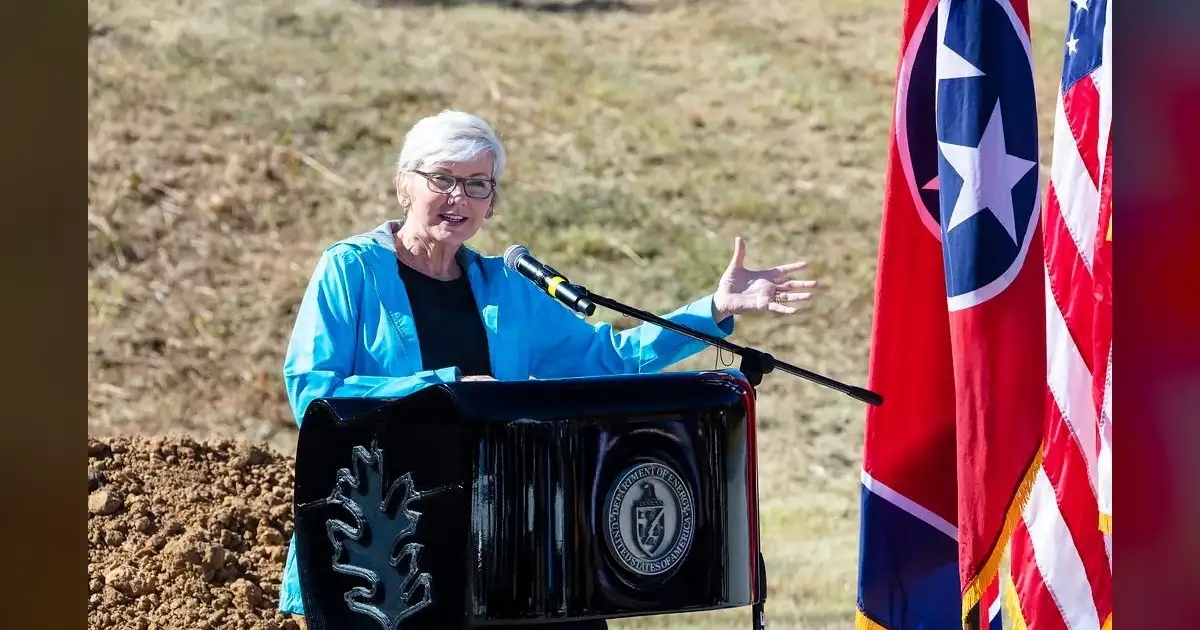
Granholm addressed the volatile energy markets on April 18, 2026, attempting to frame the administration’s efforts to fight inflation and stabilize prices. Her message, however, was less a promise of relief and more a stark warning: global instability is the primary driver. Meanwhile, President Trump, hitting the campaign trail in Pennsylvania on April 17, 2026, sharpened his rhetoric against Iran, promising a “maximum pressure” campaign that, to any astute observer, signals only further market jitters and potential escalation.

Granholm’s Defensive Play: Blame the Globe
Granholm, ever the pragmatist, offered no precise date for cheaper gas. Her revelation wasn’t about a timeline, but about the conditions for lower prices, firmly pointing the finger at global oil supply and demand dynamics, and crucially, geopolitical instability. This isn’t just a convenient excuse; it’s the cold, hard reality of a globalized energy market.
The administration claims it’s committed to diversifying energy sources and promises strategic reserve releases to mitigate price shocks. Yet, these are defensive plays, not offensive solutions. Granholm’s underlying message is clear: the wallet pain stems from forces far beyond domestic policy, a narrative designed to shield the current administration from direct blame.
For the administration, these statements serve as a public reassurance, a declaration of active management in the face of daunting energy challenges. They strategically blame high prices on external, global factors, while simultaneously touting diplomatic efforts as the path to de-escalate tensions and achieve long-term energy independence.
The unspoken accusation? Trump’s aggressive talk only makes things worse. It risks further destabilizing an already fragile region, pushing global oil markets into chaos and potentially sending prices even higher. It’s a classic political counter-punch, framing Trump’s assertiveness as recklessness.
Trump’s Iran Gamble: A High-Stakes Bet
President Trump’s stance on Iran is hardly new territory, but his latest comments represent a clear, calculated escalation. He’s not just talking; he’s linking his past policies directly to current instability and global oil market uncertainty. This is a strategic move, designed to project strength and lay the groundwork for future action, regardless of the immediate economic fallout.
Trump’s camp asserts his hardline approach is a necessary display of strength, vital for protecting U.S. interests and ensuring global stability. They argue that a firm hand deters Iranian aggression, thereby securing critical oil transit routes.
Consider the Strait of Hormuz: approximately 20% of the world’s oil passes through this narrow choke point daily. Any perceived threat, any whisper of conflict in that region, sends oil prices soaring. Trump’s threats, in this context, aren’t just rhetoric; they are market movers, designed to signal a readiness to act, even if it means initially pushing those prices higher.
His supporters genuinely believe his actions would ultimately lead to more stable prices by removing perceived threats. They blame current high gas prices squarely on the administration’s policies and what they perceive as weakness abroad.
For them, Trump is the strongman, the only one willing to confront real threats, even if it means a bumpy ride in the short term. But is the consumer prepared for that ride?
“I will not tolerate Iran’s alleged nuclear ambitions or its proxies’ actions in the Middle East,” President Donald Trump declared with characteristic defiance. “We will return to a maximum pressure campaign, and the world will see American strength once again.”
The Consumer Takes the Direct Hit
Forget the geopolitical chess match for a moment. Ordinary people care about one thing, and one thing only: their wallets. High gas prices aren’t an abstract concept; they’re a gut punch.
They cut directly into grocery budgets, inflate the cost of every commute, and act as a relentless engine of inflation. Consumers are caught in the crossfire of political rhetoric, desperate for real solutions, not complex geopolitical and economic explanations that don’t pay their bills. The promise of lower gas prices always resonates because it speaks directly to their daily struggle.
For the average family, this isn’t rocket science; it’s simple math. More at the pump means less for everything else. Their household budget shrinks, discretionary spending evaporates, and the ripple effect slows economic growth, making inflation even worse.
The “so what” factor is unequivocally clear: energy price stability is the bedrock of economic health. Threats to that stability, whether from policy decisions or active conflict, hit everyday life hard. This is the real, tangible cost of Washington’s power plays, a burden disproportionately shouldered by hardworking Americans.
Photo: Photo by oakridgelabnews on Openverse (flickr) (https://www.flickr.com/photos/37940997@N05/52523002885)
Source: Google News