
The specter of Russian aggression against NATO, once a distant, theoretical concern, has just been dragged into the immediate future. A major European spy agency now warns that Moscow could launch an attack within a mere 12 to 18 months following any ceasefire in Ukraine, a stark acceleration that sends tremors through Washington and puts the Pentagon’s budget under an unforgiving spotlight.
The Estonian Foreign Intelligence Service (EFIS) delivered this chilling assessment on April 20, 2026, upending previous intelligence estimates that afforded Moscow a more comfortable three to five years to reconstitute its forces. Their new report paints a grim picture: Russia’s military-industrial complex, far from being crippled by sanctions and war, is rebuilding and rearming at a pace few in the West anticipated, transforming a long-term worry into an urgent, near-term threat.

The Accelerated Threat and DC’s Political Calculus
This “accelerated timeline” isn’t merely an academic exercise; it means Russia could directly challenge NATO by late 2027 or early 2028. The EFIS report meticulously detailed Russia’s expanded ground forces, its burgeoning arsenal of long-range weapons, and its chilling capacity to replace losses and adapt battlefield tactics honed in the brutal proving ground of Ukraine. This isn’t just about numbers; it’s about a hardened, experienced military machine being retooled for a larger fight.
NATO Secretary General Jens Stoltenberg, ever the diplomat, quickly framed the dire implications. He didn’t mince words, stating:
This report is a stark reminder that the threat from Russia is not diminishing; it is evolving and accelerating. We must not only continue to support Ukraine but also rapidly enhance our own collective defense capabilities. Every day counts.
Senator Tom Cotton, a perennial hawk, seized the opportunity to lambast European allies. His declaration was unequivocal:
Europe must step up. We cannot continue to rely solely on American taxpayers to defend the continent. This warning should be a wake-up call for those who have not met their commitments.
These pronouncements, however, are rarely just about security. They are fundamentally about power, influence, and, most importantly, money. The EFIS report is a political godsend for defense hawks and an unmissable opportunity for those pushing for a dramatically increased defense budget. It fuels the potent, long-standing narrative that Europe is a freeloading continent, content to let American taxpayers foot the bill for its own security.
Following the Money Trail: Who Pays the Piper?
Strip away the geopolitical rhetoric, and the core issue is always the cash. NATO members are theoretically committed to spending 2% of their GDP on defense, a target many routinely fail to hit. This new, urgent warning isn’t just a recommendation; it’s a cudgel to beat the laggards into submission. Nations like Germany and France, consistently lagging behind, will now face immense, perhaps irresistible, pressure to finally open their national wallets and invest in serious rearmament. The political cost of not doing so has just skyrocketed.
For the average American taxpayer, the implications are chillingly clear: more bills. Increased defense spending in the US doesn’t materialize out of thin air. It will inevitably mean higher taxes, or, more likely, a brutal diversion of funds from vital domestic priorities like schools, infrastructure projects, or healthcare. Yet, for the military-industrial complex, this isn’t a crisis; it’s a booming market, a guaranteed windfall of lucrative contracts.
Consider Russia’s staggering output: its defense industry is reportedly churning out an estimated 2 million artillery shells annually, a figure that dwarfs collective European production. The immediate, frantic call from Washington will be to match, or even exceed, that output. This translates directly into multi-billion-dollar contracts for US defense contractors, a bonanza that will be championed as a national security imperative, regardless of the domestic costs.
The Trump Factor and America’s Deepening Divide
The political landscape is further complicated by President Donald Trump’s enduring, often inflammatory, stance on NATO. He has long excoriated European nations for their perceived failure to pull their weight, his “America First” doctrine openly questioning the very premise and cost of US NATO membership. The EFIS report doesn’t just land in this political firestorm; it detonates within it, providing fresh ammunition for all sides.
This dire warning will inevitably deepen the already stark divides in US politics. Pro-NATO Democrats and traditional, interventionist Republicans will seize upon it to demand more robust aid to Ukraine, pushing for an aggressive beefing up of NATO’s eastern flank. For them, it is an undeniable vindication of the need for global stability and unwavering US leadership.
Conversely, the Trump-aligned wing of the Republican Party will undoubtedly question the urgency, if not the veracity, of the warning itself. They will argue, with renewed vigor, that Europe must shoulder its own defense burden, perhaps even suggesting that NATO’s expansion and posture are themselves escalatory. This report, therefore, isn’t just an intelligence assessment; it’s a potent political weapon, providing both sides with rhetorical ammunition for the ongoing, ferocious debate over America’s role in the world and the future of its foreign policy. This isn’t merely about Russia; it’s about leverage within Washington, a high-stakes battle over who controls the narrative and, critically, the flow of defense spending for the foreseeable future.
Public Cynicism and the “Fear Porn” Label
While official channels and political elites predictably ramp up the rhetoric, the public, increasingly jaded, often sees through the manufactured urgency. Social media platforms are already awash with cynical takes, many deriding this latest warning as the “annual Russpocalypse bingo.” Commentators quickly point to a litany of similar, often exaggerated, warnings that have been issued with alarming regularity since 2022, none of which have fully materialized into the predicted cataclysm.
Users across platforms like X (formerly Twitter) and Reddit’s r/geopolitics are openly skeptical of the hype. They frequently highlight Russia’s protracted struggles in Ukraine, a conflict now in its fifth year, where Moscow remains bogged down, bleeding equipment, and hemorrhaging manpower against a far smaller, less equipped adversary. The notion that this same military could swiftly reconstitute itself to challenge a united NATO within a year or two strikes many as ludicrous.
One prevalent sentiment dismisses the warning as “Pentagon’s Q4 grift,” while others mock it as “Zelensky begging for F-16s” – a reference to Ukraine’s persistent appeals for advanced weaponry. This widespread public reaction isn’t just casual cynicism; it reveals a profound, entrenched distrust in official narratives. People are weary of dire predictions that consistently fail to fully materialize, suspecting ulterior motives behind the alarm bells.
This public skepticism doesn’t negate the very real threat Russia poses, but it underscores a crucial point: the public is acutely aware of how such warnings are strategically deployed. They understand the intricate financial and political games being played, and they are increasingly reluctant to be stampeded into fear-driven policy decisions.
The Unseen Cost for Everyday Life
Regardless of the political maneuvering or public cynicism, this accelerated timeline carries undeniable, harsh real-world consequences for ordinary people. Governments, under immense pressure, will be compelled to spend significantly more on defense, diverting precious resources from other critical areas. This isn’t a hypothetical; it’s a certainty.
Social programs will face cuts. Crucial infrastructure projects will be delayed or abandoned. Healthcare funding, already strained, will be diverted. Citizens will inevitably pay the price, either through higher taxes or a noticeable degradation of public services. Beyond the direct financial impact, the looming prospect of a potential war creates pervasive economic uncertainty, threatening to destabilize markets and daily life.
Energy prices, already volatile, will spike. Global supply chains, still recovering from recent disruptions, will face new, severe pressures. Some European nations, particularly those on the front lines, will seriously consider, and likely reintroduce, mandatory military service, fundamentally altering the lives of their youth. This is not some distant geopolitical chess match; it is a creeping reality that will fundamentally hit home for millions.
The United States will be forced to prioritize European security with an intensity not seen in decades, inevitably shifting focus and resources away from other pressing global challenges. And for everyone, the drumbeat of potential conflict, amplified by such warnings, will undoubtedly cause everyday anxiety to climb, casting a long, dark shadow over the future.
This latest intelligence warning, then, is a masterstroke serving multiple masters. It undeniably strengthens the hand of defense hawks in every capital. It applies immense, almost unbearable, pressure on European allies to finally meet their commitments. But most powerfully, it guarantees an unprecedented torrent of money flowing into the coffers of the military-industrial complex. The average American taxpayer, as always, will ultimately foot the bill, whether they like it or not, for a geopolitical game they never asked to play.
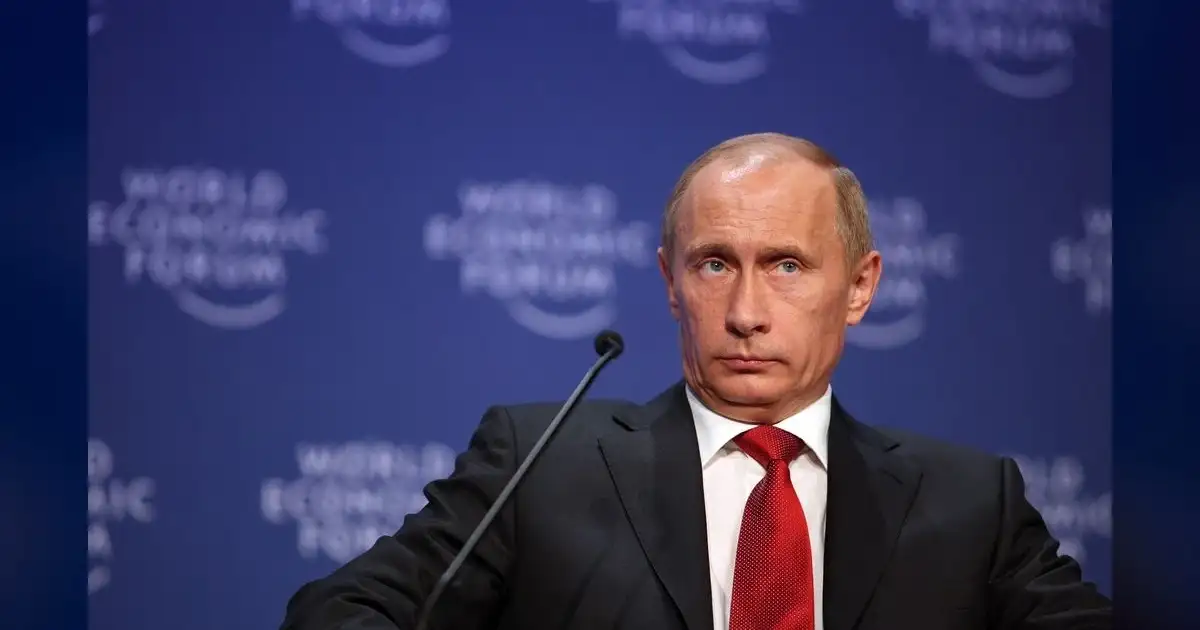
Photo: Photo by World Economic Forum on Openverse (flickr) (https://www.flickr.com/photos/15237218@N00/3234710388)
Source: Google News