
The nation watched in horror as the White House Correspondents’ Dinner became a flashpoint for violence on Friday, April 24, 2026. What followed was an immediate political counter-attack. President Donald Trump launched a scorched-earth offensive, blaming “radicalized sickos” “totally funded” by Democrats for the shooting.
MSNBC’s Rachel Maddow, in turn, unleashed a tactical broadside. She accused Trump himself of fueling the very rhetoric that leads to such tragedy. This isn’t merely a political skirmish; it’s a full-blown blitz on the nation’s already fragile unity, exposing deep fissures in the American body politic.

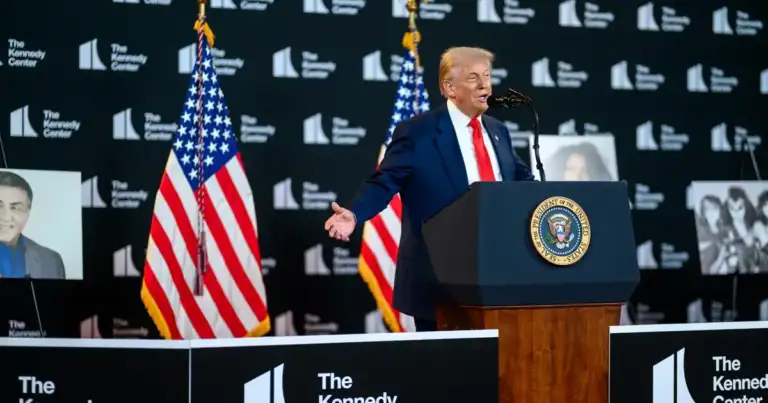
The White House Correspondents’ Dinner, held on Friday, April 24, 2026, devolved into chaos. A shooting incident erupted outside the prestigious venue. The alleged perpetrator, Cole Tomas Allen, plunged what should have been a night of bipartisan levity into an abyss of fear and recrimination.
Less than 24 hours after the shots rang out, on Saturday, April 25, 2026, President Donald Trump executed a swift, decisive strike on Truth Social. He wasted no time in framing the narrative. He branded the perpetrators as “radicalized sickos” and unequivocally pinned the blame on the Democratic Party. This was a calculated political maneuver, not a moment of reflection.
The radicalized sickos who commit these heinous acts are totally funded and encouraged by the Democrat Party. They hate our country and want to destroy it. This is what you get when weak leadership allows anarchy to fester! — President Donald Trump, Truth Social, April 25, 2026
This wasn’t a subtle jab; it was a direct, unvarnished broadside aimed straight at the heart of his political opposition. Trump doubled down, asserting that the “Democrat machine” actively fueled “chaos and division” across the nation.
While the President launched his offensive, law enforcement agencies continued their painstaking work, scrutinizing Allen’s motives. Crucially, as of this writing, there has been no public confirmation of any direct political affiliations or ties linking Allen to either party. This makes Trump’s immediate condemnation a purely speculative, albeit politically potent, declaration.
The inevitable counter-punch arrived with equal force on Sunday, April 26, 2026. MSNBC host Rachel Maddow, a seasoned political combatant, immediately rejected Trump’s narrative. Her broadcast wasn’t merely a report; it was a direct accusation, a tactical return fire aimed squarely at the President himself.
When a former President of the United States immediately jumps to baseless accusations, blaming an entire political party and using inflammatory language like ‘radicalized sickos,’ he is not just commenting on an event; he is actively fueling the very division and anger that leads to such tragic outcomes. His words have consequences, and we are seeing them play out in real-time. — Rachel Maddow, MSNBC, April 26, 2026
Maddow’s core argument is clear: Trump’s rhetoric isn’t just political posturing. It’s accelerant poured onto an already volatile national landscape.
Democratic Party officials wasted no time amplifying this message. They condemned Trump’s remarks as “irresponsible” and “incendiary.”
Even voices from the former President Biden’s administration weighed in. They sharply criticized “those who seek to politicize tragedy for personal gain,” a thinly veiled but potent jab at Trump’s immediate blame game. The lines were drawn, and the battle for public perception was fully engaged.
The Real Game: Linking Rhetoric to Reality
Forget the shallow skirmishes of X (formerly Twitter); the real stakes here are profound. Does incendiary political speech directly translate into real-world violence?
Trump’s most vocal critics don’t just suggest it; they scream “stochastic terrorism” from the rooftops. They present the January 6th Capitol riot as Exhibit A. This chilling precedent allegedly saw presidential rhetoric galvanize a mob.
For them, Trump’s language isn’t just provocative. It’s a deliberate, dangerous dog whistle to extremists, a coded call to action for those on the fringes.
But Trump and his fervent base operate on an entirely different playbook. They don’t see incitement; they see a leader bravely calling out what they perceive as the unvarnished truth.
For them, the Democratic Party isn’t a victim. It’s an active sponsor of chaos, with “left’s policies” creating the very fertile ground for such acts of violence.
The online arena immediately became a digital battleground, with reactions splitting along deeply entrenched tribal lines. On X, hashtags like #DemocratTerror surged, fueled by unverified claims of “Soros cash” and shadowy Antifa ties. This demonstrates how quickly misinformation can weaponize a narrative.
Conversely, left-leaning Reddit threads quickly coalesced, piling on Trump with vitriol. They branded him the “inciter-in-chief” and drew direct parallels to past instances of political unrest. This stark dichotomy paints a grim picture of a nation not just divided, but deeply fractured, where common ground has evaporated.
Both political factions, without hesitation, are quick to weaponize tragedy. They leverage human suffering for immediate political gain. It is a brutal, high-stakes game of blame, played out in the public square with devastating consequences for national cohesion.
A History of Hostility
Let’s be clear: politically motivated violence is not a novel phenomenon in America’s turbulent history. Yet, the current climate carries a distinctly more ominous feel. A palpable tension seems to escalate with each news cycle.
Reputable organizations like the Anti-Defamation League (ADL) and the Southern Poverty Law Center (SPLC) have meticulously documented a disturbing, undeniable surge in politically motivated threats and acts of aggression. This upward trajectory has been particularly pronounced since 2016. It marks a significant inflection point in the nation’s political discourse and its violent manifestations.
The digital frontier, specifically the sprawling landscape of online extremism, plays an undeniably massive, often insidious, role in this escalating crisis. Social media algorithms, designed for engagement, inadvertently act as echo chambers. They amplify extreme views and radicalize individuals at an alarming rate.
President Trump’s own platform, Truth Social, is not merely a bystander. It is an active, integral component of this volatile ecosystem, contributing to the constant bombardment of extreme rhetoric. This relentless digital assault creates a societal powder keg, primed to ignite.
The WHCD, once a venerable symbol of bipartisan civility and a rare moment of unity, has now tragically transformed into just another battlefield in America’s culture wars. Its very purpose has been corrupted by division.
The ghost of January 6th, 2021, Capitol riot looms large. Its specter is a stark, unforgiving reminder of the potential for rhetoric to spill over into insurrection. Critics drew an immediate, direct line between Trump’s words and the violence that engulfed the Capitol that day.
This latest shooting incident at the WHCD doesn’t just reignite that uncomfortable conversation; it throws gasoline on the smoldering embers of doubt. It forces us, as a nation, to confront the most difficult question in this brutal game: to what extent can leaders truly be held accountable for the independent, often unhinged, actions of individuals who claim to be inspired by their words? The answer, or lack thereof, holds profound implications for the future of political discourse.
The Unavoidable Costs of Division
This relentless, zero-sum blame game is not merely a political spectacle. It carries devastating, real-world consequences that extend far beyond who ‘wins’ a news cycle. At its core, it represents a dangerous erosion of public safety and trust.
When even a high-profile event like the White House Correspondents’ Dinner, ostensibly protected by layers of security, can be breached by violence, it sends a chilling, undeniable message to ordinary Americans: nowhere is truly safe from the escalating political animosity. This isn’t just about optics; it’s about the fundamental sense of security in our society.
With every fresh accusation hurled, with every finger pointed, the already gaping chasms of division within our society deepen further. The nation becomes paralyzed, utterly incapable of addressing critical, core issues that demand collective action.
The very concept of finding common ground, once a foundational principle of democracy, now appears utterly impossible. It seems a relic of a bygone era. When political opponents are not merely disagreed with but are branded as ‘sickos’ or ‘enemies of the state,’ the act of dehumanization is complete.
This toxic environment doesn’t just make constructive dialogue a pipe dream. It transforms legitimate political differences into existential threats, pushing the nation closer to an irreparable rupture.
This isn’t merely politics as usual; it’s a full-throttle, head-on collision. Both sides are entrenched, throwing haymakers in a desperate bid for dominance.
The immediate question isn’t just about assigning blame for who started this brutal game. The paramount, existential question for America now is far more critical: how do we, as a fractured nation, pull back from the brink?
How do we prevent the entire damn thing from unraveling before our very eyes, leaving behind a wasteland of division and distrust? The clock is
Source: Google News