
Iran now threatens to obliterate US ships as any talk of a peace deal collapses. Experts confirm Tehran has enough plutonium reserves for 200 nuclear bombs. This isn’t just about escalating tensions; it’s a direct challenge in an already active warzone.
This week, Iranian military officials issued chilling warnings. They vowed to destroy any American vessel perceived as a threat. These threats came during intense military exercises in the crucial Strait of Hormuz.

The warnings, reported May 8th and 9th, follow heightened U.S. naval surveillance. Washington calls it routine, but Tehran calls it a provocation. This dangerous game plays out daily.
The Strait of Hormuz Powder Keg
A senior commander of the Islamic Revolutionary Guard Corps (IRGC) Navy delivered the threats. He spoke of Iran’s “unwavering resolve” to protect its borders. This isn’t just talk; it’s a declaration of intent in a vital shipping lane.
The Strait of Hormuz is a choke point for global oil supplies. Any conflict here sends economic shockwaves worldwide.
It’s a flashpoint for the ongoing US-Iran War 2026, which began February 28, 2026. This isn’t merely a Cold War standoff; it’s a hot conflict with real stakes.
The US and Israel launched strikes against Iran earlier this year. The Strait of Hormuz has been central to that conflict. Iran’s threats against US ships are a direct response to this active military engagement.
Nuclear Brinkmanship: 200 Bombs
Adding fuel to this fire is a new, terrifying assessment. Nuclear proliferation experts released their findings on May 7th. They claim Iran now has enough plutonium for 200 nuclear weapons.
This isn’t about uranium enrichment, the usual headline. This is a separate, equally dangerous path. It means Iran is closer than ever to a nuclear breakout.
The numbers are staggering and cannot be ignored. Consider the scale: 200 nuclear bombs. This capability fundamentally alters the regional power balance.
It transforms Iran from a rogue state into a truly existential threat. The world faces a new nuclear reality.
“Tehran now possesses sufficient plutonium reserves to theoretically construct up to 200 nuclear weapons, should it choose to pursue that path.” – Consortium of nuclear proliferation experts, May 7th.
The Illusion of a “Peace Deal”
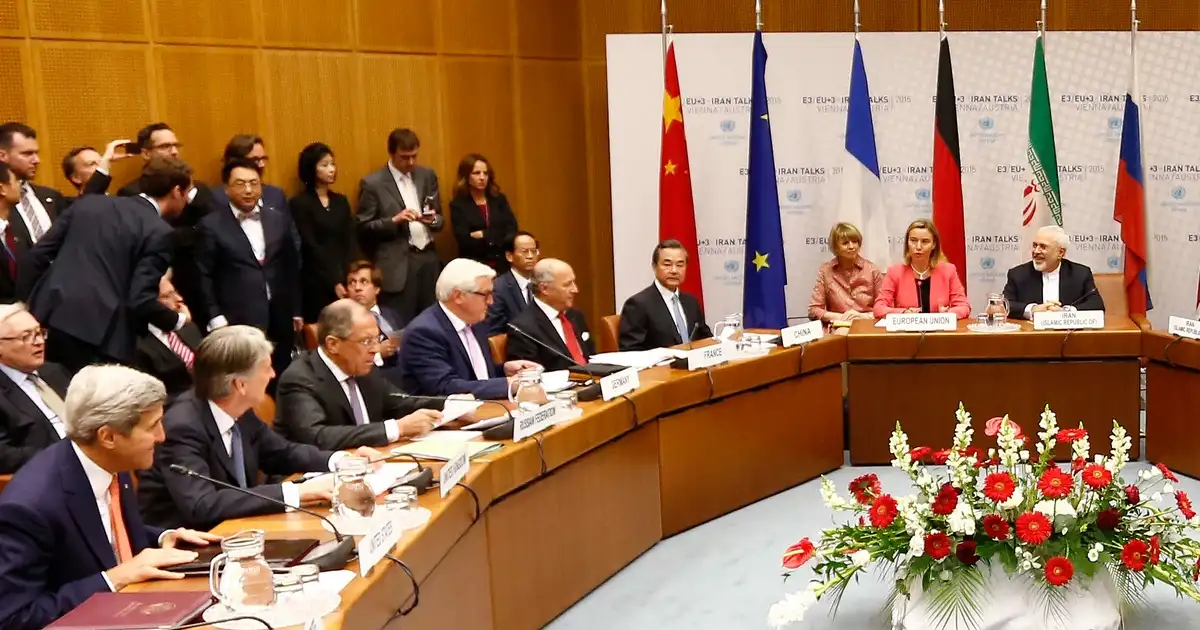
Amidst these threats, talks of a “peace deal” are collapsing. These efforts aimed to revive or replace the 2015 nuclear accord (JCPOA). Diplomatic sources in Oman confirmed the grim outlook on May 9th.
Breakthroughs remain elusive. Both sides refuse to budge on key demands.
The U.S. insists on full IAEA monitoring and a rollback of enrichment activities. Iran, predictably, demands the complete lifting of all sanctions.
This isn’t a negotiation; it’s a stalemate. How can there be a “peace deal” when one side threatens to obliterate the other’s navy?
The term “peace deal” itself feels like a cruel joke in this context. It’s less a peace deal and more a fantasy.
The gap between the two sides is a canyon. Iran is actively threatening war and building a nuclear arsenal.
The diplomatic table is merely a prop in this dangerous drama. True peace requires a genuine will to compromise, which is clearly absent.
Trump’s Next Move
President Donald Trump faces an undeniable crisis. His administration inherited an active conflict with Iran.
Now, Iran’s nuclear capabilities are undeniable and its threats against US ships are direct.
What is the strategy? Continued surveillance? Sanctions that Iran ignores? Or direct military action to prevent a nuclear Iran?
The stakes have never been higher for the 47th President.
The world watches to see how Trump will respond. His critics will demand restraint, his supporters will demand strength.
The reality is far more complex than either side admits. Ignoring 200 potential bombs is not an option.
The situation in the Persian Gulf demands immediate attention. This isn’t a future problem; it is a present danger.
The US cannot afford to blink, nor can it afford to miscalculate. Every decision now carries immense weight.
No Easy Answers
Iran’s nuclear ambitions are clear. Its military threats are unequivocal. The prospect of a diplomatic resolution grows dimmer by the hour.
The notion of containing Iran with sanctions has failed. The idea of a diplomatic “peace deal” is dead.
The question is no longer if Iran will build nuclear weapons, but when. And what the world will do about it.
This is not a theoretical exercise; it is a stark reality. The Strait of Hormuz is a powder keg, and Iran has the match.
The fuse is burning short. The next few weeks will define the future of the Middle East and beyond.
The time for hedging is over. The threats are real, and the nuclear capability is real.
America must face this new, dangerous truth head-on.
Photo: Wikimedia Commons (query: Strait)
Source: Google News