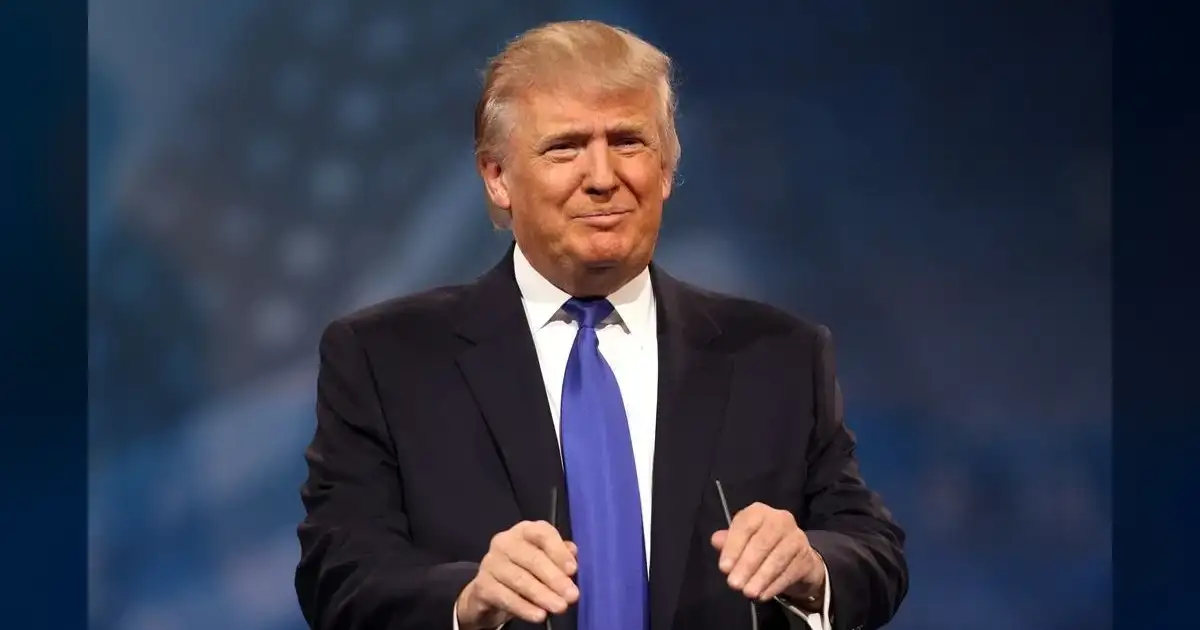

President Donald Trump has just detonated a truth bomb, unsealing genuinely unsettling audio from the Apollo 12 mission and releasing a massive new cache of UFO files. This isn’t merely a historical footnote; it’s a direct challenge to our understanding of the cosmos, forcing us to confront the profound secrets that shape humanity’s future in space.
The White House confirmed this extraordinary release earlier today. This move, I believe, is designed to tear down decades of secrecy surrounding some of our most sensitive space encounters. The unsealed Apollo 12 audio reportedly contains communications from the 1969 lunar mission, deemed too sensitive for public ears until now.

These whispers from the void, perhaps, defy easy explanation. Simultaneously, a vast collection of UFO files has been made public, promising to illuminate unexplained aerial phenomena witnessed across generations. The scientific ramifications, and the public’s perception of our place in the universe, are nothing short of monumental.
The Moon’s Silent Scream: Apollo’s Unsettling Echoes
Just imagine: you’re hundreds of thousands of miles from Earth, encased in a fragile tin can, staring out at the inky blackness. Every sound, every creak, every unexpected signal would be magnified a thousandfold. The very notion of “chilling audio” from Apollo 12 isn’t just a dramatic turn of phrase; it speaks to the raw, visceral experience of pushing humanity to its absolute limits.
Astronauts like Pete Conrad, Alan Bean, and Richard Gordon were heroes, yes, but they were also human, grappling with the profound alienness of space. What did they hear that made mission control decide it needed to be locked away for half a century?
These newly released historical records aren’t just old tapes; they are direct conduits to the unknown. They underscore the immense courage of those early explorers. Now, decades later, these sounds demand we confront what they truly experienced.
Was it an anomalous radio signal? An unexpected thrumming from the lunar surface? Or something far stranger? Scientists and historians will dissect every frequency, every pause, every inflection.
Understanding these moments isn’t just about historical curiosity; it’s crucial for preparing the next generation of astronauts. Space, my friends, remains a profoundly mysterious and potentially unnerving frontier.
Trump’s Galactic Gambit: What Secrets Do the UFO Files Hold?
President Trump’s decision to declassify these UFO files is, frankly, a game-changer. For too long, the public has been fed a diet of half-truths and official denials, fueling speculation about government cover-ups. Now, the official curtain isn’t just being pulled back; it’s been ripped away.
This isn’t about sensational headlines or cartoonish aliens; it’s about hard data. It’s about empirical observations of phenomena we simply cannot explain with our current understanding of physics or aeronautics. Are we talking about advanced atmospheric conditions, or something far beyond our comprehension?
What does this mean for our national security? What does it mean for our understanding of potential technologies operating in our skies?
The scientific community, myself included, will be poring over these documents with a mixture of skepticism and fervent hope. New research avenues could open up like never before. This challenges existing paradigms and forces us to reconsider fundamental assumptions about the universe.
The public deserves to know the truth, not just filtered narratives. This release
Source: Google News