
The crack of gunfire on May 24, 2026, didn’t just shatter the afternoon calm around the White House; it ripped a gaping hole in the illusion of American security, forcing a presidential lockdown and sending D.C.’s power brokers scrambling for cover. This wasn’t merely another headline; it was a raw, undeniable tremor that exposed a capital perpetually teetering on the brink, a stark reminder that even the most fortified symbols of power are ultimately vulnerable.
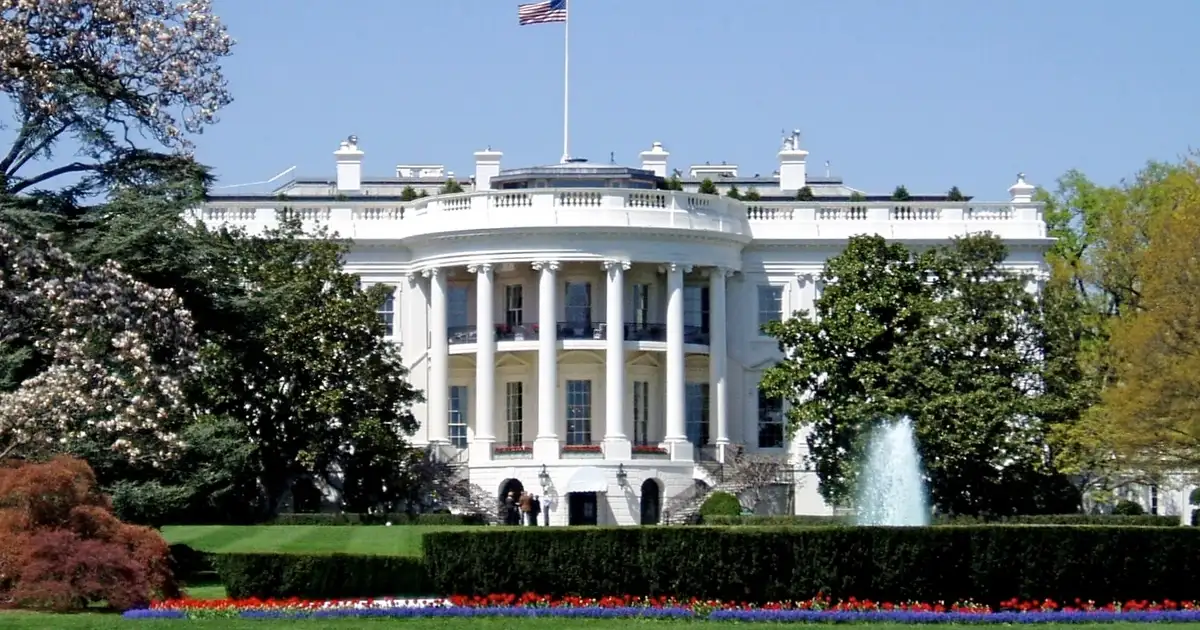
The security incident, a chilling episode unfolding at approximately 1:30 PM Eastern Time, saw two individuals shot near the White House complex. Initial reports, quickly confirmed by Secret Service officials, detailed a rapid and chaotic scene.

The area around Lafayette Square, a public park directly north of the White House, and significant portions of Pennsylvania Avenue were immediately sealed off. This transformed the bustling heart of the nation’s capital into a ghost town of flashing lights and urgent commands.
Secret Service agents, true to their training, moved with brutal efficiency. They secured the perimeter and rushed essential personnel, including members of President Donald Trump’s staff, to designated safe zones within the Executive Mansion.
Emergency medical services descended upon the scene within minutes, their sirens a piercing soundtrack to the unfolding crisis. While the exact condition of the victims remains, as always, shrouded in the impenetrable silence that descends upon D.C. during such events, the immediate impact was clear: instant chaos, a terrifying scramble for safety, and the chilling realization that the nation’s seat of power could be so brazenly targeted. The very air around the White House, usually thick with the hum of power and the murmur of tourists, was suddenly charged with fear and uncertainty.
The Crushing Myth of Impenetrable Security
Washington D.C. has long cultivated an image as the impenetrable fortress of American democracy, a bastion of control where federal might ensures absolute safety. This incident, however, didn’t just chip away at that myth; it shattered it completely. It laid bare the unsettling truth that even the most heavily guarded building in the country, the very symbol of federal authority, is not immune to the random, terrifying eruption of violence.
The White House represents the pinnacle of federal power, the nerve center of a global superpower. When shots ring out near its gates, it sends a chilling, unequivocal message: control is fleeting, security is an elaborate illusion, and the capital can be breached. It forces a reckoning with the uncomfortable reality that despite the layers of concrete, the surveillance cameras, and the legions of armed guards, the human element of vulnerability persists.
Consider the staggering sums involved. Billions of taxpayer dollars are poured into federal security every single year.
The budgets for the Secret Service, the Department of Homeland Security, and countless other agencies swell annually, ostensibly to protect against such threats. Yet, here we are.
The everyday American pays for an endless, ever-expanding labyrinth of protection. But the core vulnerability remains exposed for all to see, a glaring indictment of brute-force security measures alone.
This isn’t an indictment of the Secret Service; they acted swiftly and professionally, as expected. This is about the larger, more systemic failure.
It’s about a city that has become a paradox: a symbol of both immense, unchallengeable power and pervasive, unsettling insecurity.
The constant tension in D.C. is not merely a political abstraction; it is a palpable force. It bleeds into every aspect of life, from security checkpoints to the guarded language of its inhabitants.
This shooting simply brought that simmering undercurrent to the surface. It did so violently and unambiguously.
The Inevitable Political Exploitation
Make no mistake: the blame game began the moment the first bullet flew. Every politician with a camera, a microphone, or a Twitter account immediately weighed in, offering their rote “thoughts and prayers” before pivoting to their preferred talking points. This incident, tragic as it is, will be a convenient, potent weapon for anyone pushing a specific agenda, a ready-made crisis to justify pre-existing policy demands.
Some, predictably, will seize on the opportunity to renew calls for stricter gun laws, portraying the event as irrefutable proof of the need for tighter controls. Others, equally predictably, will demand even more federal security spending, more surveillance, more barriers, effectively advocating for the further militarization of public spaces. As one seasoned political strategist, speaking off the record to Reuters, observed,
“A crisis like this is gold for D.C. operators. It allows them to bypass debate and push through measures that would otherwise face scrutiny. Fear is a powerful persuader.”
And who truly profits from such demands? The massive security contractors, of course.
The companies that supply cameras, blast barriers, armed guards, and biometric scanners undoubtedly saw an immediate stock price bump. This is a grim testament to the cynical economics of fear.
It’s a predictable, depressing cycle: crisis hits, public outrage builds, and the establishment tightens its grip. More money is funneled into the security apparatus.
The average taxpayer foots the bill. Meanwhile, the problem’s root causes – social division, mental health crises, political polarization – are conveniently swept under the rug.
This event will be politicized down to its very bones. Every angle will be twisted, every fact contorted to fit a pre-determined narrative.
The focus will inevitably shift from the victims and the immediate trauma to the political leverage that can be extracted. That, sadly, is the unvarnished truth of how Washington works.
The Taxpayer’s Invisible Burden
Increased security measures are never cheap; they are, in fact, an astronomical black hole for public funds.
After an event like this, new protocols won’t just be considered; they will be implemented with furious urgency.
More Secret Service agents will be deployed, more sophisticated technology purchased, and more physical barriers erected around an already fortified zone. The bureaucratic machine, once given an excuse, rarely slows down.
All these costs, every single dime, are passed directly to the American taxpayer. Your hard-earned money will fund the reaction to this incident, making the already bloated federal security budget even larger. It’s an open secret that D.C. loves to spend money to solve problems that are often systemic, throwing cash at symptoms rather than addressing the underlying disease.
Will these new, expensive measures truly make anyone safer? Or will they simply create more layers of bureaucracy, inconvenience, and expense without tackling the core issues?
History offers a bleak prognosis. We’ve seen this play out time and again: a dramatic incident, a massive expenditure, and then the slow creep of new vulnerabilities emerging elsewhere.
This shooting is not just a single, isolated event; it is a glaring symptom of a much larger, deeply entrenched issue. It reveals a city on edge, a nation divided, and a government that reflexively responds with more force and less introspection.
The real cost isn’t just the immediate emergency response, the overtime for agents, or the price of new hardware. It’s the insidious erosion of public trust, the further militarization of public spaces, and the ever-growing tab for what amounts to security theater, all paid for by you, the American citizen, with diminishing returns on true safety.
President Trump’s Quandary and the Road Ahead
President Donald Trump now faces immediate, intense pressure. His administration will have to address this
Source: Google News