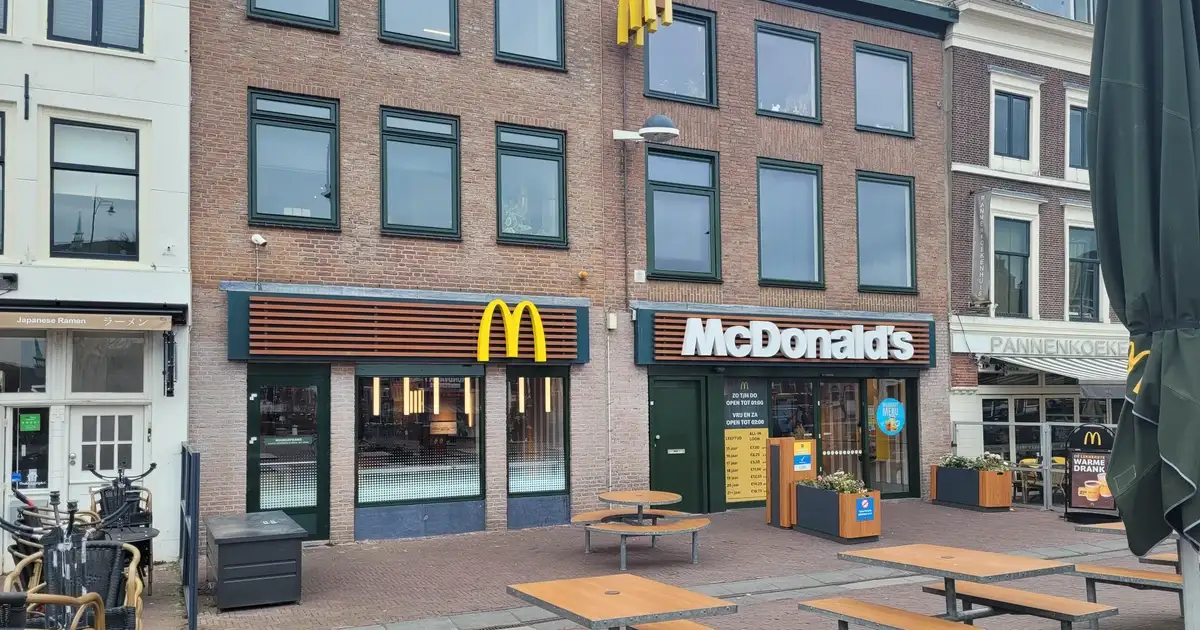

The stench of burning oil now replaces the scent of wedding flowers for Marcus Thorne, a 28-year-old McDonald’s shift manager whose life was brutally derailed just two days before his wedding. He suffered horrific second-degree burns when a coworker allegedly hurled burning hot oil directly at him, not a rival team in a contest, but an ambush in the very kitchen Thorne managed.
This wasn’t some street brawl; this was an internal collapse, a catastrophic breakdown of workplace safety that unfolded inside a McDonald’s kitchen on the evening of June 6, 2026. The alleged attacker, Kevin “Kev” Jenkins, 22, reportedly blew his top over a scheduling conflict and a disciplinary action. Thorne was supposed to walk down the aisle on June 8th. Instead, he’s fighting for his future in a burn unit, his wedding indefinitely postponed.
Jenkins didn’t dodge the tackle. Police nabbed him at the scene, and he’s now facing charges of aggravated assault with a deadly weapon, held without bail. Thorne’s fiancée, her voice thick with anguish, confirmed the devastating news: “It’s just horrific.” You bet your life it is. The Golden Arches aren’t just facing a serious safety penalty here; they’re staring down a full-blown crisis.
The Golden Arches Under Fire: Safety Protocols on Trial
This isn’t just a random act of workplace rage; it’s a searing indictment. The critical question isn’t if McDonald’s has policies, but why their defensive line utterly collapsed on the evening of June 6th. What was their game plan for protecting their own players when the internal threat became real?
Every major corporation talks a good game. McDonald’s, like the rest, has policies against workplace violence, likely etched into every employee handbook. But when scorching oil is flying and a man’s life is changed forever, those policies look like paper-thin playbooks, utterly useless in the face of real-world aggression. Is a rulebook worth the paper it’s printed on if it can’t stop a coworker from turning a fry vat into a weapon?
The problem isn’t usually the policy’s existence; it’s the execution, or lack thereof. The glaring deficiencies in training are not merely “obvious gaps”; they are gaping chasms in a system designed to fail. Fast-food environments are high-stress pressure cookers. Managers and staff don’t just need a rulebook; they need real conflict resolution skills, de-escalation tactics, and the mental fortitude to handle volatile situations before they erupt.
Physical security is another critical blind spot. Most McDonald’s locations are equipped with cameras, which are excellent for after-the-fact evidence, sure. But they do absolutely nothing to stop a coworker from grabbing a vat of scorching oil in the heat of the moment. Security measures often focus exclusively on external threats, like robberies. Internal threats, however, are a different beast entirely, and they are tragically ignored until a disaster like this strikes, leaving a trail of unimaginable pain.
“Our wedding was supposed to be today. Now, Marcus is fighting for his recovery, and our future feels so uncertain. It’s just horrific.”
— Marcus Thorne’s Fiancée
When something this ugly happens, corporations scramble. McDonald’s is now issuing statements, expressing “deep concern.” They’re “fully cooperating with law enforcement.” And you can bet your bottom dollar they’ll be “reviewing safety protocols.” This is standard operating procedure, a predictable PR playbook trotted out after the game is already lost, the damage irreversible. It’s fixing the scoreboard after the final whistle, a reactive measure instead of a proactive defense.
Here’s another wrinkle in this grim scenario: the franchise model. Many McDonald’s locations are independently owned and operated. This means that while they ostensibly follow corporate standards, the actual implementation of safety protocols can vary wildly. One franchisee might run a tight ship, while another might cut corners, prioritizing profit over employee well-being. That inconsistency creates weak points across the entire brand, a defensive coordinator’s nightmare: a patchwork of inconsistent strategies across the field, inviting disaster.
Beyond the Fryer: The Human Cost of Workplace Rage
Forget the corporate jargon; this isn’t about policy, it’s about a young man’s future incinerated. Marcus Thorne was days from one of the biggest moments of his life, a new beginning. Now, he faces a grueling, agonizing recovery. The physical agony of second-degree burns is immense, a searing pain that will echo through his life. But the emotional scars, the betrayal of an attack from a coworker in what should have been a safe workplace, will run even deeper, a psychological wound that may never fully heal.
The numbers don’t lie; they scream a warning. Workplace violence is not just on the rise; it’s escalating. The Bureau of Labor Statistics reported nonfatal incidents leading to days away from work jumped a staggering 11% in 2023. And the fast-food industry? It’s a verified hotspot. A 2024 study from the Workplace Safety Institute found that a shocking 1 in 5 fast-food workers reported experiencing violence. This isn’t just customers acting out; it’s employees turning on each other, a breakdown of camaraderie in the trenches.
Why? Stress. Low pay. Long hours. These fast-food kitchens aren’t just workplaces; they’re high-pressure cookers, simmering with stress, inadequate compensation, and grueling shifts. When you combine that with inadequate training in handling disputes, you’ve got a ticking time bomb. Kevin Jenkins allegedly lost control over a scheduling conflict and discipline – common trigger points in any workplace. But this level of violence? This is an extreme, horrifying escalation that demands immediate, systemic attention.
“The suspect was taken into custody without further incident. Charges of aggravated assault with a deadly weapon have been filed. We are investigating the motive behind this violent act.”
— Police Spokesperson
The cost of this kind of violence is staggering, extending far beyond the immediate medical bills for Thorne, which will undoubtedly be massive. It includes potential lawsuits against both the franchise owner and the corporate giant. It means higher insurance premiums, lost productivity, and an irreparable hit to the brand’s reputation. Nobody wants to work, or even eat, at a place where you might get hot oil thrown in your face. The public’s trust, once taken for granted, is now severely compromised.
The Unseen Toll: Trust, Morale, and the Future of Fast Food
Beyond the immediate victims and legal battles, this incident casts a long shadow over every McDonald’s employee. What does this do to morale? How can workers feel safe when a routine scheduling conflict can erupt into such brutal violence? The psychological impact on the wider workforce – the fear, the distrust – is immeasurable. It erodes the very foundation of a cohesive team, replacing it with anxiety and suspicion. This isn’t just about one isolated incident; it’s about the systemic failure that allows such a horrific event to occur, leaving every employee wondering if they could be next.
The fast-food industry already struggles with high turnover and a reputation for demanding work. Incidents like this only exacerbate those challenges, making it even harder to attract and retain talent. Who would willingly step onto a field where the risk of a brutal, internal attack is a tangible reality? McDonald’s, as an industry leader, has a moral and corporate obligation to address these deep-seated issues, not just with platitudes, but with concrete, actionable strategies that prioritize the safety and well-being of every single person under their Golden Arches.
The Price of Unchecked Anger: A Searing Indictment
This brutal play isn’t just a grim headline; it’s a stark, searing indictment of unchecked workplace rage and corporate complacency. What happens when workplace tensions aren’t managed? When anger boils over, lives are irrevocably ruined. Marcus Thorne is facing a long, arduous road back, his wedding, a symbol of a new beginning, indefinitely postponed. Kevin Jenkins is looking at a future behind bars. Both futures are now irrevocably altered, scarred by a single, alleged moment of uncontrolled rage.
McDonald’s says they have a “zero-tolerance policy for violence.” That’s easy to say, a convenient soundbite. The real test isn’t a PR statement, but whether McDonald’s can overhaul its entire defensive strategy, investing in robust training, genuine support, and a culture where disputes are defused long before they ignite into violence. Anything less is a monumental failure to protect their own team, a betrayal of the trust placed in the Golden Arches.
The public isn’t just watching this case; it’s demanding accountability. Justice for Thorne means more than just Jenkins facing the music; it demands a systemic change, ensuring no other worker suffers such a brutal, preventable assault. McDonald’s must step up and prove their policies are more than just words on a page, or risk being forever branded by the scars of this horrific attack.
Photo: Wikimedia Commons (query: Marcus Thorne)
Source: Google News