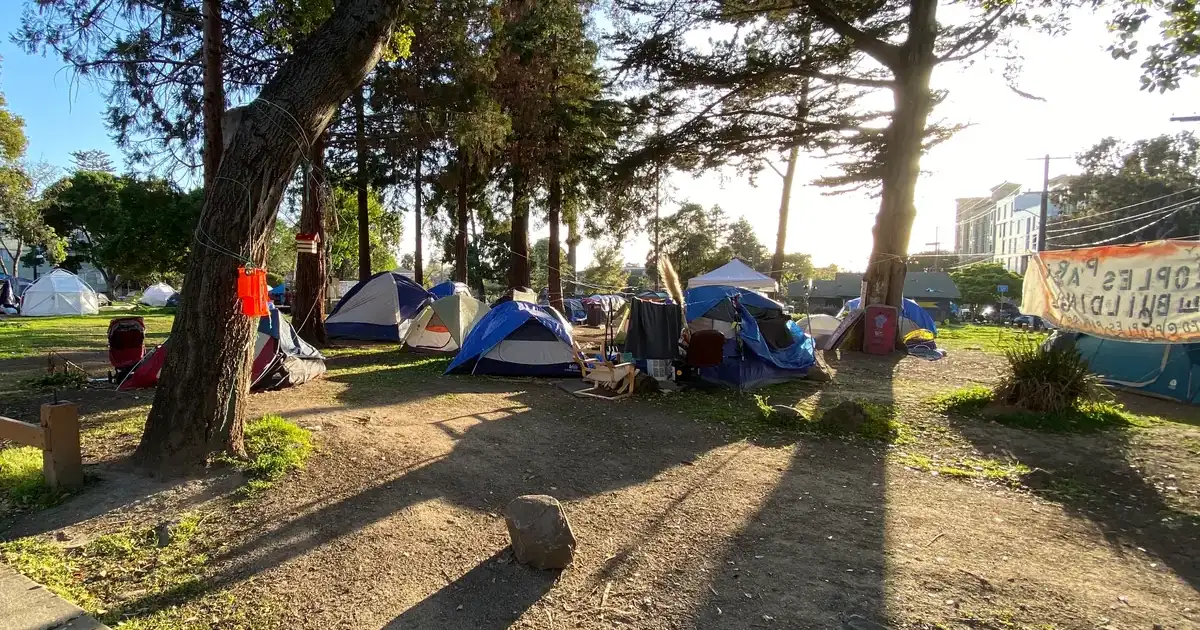

Forget the headlines; this isn’t just news. This is a full-blown, catastrophic failure playing out in Berkeley, where a deadly disease has claimed one life within a homeless encampment. It’s not a grim statistic—it’s a brutal reality check, a public health disaster unfolding right on the city’s doorstep. Authorities confirmed the grim discovery: a filthy breeding operation housing over 200 rats, a direct, undeniable link to the disease spreading and a public health nightmare made flesh.
Berkeley’s Crisis Explodes: A Tactical Breakdown
Berkeley’s situation hasn’t just ‘hit rock bottom’; it’s cratered. This deadly outbreak is the direct, undeniable consequence of utterly unsanitary conditions—a critical fumble in public health management. The city’s long-standing struggle with homeless encampments just escalated from a simmering problem to an explosive, fatal crisis. One death confirms the stakes; this isn’t theoretical anymore. It’s a tragic human cost, a life lost, and the public health risk is now undeniable, glaring, and utterly unacceptable.

Berkeley faces not only a massive cleanup operation but also a monumental trust deficit. How could conditions deteriorate so badly under official watch? Who was watching the ball, and why did they let it roll out of bounds into such a deadly zone? The city’s playbook for managing its unhoused population has proven fatally flawed, resulting in a direct casualty.
The Fallout: More Than Just Vermin, It’s Systemic Failure
This isn’t merely about controlling a rat population; that’s a symptom, not the disease. This is about a monumental failure of basic city services, a dereliction of duty to protect even the most vulnerable residents. The spread of this deadly, unnamed disease is a grim indicator of deeper, systemic problems that have festered unaddressed for far too long. It’s a breakdown in the fundamental contract between a city and its people.
Public health experts are now scrambling, playing catch-up in a game they should have been leading. Their mission is clear: contain this deadly threat and contain it now. The camp demands immediate, decisive action. This isn’t a suggestion; it’s a non-negotiable directive. As Dr. Aris Thorne, a public health epidemiologist, recently told The Washington Post,
“When you have conditions ripe for vector-borne diseases, it’s not a matter of ‘if’ an outbreak occurs, but ‘when.’ Berkeley’s situation is a textbook example of preventable tragedy.”
The city has a clear mandate. They must secure the area, provide immediate and comprehensive sanitation, and offer safe, viable alternatives for every resident currently living in these deplorable conditions. This crisis demands answers. Where were the preventative measures? Why did it take a death? Why did it take the discovery of 200 rats to trigger an emergency response? These aren’t rhetorical questions; they are direct challenges to the city’s conscience and competence.
The implications extend beyond the encampment itself. The health and safety of the entire Berkeley community are at risk. Uncontrolled disease outbreaks in one area can quickly spill over, impacting schools, businesses, and public spaces. This isn’t just a localized problem; it’s a city-wide threat demanding a city-wide solution, executed with the urgency of a fourth-quarter comeback.
Leadership on the Hot Seat: A Failure of Vision and Execution
Berkeley city officials are now under immense pressure, and rightfully so. Their long-touted strategy for addressing homelessness is not just faltering; it’s demonstrably failing. This incident isn’t just proof; it’s a tactical breakdown of epic proportions, a catastrophic misjudgment of priorities and resource allocation. You cannot ignore a problem until it kills someone and then claim leadership. That’s not leadership; that’s negligence. The city leadership needs to own this, unequivocally.
For too long, Berkeley has wrestled with these issues, often with a public posture of compassion that rings hollow in the face of such abject conditions. Its unhoused population faces severe challenges daily, and public health concerns, particularly sanitation in encampments, have been a constant, losing battle. This incident throws all those struggles into sharp, tragic relief. It highlights systemic failures, a glaring lack of proactive management, and a city that has unequivocally dropped the ball on its most vulnerable citizens.
The time for talk, for committee meetings, and for platitudes is over. The game clock is ticking, and lives are on the line. Residents deserve action, not more rhetoric. They deserve accountability, not excuses. This isn’t a complex strategic play; it’s basic governance. The failure to provide fundamental safety and sanitation is a failure at the most foundational level of civic responsibility.
What’s Next for Berkeley? A Playbook for Redemption
The immediate priority is public safety, plain and simple. The camp must be cleared, and the area must be sanitized with extreme prejudice. These steps are not negotiable; they are the bare minimum. But the problem doesn’t end there. Berkeley needs a long-term plan, a winning strategy that addresses the root causes of this crisis, not just its horrific symptoms. This isn’t a one-game fix; it’s a season-long commitment.
This means a genuine investment in sustainable housing solutions, not temporary shelters that perpetuate cycles of instability. It means drastically improving mental health and addiction services, recognizing that these are often underlying factors in homelessness. It means providing real, comprehensive support, not just moving people from one unsafe location to another. It requires a complete overhaul of their approach, a strategic pivot from reactive crisis management to proactive community building.
The city must learn from this tragedy, internalize its brutal lessons, and implement changes that prevent future outbreaks. They must protect every citizen, and that includes the unhoused, who are often forgotten until a crisis erupts. The eyes of the nation are on Berkeley. How they respond will define their leadership, their values, and their very identity. Will they step up, execute a winning strategy, and truly protect their community? Or will they punt on this critical issue, allowing another tragedy to unfold?
The Red Marker Verdict: Hypocrisy Exposed
This Berkeley disaster isn’t just a health crisis; it’s a stark exposé of political weakness and a profound failure of leadership. This city has preached compassion and progressive values for years, projecting an image of enlightened governance. Yet, conditions deteriorated to this deadly point. One person is dead. Rats are breeding unchecked. The hypocrisy is staggering, a gap between rhetoric and reality so wide it’s unforgivable.
The real motive, often, is about optics. It’s about projecting an image, about sounding good in public forums, not about actual, boots-on-the-ground solutions. Berkeley’s leadership got caught flat-footed, unprepared, and ultimately, responsible for a preventable death. They prioritized rhetoric over results, grandstanding over genuine intervention. This tragedy is the cost of that misplaced priority. It’s a brutal reminder: talk is cheap. Lives are not. The scoreboard shows a devastating loss, and the blame lies squarely with those who failed to lead.
Photo: Wikimedia Commons (query: Berkeley)
Source: Google News