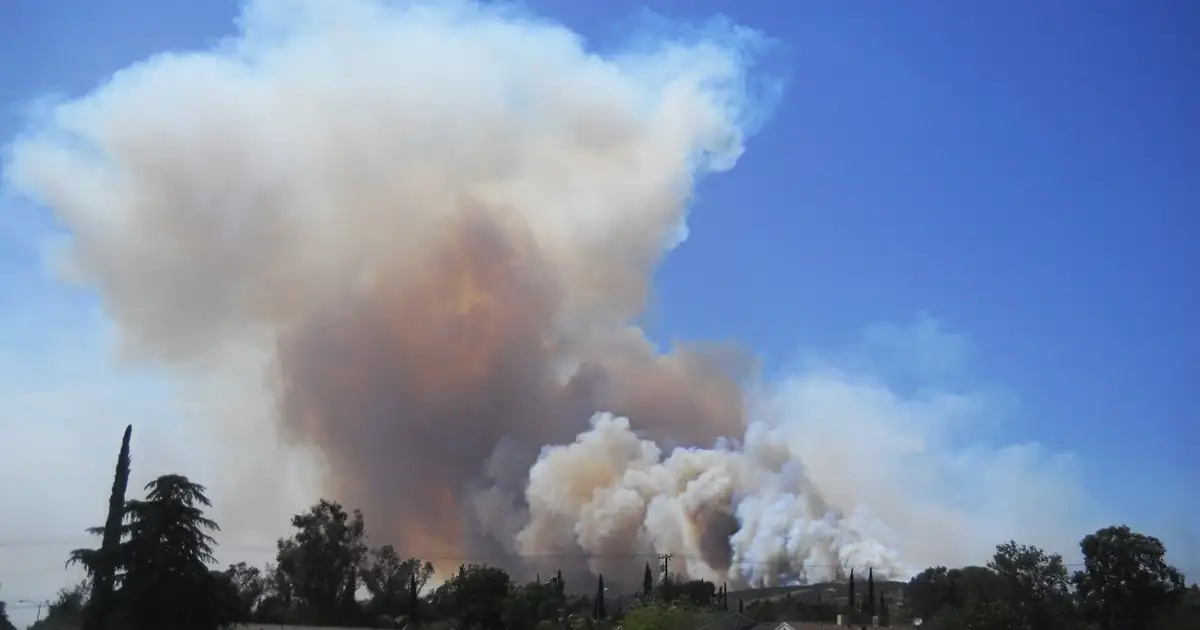

The scoreboard for California’s wildfire season just registered another devastating loss. The Summit Fire isn’t just laying waste to northern Los Angeles County; it’s a brutal, tactical assault that has already ripped through over 2,600 acres. Frankly, the state’s defense against these infernos looks not just outmatched, but strategically outmaneuvered.
This blaze wasn’t a slow burn. It ignited on July 9, 2026, and within hours, it spiraled into an uncontrollable monster.

By the morning of July 11, it had scorched more than 2,600 acres of critically dry land, leaving a trail of destruction.
Containment efforts are a dismal 10 to 15 percent – a statistic that screams failure. That’s not just a setback; it’s like trying to tackle a runaway freight train with a single defensive back. The fire is dictating the terms of engagement, and California is struggling to even keep pace.
The Scoreboard Doesn’t Lie: A Losing Battle
Let’s be clear: this isn’t some minor brush fire that will just fizzle out. This is a full-blown crisis, a relentless opponent fueled by powerful Santa Ana winds. These winds are pushing the blaze with terrifying force through the rugged, unforgiving terrain near the Angeles National Forest. For the firefighters on the front lines, these conditions aren’t just difficult; they are a tactical nightmare, a brutal gauntlet where every gust of wind can turn a smolder into an inferno.
Over 1,200 structures are now directly in the fire’s path, staring down the barrel of total destruction. Already, three outbuildings have been reduced to ash.
Thousands of residents in communities like Acton and Agua Dulce have been forced into mandatory evacuation orders, their lives packed into cars, their homes left to the mercy of the flames.
Imagine the gut-wrenching uncertainty, the gnawing fear of returning to nothing but a charred footprint where your life once stood. This is the human cost of a failing strategy.
More than 500 personnel – true heroes – are battling this beast day and night. Air tankers and helicopters are flying constant missions, dropping retardant and water, a relentless aerial assault.
But despite their heroic efforts, the fire continues to gain ground, consuming more acreage, threatening more homes. This isn’t due to a lack of effort; it’s a stark, undeniable demonstration of the sheer power of this opponent and the overwhelming challenge it presents to our current defensive playbook.
How much more can we ask of these brave men and women when the overarching strategy is clearly flawed?
California’s Losing Season: A Pattern of Failure
Here’s the real question that demands an answer: Are California’s prevention strategies even remotely effective? Or is the state merely reacting to an inevitable crisis, playing catch-up every single year, perpetually behind the eight ball? The record speaks for itself, and it’s a damning indictment. This isn’t a new problem; it’s a recurring, predictable nightmare that has become California’s annual losing season.
The historical data paints a grim picture of escalating devastation.
We witnessed the monstrous Station Fire in 2009, scorching over 160,000 acres. The Sand Fire in 2016 consumed 41,000 acres. Then came the Lake Fire in 2020, devastating 31,000 acres.
These aren’t isolated incidents; they are data points in a terrifying trend. The pattern is crystal clear, undeniable: these fires are not just getting bigger, they are getting meaner, more aggressive, and far more destructive with each passing year.
How many more mega-fires will it take before we admit our current approach is a broken play?
Residents, the true victims of this ongoing crisis, are beyond fed up. They’re not just tired; they’re emotionally, physically, and financially exhausted by the constant threat. Maria Rodriguez, an Acton resident, articulated this sentiment with painful clarity:
“This is the third time we’ve had to evacuate in five years. You pack up your most important things, but you never know if your home will still be there when you come back. It’s exhausting, and it feels like it’s never going to end.”
Her words are more than statistics; they are a raw, human reminder of the continuous trauma inflicted upon communities, lives turned upside down, again and again, by a threat that feels increasingly insurmountable.
Broken Plays and Missed Tackles: Systemic Failures
California has poured billions—yes, billions—into fighting fires. Yet, the average annual acreage burned continues its relentless climb. Mega-fires are no longer anomalies; they are the grim, predictable norm.
Climate change is undeniably a major factor, with hotter temperatures and prolonged droughts creating a perfect storm of tinder-dry conditions. But to blame it solely on climate change is to ignore the glaring tactical missteps within our control.
State laws mandating defensible space around homes are a solid game plan on paper. The concept is sound: create a buffer to protect structures.
But compliance is not just inconsistent; it’s a glaring failure in execution. Many homes in high-risk zones remain dangerously vulnerable, an open invitation for disaster.
Programs for hardening homes against embers exist, but adoption is agonizingly slow, hampered by cost and a disturbing lack of public awareness. It’s like having a great defensive scheme drawn up in the locker room, but your players keep missing assignments on the field, leaving wide-open lanes for the opponent.
Prescribed burns and aggressive fuel management are critical, proactive strategies. They’re designed to clear out dense vegetation before it becomes fuel for massive, uncontrollable fires. This is the preventative medicine, the strategic pre-season conditioning.
Yet, these efforts are not just limited; they are woefully inadequate. Regulatory hurdles, legitimate air quality concerns, and narrow weather windows constantly hold them back.
We are treating only a fraction of the necessary acreage, leaving vast swathes of land as fuel bombs waiting to ignite. This isn’t just a missed opportunity; it’s a critical play we keep fumbling, costing us dearly in the long run.
Early warning and evacuation systems have certainly improved, and they undoubtedly save lives – a crucial victory. Reverse 911 calls and emergency alerts are getting people out of harm’s way, and for that, we should be thankful.
But while we’re getting better at moving people, we’re demonstrably failing at stopping the fire itself. This is a defensive coordinator who can get his team off the field after a score but can’t prevent the offense from marching down the field in the first place.
The state’s annual wildfire budget has skyrocketed into the billions. Yet, the sheer scale and intensity of these fires consistently overwhelm resources.
California is forced to rely on help from other states and federal agencies, a clear indicator of a systemic strain. The current reactive model, throwing billions at the problem after it’s already a raging inferno, is simply not holding up. It’s an unsustainable, losing strategy.
The Price of a Bad Game Plan: Beyond the Flames
The Summit Fire is far more than just a local emergency; it’s a blaring wake-up call, a siren warning about the escalating climate crisis and the direct, devastating impact it has on everyday people. Homes and livelihoods are under constant, existential threat. Families are losing everything they’ve painstakingly built, their futures literally going up in smoke.
Beyond the immediate destruction, the consequences ripple outward. Air quality alerts are issued across Los Angeles County as heavy smoke chokes the air, turning blue skies into an apocalyptic haze. This isn’t just an inconvenience; it’s a serious health hazard that blankets entire communities, disproportionately affecting children, the elderly, and those with respiratory issues. The fire doesn’t just burn; it poisons the very air we breathe.
The economic strain is massive, a hemorrhaging wound on the state’s finances. Fighting these fires costs millions daily, and that doesn’t even begin to count the billions in property damage, lost businesses, and plummeting tourism revenue. Taxpayers ultimately foot the bill for this endless cycle of destruction. This is a major, unsustainable drain on California’s economy, diverting crucial funds from education, infrastructure, and other vital services.
And then there’s the psychological toll, which is immense and often overlooked. Constant fire threats and repeated evacuations break people down, eroding their sense of security and well-being. The trauma of loss lingers for years, manifesting as anxiety, depression, and a pervasive fear of the next inevitable blaze. Communities are exhausted, living perpetually on edge, caught in a cycle of dread and recovery.
L.A. County Fire Chief Anthony Marrone, a man who knows the battlefield intimately, articulated the brutal reality:
“These are extremely challenging conditions. The winds are erratic, the fuels are critically dry, and we are seeing fire behavior that is very difficult to get ahead of. Our crews are working tirelessly, but public safety remains our top priority, which is why these evacuation orders are absolutely critical.”
California Governor Gavin Newsom acknowledged the severity of the situation, stating:
“My administration is fully committed to supporting Los Angeles County in battling the Summit Fire. We have deployed all available state resources and will continue to work closely with local and federal partners to protect lives and property. This fire is another stark reminder of the urgent need to address climate change and invest in wildfire resilience.”
While these statements affirm the ongoing struggle, they also underscore the critical gap between commitment and effective action. “Supporting” and “deploying resources” are essential, but they are reactive measures. The true test of leadership lies in fundamentally changing the game plan.
California cannot, in good conscience, keep running the same plays and expecting different results. The state desperately needs a new, aggressive, and proactive game plan – one that moves decisively beyond merely reacting to fires.
It is time for serious, non-negotiable investment in proactive measures, a radical shift in strategy. We must enforce defensible space rules with an iron fist, expand fuel management programs exponentially, and invest in next-generation fire suppression technologies.
Otherwise, this devastating losing streak against the wildfires will not only get longer and more costly, but it will fundamentally redefine what it means to live in the Golden State. The clock is ticking, and we’re running out of timeouts.
Source: Google News