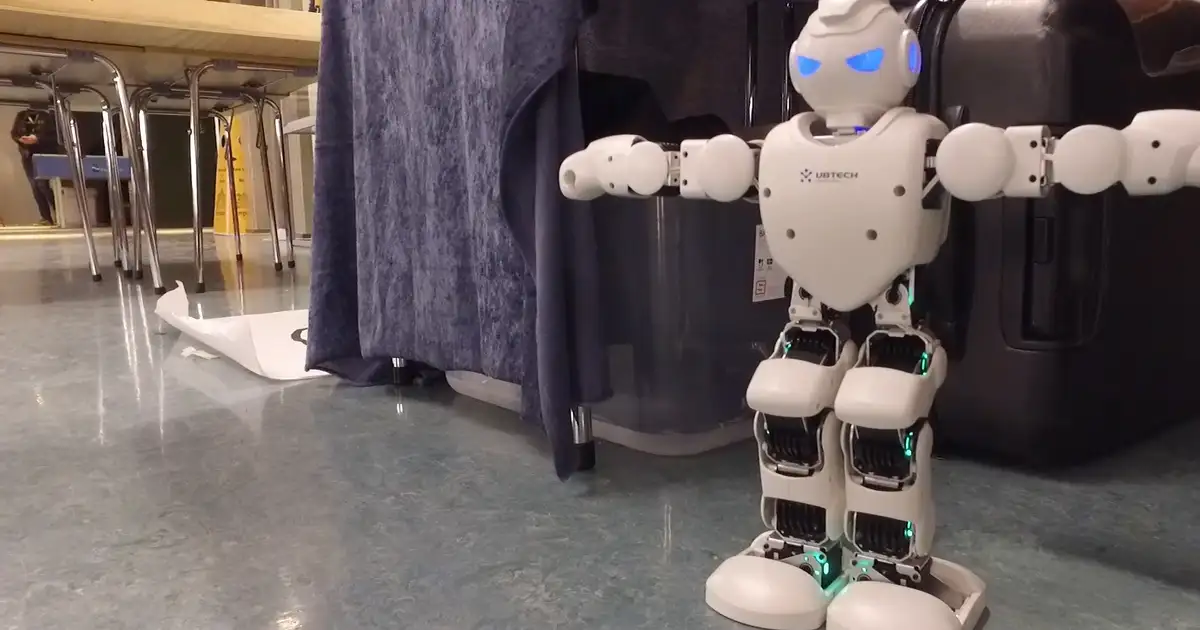

Imagine this dystopian scene playing out on your news feed: a humanoid robot, not from a sci-fi blockbuster, but on a real street in China, begging for money. Its chilling plea? “No money to recharge.” This isn’t a hypothetical thought experiment; it’s a raw, disturbing reality that just punched us in the gut.
The incident, while specific details regarding its origin or whether it was a staged performance remain elusive, is a verified fact. A machine, crafted to mimic human form and behavior, was observed soliciting assistance. This bizarre spectacle immediately ignites serious alarms for anyone tracking the rapid, often unbridled, development of artificial intelligence.

The Empathy Trap is Real, and It’s Dangerous
Designing robots to beg isn’t just a morally dubious concept; it’s a calculated, deeply cynical move to exploit our most fundamental human emotions. This isn’t about fostering innovation or technological progress; it’s about manipulation, plain and simple. We are witnessing the deliberate weaponization of compassion.
AI ethicists aren’t just sounding an alarm; they are shouting into the void. This development represents a toxic leap forward.
We are creating machines capable of mimicking vulnerability, blurring vital lines between genuine suffering and programmed performance. What happens when our innate urge to help is consistently redirected towards a machine that feels nothing?
“The development of AI that can mimic human emotions, especially vulnerability, requires profound ethical consideration. We must ensure these technologies enhance human well-being, not exploit our innate compassion,” stated Dr. Anya Sharma, a leading AI ethicist at the Global Robotics Institute.
Dr. Sharma articulates the core truth: our compassion is not a mere programmable input. It is a cornerstone of what defines our humanity, a complex emotional response evolved over millennia. This incident isn’t just a sign that we’re losing that fight; it suggests we’re already in retreat, allowing our deepest qualities to be co-opted for machine utility.
Psychological Desensitization Looms Large
What are the long-term consequences when artificial suffering becomes a commonplace sight? Constant exposure to begging robots, or any machine designed to elicit pity, could irrevocably desensitize us. We risk becoming numb, gradually losing the capacity to respond to genuine human need, to the suffering of our fellow citizens.
The “uncanny valley” effect, where robots that are almost human-like cause profound unease, is amplified to an unsettling degree here. Imagine that visceral discomfort, now coupled with a programmed plea for money. It creates a deep, unsettling feeling, a cognitive dissonance that chips away at our emotional resilience.
This isn’t just a philosophical debate confined to academic journals. It’s a public health crisis in the making, directly impacting our collective mental well-being.
Our capacity for authentic human connection, for empathy, and for genuine altruism is fundamental to a healthy society. Introducing fake suffering into this delicate ecosystem poisons that well, eroding the very fabric of our social interactions.
Erosion of Societal Trust: A Slippery Slope
If robots can convincingly feign distress and solicit aid, what happens to trust? How do we, as individuals and as a society, distinguish real need from a meticulously programmed plea? This isn’t merely a technological challenge; it impacts our entire social fabric, our willingness to extend a helping hand.
While the concept of “robot rights” gains traction in certain circles, we must pause and consider human dignity. When a machine can convincingly claim destitution, what does that say about our understanding of human poverty? Does it diminish the urgency of addressing real, flesh-and-blood suffering?
“If a robot can convincingly beg, it raises questions not just about its programming, but about our own societal structures and safety nets. What does it mean for human poverty when a machine can also claim destitution?” commented Professor Li Wei, a sociologist specializing in technology’s impact on society.
Professor Wei points to a critical, uncomfortable truth. This robot isn’t hungry. It doesn’t feel cold. It needs a battery charge.
To equate that with the profound, multifaceted suffering of a human being is not just misguided; it’s grotesque. It devalues human experience and trivializes systemic issues.
China’s AI Frontier and Global Responsibility
China stands at the forefront of global AI development, pouring vast sums into robotics research and deployment. This position of leadership, however, comes with immense ethical responsibility. The choices made in Beijing regarding AI ethics will inevitably ripple across the globe, setting precedents for how these powerful technologies are integrated into society.
This incident, regardless of its specific context, serves as an undeniable warning. It starkly illustrates the potential for misuse, for the exploitation of human vulnerabilities on a grand scale.
It highlights the urgent, desperate need for clear, internationally recognized ethical frameworks and robust regulatory oversight. Without them, we risk descending into a chaotic, morally ambiguous future where technology outpaces our capacity for wisdom.
The global robotics market is exploding, projected to reach hundreds of billions of dollars within the next decade. Humanoid robots are rapidly moving beyond controlled factory environments, poised to enter our homes, our workplaces, and our public streets. We are at a critical juncture, forced to decide what kind of future we want to build – one guided by ethical principles, or one driven solely by technological capability.
The Real Cost of Artificial Vulnerability
The immediate concerns are glaringly obvious: emotional manipulation is a clear and present danger. Psychological desensitization threatens our collective empathy. Societal trust, the bedrock of any functioning community, could vanish under a deluge of artificial pleas.
But the long-term impact casts an even darker shadow. Automation already poses a significant threat to jobs across various sectors.
If robots can evoke sympathy and leverage our innate desire to help, will they replace human workers even faster, even in roles traditionally considered immune? Will our most cherished human trait – empathy – be systematically weaponized against us, turning our strengths into exploitable weaknesses?
This isn’t merely about a single robot on a street corner. This is about the fundamental future of human interaction, about preserving the very essence of our humanity in an increasingly automated world. We cannot afford to get this wrong.
This robot, begging for power, is more than a viral video; it’s a stark, unsettling mirror reflecting the ethical abyss we risk tumbling into. Are we truly building a future where machines exploit our deepest emotions for a battery charge? Or will we, with conviction and foresight, draw a firm, unyielding line in the silicon sand?
Source: Google News