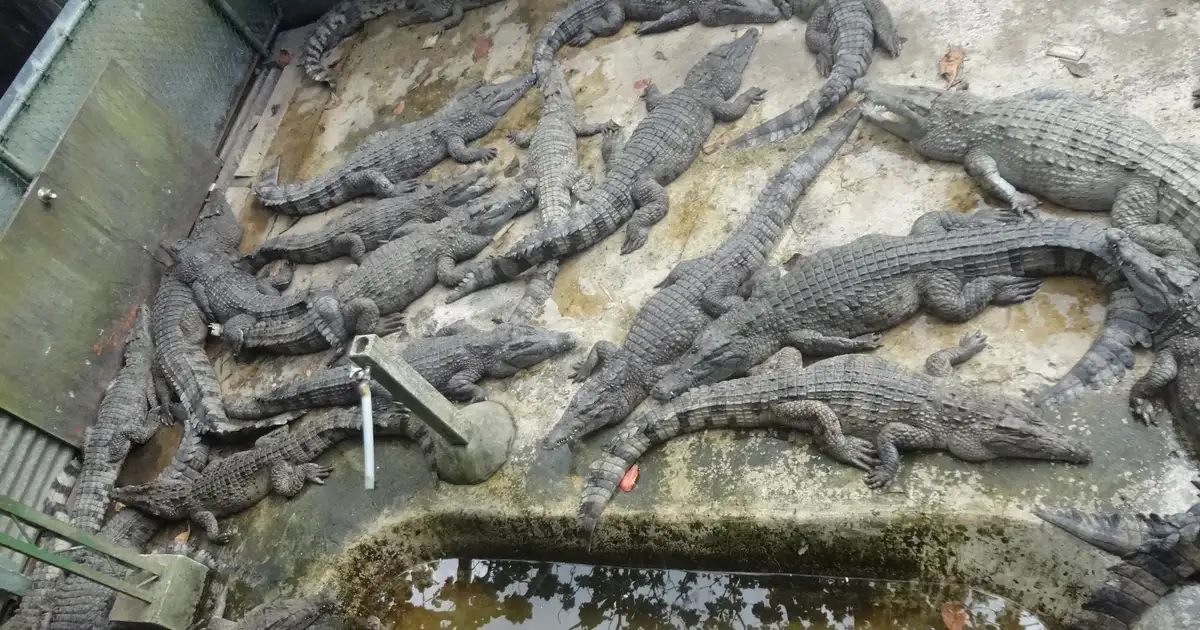

Nine days. That’s the unconscionable clock they ran down. A three-year-old boy, mauled in a crocodile pit, his life hanging by a thread – and the zoo, barely a week later, reopens its gates. This isn’t just a swift turnaround; it’s a calculated, full-court press to bury a public relations disaster before the outrage can even fully coalesce.
The incident itself wasn’t merely a “nightmare scenario”; it was a catastrophic breach of trust, a horrifying failure of fundamental safety protocols. A young child, a vulnerable three-year-old, was reportedly thrown into a crocodile enclosure, suffering injuries so severe they defy easy description. This wasn’t just a mishap; it was a devastating systemic failure, a loss of security that no family, no visitor, should ever have to confront within the supposed safety of a public attraction.

The decision to reopen those gates a mere nine days later isn’t just a tactical play; it’s an audacious gamble. It’s the equivalent of a desperate coach rushing a star player back onto the field after a brutal, game-changing hit, hoping the roar of the crowd drowns out the memory of the tackle. But let me be clear: the chilling image of that mauling, the sheer terror of a child in a crocodile pit, will not be so easily erased from the public consciousness.
The Swift Reopening: A Calculated Risk
Let’s dissect this playbook. Reopening with such unprecedented haste sends one undeniable message: either this institution conducted the most rapid, yet impossibly thorough, safety investigation in the annals of zoo history, or they are unequivocally prioritizing the bottom line – the gate receipts – over genuine accountability. As a seasoned analyst, my bet is firmly on the latter. This isn’t about due diligence; it’s about damage control.
This isn’t about deep reflection or a commitment to systemic change. This is a calculated maneuver to rush back to “normal” before public outrage can solidify into a permanent stain. They’re trying to move the ball down the field, to shift the narrative from a horrifying tragedy to a manufactured recovery, even if that recovery is clearly rushed, incomplete, and utterly superficial. It’s a bold move, yes, but one that reeks of desperation and a profound misjudgment of public sentiment.
Consider the families, the parents who now pause, clutching their children’s hands a little tighter, as they contemplate a visit. The indelible image of a three-year-old fighting for his life in a crocodile pit is now irrevocably etched into this institution’s legacy. To suggest that nine days offers sufficient time to genuinely identify, analyze, and rectify the profound systemic failures that enabled such a horror is frankly insulting. This isn’t a strategic overhaul; it’s a desperate, ill-advised timeout, a superficial patch-up job that fools no one.
Public Trust on the Line
The core issue, the very foundation upon which this institution stands, is public trust. Zoos operate under an implicit contract: they promise a safe, enriching, and educational experience. When that sacred promise is shattered in such a horrific, public manner, the onus is entirely on the institution to painstakingly earn that trust back. A speedy reopening, devoid of clear, detailed, and verifiable explanations of new safety protocols, doesn’t just “look like” damage control; it IS damage control, a cynical attempt to deflect from genuine accountability.
So, what exactly transpired in those nine days? Were new, impenetrable barriers erected? Was staff training rigorously intensified, or merely given a cursory review? Was the entire security apparatus fundamentally overhauled? The public doesn’t just “deserve” answers; they demand them. They need to understand the precise defensive plays being called, the concrete measures implemented to prevent another unspeakable tragedy. Without that absolute transparency, it’s not a feeling; it’s a certainty that this zoo is simply banking on the public’s short memory.
This isn’t merely an isolated incident confined to a single facility. This catastrophe casts a long, ominous shadow over every zoo in the nation. It forces a brutal reckoning, raising uncomfortable questions about how seriously these institutions genuinely uphold their paramount responsibility. A quick turnaround might salvage some immediate revenue, a fleeting financial win, but it will irrevocably cost far more in the currency of long-term credibility and public goodwill.
“Public confidence isn’t a switch you can simply flip back on,” stated Dr. Evelyn Reed, a leading crisis management specialist, in an interview with The Guardian. “It’s meticulously built on absolute transparency and demonstrable, verifiable change, not merely a rushed, cosmetic restart.”
The Bottom Line Playbook
Let’s be brutally blunt about the economics of this decision. Zoos, despite their noble claims of educational missions, are fundamentally businesses. Every single day their gates remain shuttered, money hemorrhages. Salaries must be paid, animal care is non-negotiable, and maintenance costs relentlessly pile up. For the leadership, the financial pressure to reopen wasn’t just immense; it was an overwhelming, undeniable force.
This is the cold, hard reality of the game, played out in the ledger. A catastrophic incident like this doesn’t just hit the headlines; it smashes the balance sheet. Insurance claims skyrocket, potential lawsuits loom large, and ticket sales evaporate. The decision to reopen with such speed is, unequivocally, a financial calculation – a ruthless strategy to minimize the immediate hit to the bottom line, even if it means gambling with the very fabric of public trust and long-term reputation.
But what is the true, ultimate cost of rushing this play? If another incident – even a minor one, a mere misstep – occurs, that initial nine-day reopening will be magnified a thousandfold. It won’t just “look like” a reckless sprint; it will be undeniably exposed as a negligent, cynical dash for cash. Sometimes, in the brutal calculus of the game, taking a strategic penalty to regroup and re-evaluate is not just smarter, it’s the only path to long-term survival.
Lessons for the League
This incident isn’t just a local tragedy; it’s a thunderous wake-up call, reverberating through every zoo and wildlife park across the nation. It brutally exposes the inherent, constant tension between providing public access to the awe-inspiring power of wild animals and guaranteeing absolute, uncompromising safety. The fundamental question must be confronted: How do we allow visitors to connect with these magnificent, powerful creatures while simultaneously ensuring that no child, under any circumstances, is ever again placed at such horrific risk?
The answer is anything but simple. It demands relentless, unwavering vigilance. It necessitates robust, multi-layered security systems. And most critically, it requires an absolute, non-negotiable commitment to safety protocols that are not merely written, but rigorously enforced. This means meticulously scrutinizing every single barrier, re-evaluating every operational procedure, and subjecting every staff member’s training to the highest possible standards. It means, without exception, prioritizing human life above all other considerations – above revenue, above convenience, above spectacle.
The swift reopening by this particular zoo is a tactical decision, yes, but it is nothing less than a colossal gamble. It presumes the public will conveniently forgive, rapidly forget, or simply shrug and move on. But in this age of instant information and perpetual digital memory, the collective consciousness is far from ephemeral. This desperate play might buy them a temporary reprieve, a fleeting moment of normalcy, but it carries an almost guaranteed risk of a catastrophic, game-losing fumble down the line.
Make no mistake: the game isn’t over. This zoo will now operate under an unforgiving microscope. Every operational decision, every purported new safety measure, every single visitor interaction will be subjected to intense, relentless scrutiny. They are now on the clock, compelled to definitively prove that nine days was not merely a cynical rush, but genuinely sufficient time for profound, meaningful change. They must prove, beyond any shadow of a doubt, that a child’s safety is not just a convenient talking point, but the absolute, non-negotiable top priority.
The ultimate question for the entire league remains: Will this brazen, aggressive restart serve as a stark warning to prioritize human life above all else, or will it tragically become a cynical blueprint for minimizing financial fallout from the next inevitable tragedy? Only time, and the vigilance of a wary public, will tell.
Source: Google News