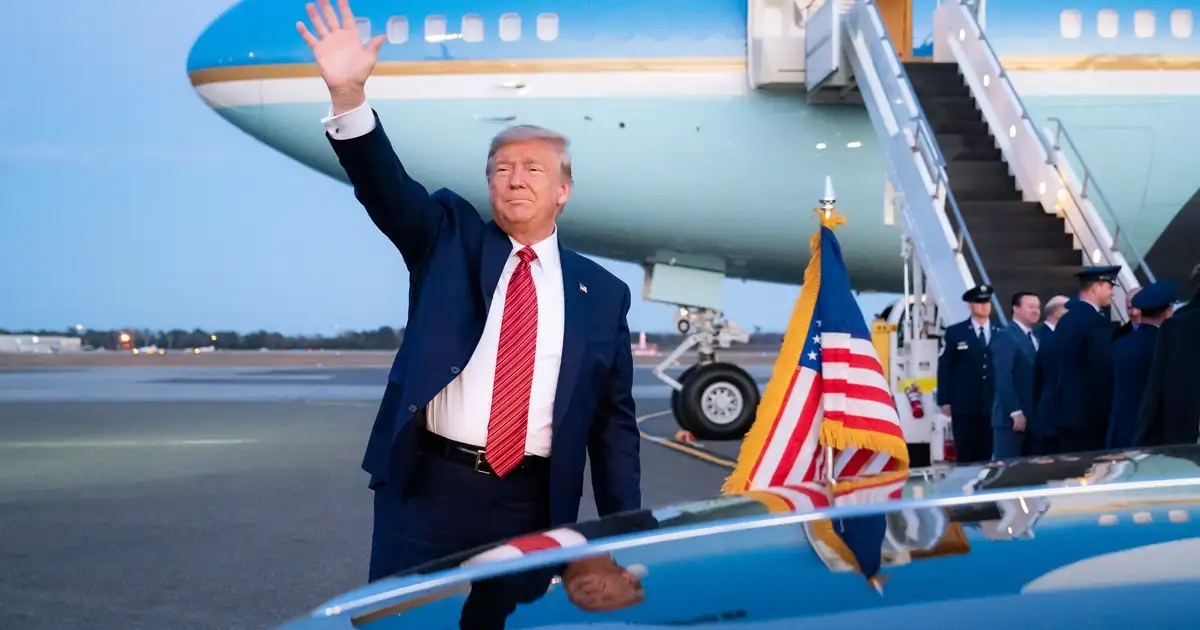

Forget the polite whispers of Washington; Donald Trump just detonated a political grenade in South Carolina. In a move that screams “I’m still in charge,” the former President has not merely suggested, but explicitly commanded, that Governor Henry McMaster appoint Darline Graham Nordone to the U.S. Senate. This isn’t just a nod to a familiar name; it’s a direct order to place the late Senator Lindsey Graham’s sister into his vacant seat, a power play that will reverberate far beyond the Palmetto State.
This isn’t a mere suggestion; it’s a presidential decree, delivered with the unmistakable force of a kingmaker. Trump has made his position crystal clear: he sees Nordone as the only choice. Governor McMaster, a man with his own political ambitions and a long history of operating in complex Republican politics, now faces an impossible decision that will define his legacy.
Trump’s Iron Fist in South Carolina Politics
The sudden and tragic passing of Senator Lindsey Graham on October 12, 2025, ripped a gaping hole in South Carolina’s political landscape. State law dictates that Governor McMaster must swiftly appoint an interim senator to serve until a special election can be held on March 4, 2026. For weeks, political insiders and state Republicans have been buzzing, their eyes fixed on McMaster’s every move, speculating on who would fill such a critical void.
A parade of prominent Republican names had been circulating, each with their own claims to the seat. Then, Trump, ever the disruptor, stepped into the fray. His abrupt and unequivocal endorsement of Nordone didn’t just change the conversation; it obliterated it.
This is a classic Trump maneuver: unexpected, audacious, and designed to send shockwaves through the establishment. It ruthlessly signals precisely who holds the reins of power within the Republican Party, even after his decisive victory in the 2024 presidential election.
Trump’s influence in South Carolina is not just undeniable; it’s absolute. He not only won the 2024 election, but his rallies still draw colossal crowds, and when he speaks, the vast majority of Republicans listen with an almost religious fervor. This isn’t just about filling a Senate seat; it’s a brutal test of loyalty, a demonstration of unwavering control, and a stark reminder that fealty to Trump often outweighs all other considerations.
The Graham Legacy: A Sister’s Unexpected Ascent?
Darline Graham Nordone is not, by any stretch of the imagination, a household political name. Her brother, Lindsey Graham, was a Washington fixture, a formidable senator, and a powerful, often controversial, voice for South Carolina for decades. Now, his sister, largely unknown in political circles, is thrust into a blinding national spotlight, not by her own ambition, but by the will of the former President.
Is Trump’s backing a genuine belief in Nordone’s untested abilities? Or is this a cold, calculated strategic play? Trump has a well-documented history of rewarding loyalty and valuing personal connections above all else.
Nordone’s deep family ties to Graham are undeniable, and this could be Trump’s idiosyncratic way of honoring a long-time ally. But let’s be brutally honest: it’s far more likely a shrewd move to ensure a loyal, predictable vote in the Senate—a safe vote that will never question his agenda.
As one veteran GOP strategist, who requested anonymity to speak candidly, remarked,
“When Trump backs someone, it’s rarely about their resume. It’s about their willingness to fall in line. This is a loyalty test, plain and simple, for both Nordone and McMaster.”
The crucial question isn’t whether she can do the job, but why Trump chose her specifically. What tangible gain does he anticipate from this particular appointment? For Trump, politics is rarely about nuanced policy debates; it is almost always about raw power dynamics, about sending an unmistakable message to friends and foes alike.
McMaster’s Political Chessboard: A Governor’s Agony
Governor McMaster now finds himself trapped in an unenviable position, walking a razor-thin tightrope. He is constitutionally obligated to choose an interim senator, but he also harbors his own political ambitions, and defying Trump is a perilous gamble.
Ignoring the President’s public directive would be an act of political suicide, risking the wrath of the most powerful figure in the Republican Party. Yet, slavishly following it might alienate other powerful state Republicans who had their own preferred candidates, individuals with established records and deep roots in South Carolina politics.
McMaster must meticulously weigh a multitude of factors. He must consider the precarious unity of the state party, his indispensable relationship with Trump, and the looming special election.
The interim appointee will immediately gain the immense advantage of incumbency, a colossal leg up in any electoral contest. This decision is not merely an administrative task; it’s a high-stakes political chess match with profound implications for his own future.
The Governor’s choice will be the ultimate test of his resolve, his independence, and his political acumen. Will he stand his ground, assert his authority, and pick his own candidate, someone perhaps more aligned with the state party’s traditional base?
Or will he meekly bow to the President’s wishes, further cementing Trump’s grip on the state? This is far more than just an appointment; it’s a battle for the soul of the South Carolina GOP.
The GOP’s Internal Fracture: Loyalty vs. Legacy
This entire situation brutally exposes the deep, festering cracks within the Republican Party. On one side stand the traditional conservatives, often valuing experience and established political hierarchies.
On the other are the unyielding Trump loyalists, whose allegiance to the man himself often supersedes all other considerations. Sometimes these factions align, but far too often, as we see now, they clash spectacularly.
Local party leaders undoubtedly had their favorites: candidates with proven track records, individuals who had patiently worked their way up through the ranks, demonstrating their commitment to the state. Now, an outsider, propelled by the sheer force of a powerful backer, is being shoved into contention. This isn’t just disruptive; it’s a direct challenge to the party’s internal mechanisms and its traditional power brokers.
This move could, and likely will, alienate a significant segment of the Republican base, fostering resentment and deepening existing schisms. Yet, paradoxically, it also serves to solidify Trump’s iron grip on the party, showcasing his unparalleled ability to dictate choices, even from his private residence, even for a coveted Senate seat. He proves, once again, that his word is law.
South Carolina’s Future: A State Held Hostage?
South Carolina voters deserve strong, effective representation. They lost their senator suddenly and tragically.
Now they face a swift, politically charged appointment, followed by a special election that will undoubtedly be overshadowed by national drama. This creates an unsettling cloud of uncertainty over the state’s political future.
Will Nordone be an effective senator? Does she possess the necessary experience, the policy acumen, the political grit to step into such a demanding and high-profile role? These are not trivial questions; they are absolutely crucial.
The state desperately needs someone ready to work from day one, someone who genuinely understands the complex needs of South Carolinians, someone who can hit the ground running in Washington.
Trump’s choice, however, shifts the focus entirely onto his own colossal influence, overshadowing other potentially more qualified candidates. It makes the decision less about the specific needs and desires of South Carolina, and more about Washington power plays and loyalty tests. This, sadly, is the brutal reality of modern politics: personal connections and unwavering fealty often trump experience, qualifications, and even the best interests of the constituents.
The Trump Factor
Source: Google News