
President Donald Trump’s World Cup intervention wasn’t just sideline chatter; it was a political grenade detonated squarely within the USMNT locker room, ultimately shattering their World Cup dream with a brutal 3-1 quarter-final loss to Belgium. This wasn’t merely noise; it was a catastrophic tactical misfire, a self-inflicted wound that crippled the squad when laser-like focus was paramount.
The saga began when Folarin Balogun, the USMNT’s electrifying top striker, received a controversial red card on July 10, 2026. This pivotal moment occurred during the Round of 16 clash against arch-rivals Mexico, a game the USA still managed to clinch 2-1 in a hard-fought extra-time victory. However, Balogun’s suspension meant he would miss the crucial quarter-final, a gaping hole in the American offensive strategy.

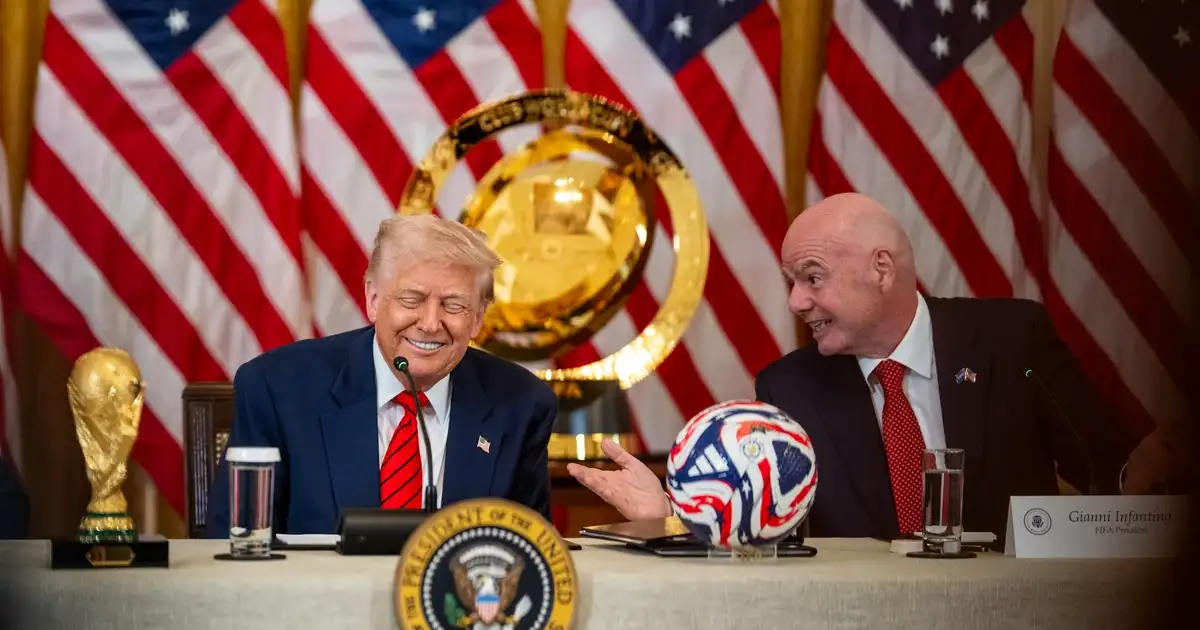
Just one day later, on July 11, 2026, President Trump plunged headfirst into the fray. Utilizing his platform on Truth Social and amplifying his message through conservative media outlets, he launched a blistering attack on FIFA’s officiating. He branded the red card “a disgrace” and provocatively suggested it was a deliberate, politically motivated maneuver designed to derail the American team’s progress.
The President’s Unprecedented Sideline Interference
President Trump’s involvement transcended mere vocal support; it was a direct demand for action, an unprecedented intrusion into international football. He reportedly pressured the U.S. Soccer Federation (USSF) to formally protest the officiating decision.
Trump even hinted at “potential diplomatic repercussions” if the perceived “unfairness” was not rectified. This wasn’t a gentle nudge; it was a full-court press from the Oval Office, imposing a political agenda directly onto the pitch.
His public condemnation, delivered with characteristic force, left no room for ambiguity:
“The red card given to our great Folarin Balogun was an absolute disgrace! FIFA is rigged against America. This is a total witch hunt against our boys. The USSF must protest this immediately. We cannot stand for this unfairness!”
This was no quiet word of encouragement. This was a political firestorm, a category-five hurricane dropped squarely into the heart of a World Cup campaign. The noise intensified, morphing into a genuine media circus that, as players later confirmed, became impossible to ignore. How could a team, isolated in its tournament bubble, possibly shield itself from the most powerful voice in the country?
The USMNT then faced a formidable Belgium squad on July 12, 2026, without their star striker. Despite a valiant effort, the USA ultimately succumbed, losing 3-1 and ending their World Cup journey. The absence of Balogun, who had already netted an impressive 3 goals in 4 matches, was not merely a loss of firepower; it was a fundamental shift in their attacking identity, forcing Coach Berhalter to scramble for a viable alternative that simply wasn’t there.
Balogun’s Blunt Assessment: The Truth from the Field
The very next day, July 13, 2026, Balogun delivered a searingly direct message to President Trump. Communicating through trusted intermediaries, he made it unequivocally clear: the President’s high-profile public push did cause significant problems. Reports from The Athletic and CNN swiftly corroborated this damning account.
Balogun, ever the professional, acknowledged the underlying sentiment of support. However, he emphasized that the relentless political commentary amplified the controversy to an unbearable degree. It created an insidious, toxic cloud of distraction and pressure for the entire squad.
This was particularly damaging “in the critical hours leading up to the Belgium game,” when mental fortitude and singular focus should have been the team’s only concern. The team was already grappling with the gut punch of losing their leading scorer and the emotional high of a dramatic victory over Mexico. To then be thrust into a political maelstrom made it agonizingly difficult to “just focus on the football,” as Balogun’s message reportedly stated. This isn’t mere speculation or punditry; this is direct, unvarnished feedback from the player whose career was directly impacted.
The Devastating Cost of External Noise
USMNT Coach Gregg Berhalter, a man known for his measured demeanor, echoed Balogun’s sentiment, albeit with diplomatic caution. After the painful Belgium loss, he stated:
“Losing Folarin was a huge blow, no doubt. He’s a game-changer. We tried to keep the focus purely on football, but in a tournament of this magnitude, there’s always a lot of external noise. My job is to shield the players from that as much as possible, but it’s not always easy.”
Berhalter’s words highlight the impossible task he faced. How do you shield an entire squad from the direct, public pronouncements of the most powerful office in the world?
President Trump’s intervention wasn’t just a tweet or a casual remark; it was a directive, a political demand. This placed the USSF in an untenable position.
To follow through on a politically charged protest risked severe FIFA sanctions. Yet, to ignore the President risked domestic political fallout. The team was caught in a geopolitical vise.
The USSF, by design, prefers official, diplomatic channels for disputes, adhering to established international protocols. Trump’s bombastic approach bypassed all of that, forcing an already stressed team to contend with a new, unforeseen opponent: overt political interference. The psychological toll of this added burden cannot be overstated. Players were not just preparing for a match; they faced a political minefield.
The raw numbers from the Belgium match paint a stark picture: Belgium 3, USA 1. The USA managed a mere 9 shots (only 3 on target) and controlled just 45% possession. Their lone goal came from Christian Pulisic in the 62nd minute, a moment of individual brilliance that couldn’t overcome the collective deficit. Losing Balogun, their most potent attacking threat, undeniably hurt their tactical options. But to dismiss the mental drain, the insidious psychological erosion caused by the “circus-like atmosphere” and the political pressure, would be a profound analytical error.
Gus Callahan’s Take: When Politics Invades the Pitch
This entire episode rips the mask off the naive notion that sports exist in a pristine, apolitical vacuum. President Trump’s actions weren’t solely about a questionable red card.
They were a calculated assertion of influence, a deliberate effort to craft a narrative. This was a play to a base that relishes a fight against perceived injustice.
Whether this actually helped the team’s performance was, tragically, a secondary concern. The true motive here, as I see it, is power.
It’s about demonstrating leverage, even over an international governing body like FIFA. The devastating consequence, however, was borne entirely by the players.
They were caught in the crossfire of a political performance, pawns in a larger game. It cost them dearly on the field, extinguishing a World Cup dream that was within their grasp.
This isn’t just about a soccer game anymore. This is a chilling illustration of the increasing politicization of everything, a trend where powerful figures exploit national symbols, like a World Cup team, for their own agenda. And when that happens, the athletes — the very individuals tasked with representing their nation’s sporting pride — are the ones who pay the ultimate price.
Balogun’s brave, direct feedback is not just a complaint; it’s a stark, undeniable wake-up call. Athletes are not political pawns.
They are elite professionals striving to perform at the absolute pinnacle of their sport. External noise, especially from the highest office in the land, is not support.
It is a corrosive distraction that can, and in this case, did, derail dreams and shatter national aspirations.
Ultimately, the USMNT’s World Cup run ended, not solely because of Belgium’s skill or Balogun’s absence. It ended because the pressure cooker had too many external leaks, politically engineered and strategically deployed. This incident sets a dangerous and deeply troubling precedent for future political entanglement in sports, a shadow cast over the beautiful game that will linger for years to come.
Source: Google News