
President Donald Trump has just thrown a tactical bomb across America’s northern border. He’s not just threatening Canada with massive tariffs; he’s initiating a brutal economic blitz, directly linking persistent wildfire smoke to a high-stakes trade war. This isn’t merely about clean air; it’s a calculated power play, a direct challenge to a key ally, and a warning shot heard across the globe.
For days, an invisible enemy has choked U.S. cities, a stark indicator of Canada’s escalating wildfire crisis. On July 16, 2026, air quality alerts weren’t just warnings; they were a declaration of environmental siege across the Midwest and Northeast.

Chicago registered a “very unhealthy” AQI of 220, forcing residents indoors and disrupting daily life. Both New York City and Detroit grappled with “unhealthy” levels soaring up to 195. Millions of Americans are struggling to breathe, their skies a perpetual haze, and President Trump isn’t about to let that stand without a fight.
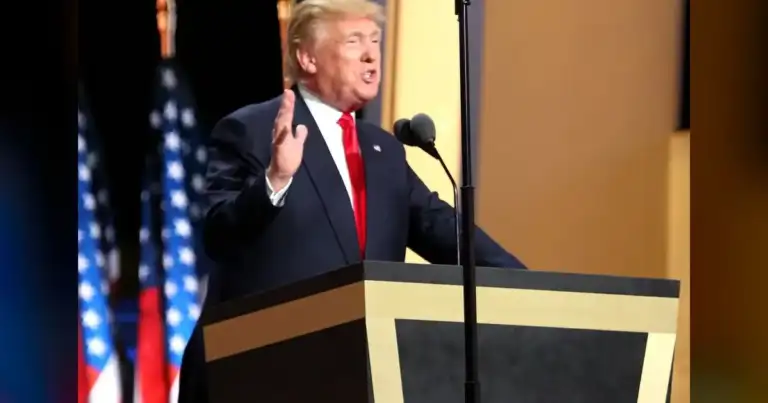
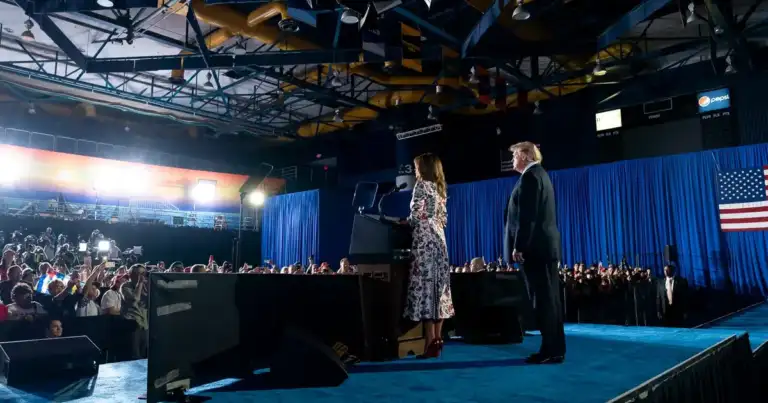
Trump didn’t mince words, delivering his message with the precision of a quarterback calling an audible. At a rally in Green Bay, Wisconsin, on July 17, 2026, he branded the smoke a “disgrace,” a direct affront to American health and prosperity.
His stance was unyielding, his directive clear: Canada needs to “get its act together,” or face the full force of American economic might. This isn’t a request; it’s an ultimatum.
Trump’s Tariff Blitz: A Full-Court Press
The President’s threat is unambiguous, a direct economic hit: “immediately impose massive tariffs on Canadian timber, oil, and other key products.” This isn’t a negotiating tactic; it’s a declaration of intent, a full-court press designed to force Canada’s hand.
Trump frames it as an “America First” defense, protecting not just American health but also the economy from the fallout of uncontrolled fires. He believes that if the smoke impacts American productivity and well-being, Canada must be held accountable, even if it means disrupting decades of established trade relationships.
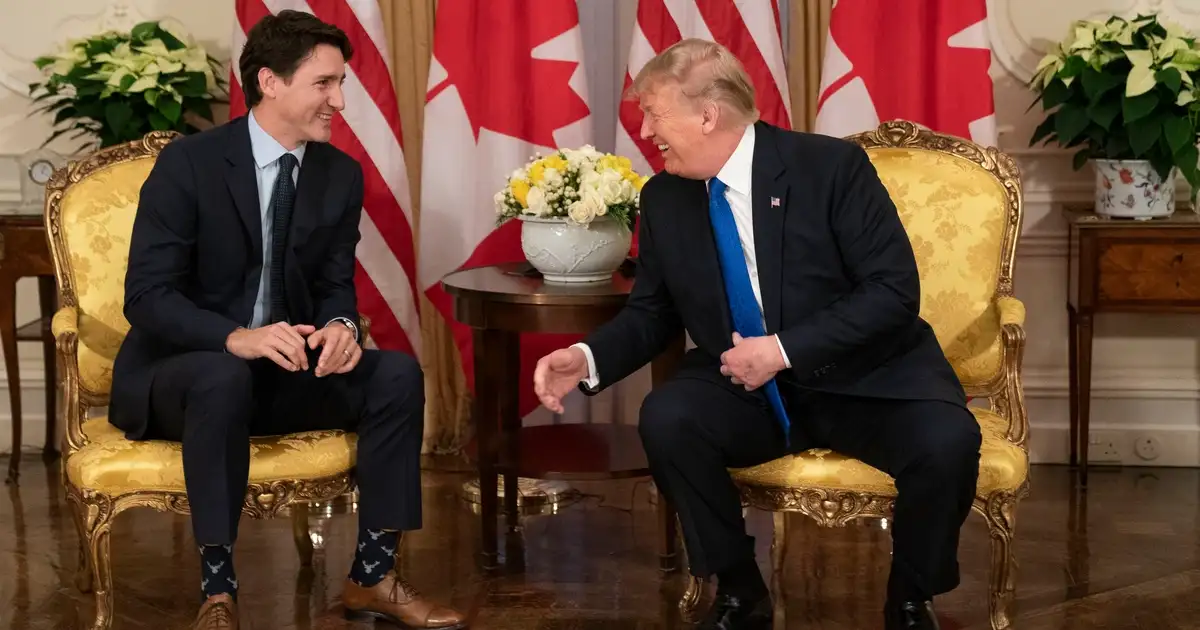
Canadian Prime Minister Justin Trudeau, visibly taken aback by the aggressive posture, fired back with diplomatic indignation. He expressed deep disappointment, calling Trump’s remarks “unhelpful and counterproductive.” Trudeau correctly argued that wildfires are a shared crisis, a consequence of broader environmental challenges that transcend national borders.
“Wildfires are a shared challenge exacerbated by climate change,” Prime Minister Trudeau stated, his voice firm but measured. “Tariffs would harm both economies and do nothing to address the underlying issue. This is a moment for collaboration, not confrontation.”
Trudeau highlighted ongoing collaboration with U.S. agencies, emphasizing that Canadian and American firefighters often battle these blazes side-by-side. His message was clear: the solution lies in teamwork and shared resources, not punitive trade wars that would only compound the suffering on both sides of the border.
The Economic Playbook: High-Stakes Wager
This tariff threat is a high-stakes gamble, a classic Trumpian maneuver to exert maximum leverage. Tariffs on Canadian goods, particularly vital sectors like lumber and oil, would send shockwaves through the American economy.
Imagine the immediate impact: construction costs would skyrocket, making new homes and infrastructure projects significantly more expensive. Manufacturing supply chains, already delicate, would feel an immediate and painful pinch, leading to production delays and increased operational costs for countless U.S. businesses.
Ultimately, American consumers would bear the brunt of these tariffs, paying more for everything from building materials to the gas in their tanks. But the economic pain wouldn’t stop there.
The very real danger of retaliatory tariffs from Canada looms large. Should Ottawa decide to hit back, U.S. exporters, particularly those in agriculture, automotive, and technology sectors, could face their own economic devastation, potentially losing access to one of their largest and most reliable markets. Is the perceived benefit of forcing Canada’s hand truly worth the inevitable cost to the American wallet and the stability of the North American economy?
This is a classic Trump power play, using economic leverage as a blunt instrument to achieve a desired outcome. His goal is to force Canada into more aggressive fire prevention and suppression strategies, perhaps even demanding significant financial investment or policy changes. But the tactical question remains: at what cost does this “America First” approach come, and will the economic fallout outweigh any environmental gains?
Beyond the Smoke Screen: Unpacking the Strategy
Environmental groups across both nations are watching this escalating situation with profound concern. Many argue that both the U.S. and Canada fall short in addressing the systemic issues that fuel these increasingly intense wildfires.
Climate change, they assert, is the undeniable driver behind these catastrophic events, transforming once-manageable blazes into uncontrollable infernos. From this perspective, Trump’s tariff threat, while seemingly decisive, risks becoming a dangerous distraction.
It pulls focus from the critical need for long-term, collaborative strategies to combat climate change and its devastating consequences, instead opting for a short-term, punitive measure.
The current U.S. administration, under President Trump, has also maintained channels for cooperation, revealing a layered and potentially contradictory approach. While Trump delivers the hard talk and tariff threats, other officials within his administration continue to emphasize bilateral aid and joint efforts in fighting wildfires.
This suggests a calculated strategy: the President’s public aggression serves to apply pressure, while behind-the-scenes diplomacy attempts to maintain some semblance of collaboration.
Is this a genuine environmental push, aimed at protecting American air quality, or is it primarily a political power play, leveraging a natural disaster to gain concessions in other areas of trade or policy?
Trump has a well-documented history of using tariffs as a potent negotiating tool, and this situation could very well be another example of his “art of the deal” applied to international relations.
The Diplomatic Scrimmage: Alliance Under Fire
The stakes are incredibly high for U.S.-Canada relations, an alliance that has long been a bedrock of North American stability. These two nations share not just the world’s longest undefended border but also deep economic, cultural, and security ties.
A trade war, triggered by a natural disaster, would strain that bond to its breaking point, impacting far more than just the flow of timber and oil. It would erode trust, foster resentment, and potentially destabilize a crucial geopolitical partnership.
This isn’t just about the immediate impact of smoke; it’s about fundamental issues of sovereignty and economic might. Canada, grappling with a crisis exacerbated by global climate shifts, feels unjustly targeted for a natural disaster largely beyond its immediate control. To be hit with tariffs under such circumstances is a tough, bitter pill to swallow, perceived as an act of hostility rather than a gesture of support from its closest ally.
President Trump is playing hardball, and his message is crystal clear: when American health and well-being are perceived to be at risk, he will deploy every tool in his arsenal, regardless of the diplomatic fallout. Even if it means hitting allies where it hurts most, he is prepared to act. This is the new, unforgiving reality of international relations under his leadership, where traditional alliances are secondary to perceived national interest.
The question isn’t whether the smoke is bad—it undeniably is. The real question, the one that will define this diplomatic scrimmage, is what America will ultimately pay for this aggressive strategy.
Tariffs are a blunt instrument, always carrying a hidden cost that often falls squarely on the shoulders of the very citizens they are meant to protect. Who truly pays the price in this high-stakes game, and are the gains worth the potential damage to a vital alliance?
Source: Google News