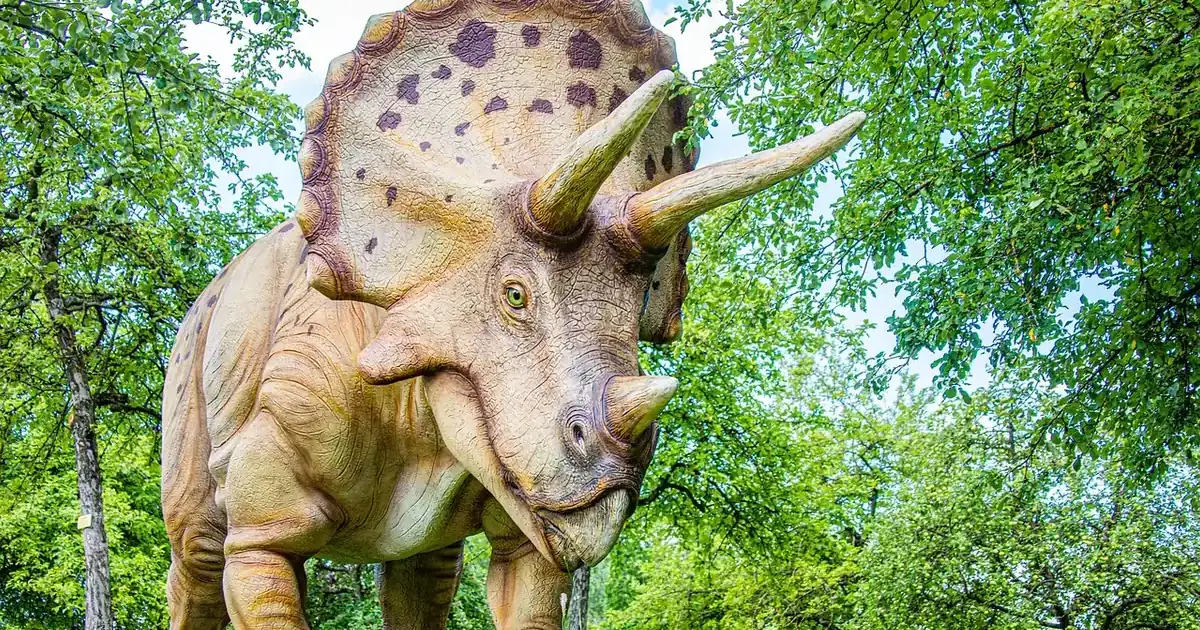

Imagine holding a piece of history so profound, so awe-inspiring, it once thundered across prehistoric landscapes 66 million years ago. On July 20, 2026, one discerning collector turned that extraordinary vision into reality, as a magnificent Triceratops skeleton named “Thor” fetched an astonishing $15 million USD at Christie’s in Paris. This isn’t just a record-breaking sale; it’s a seismic shift, a clear signal that dinosaur fossils are the new, ultimate must-have asset for the ultra-wealthy.
The sale of “Thor,” a breathtaking specimen dating back to the late Cretaceous period, far surpassed its pre-sale estimate of $8-12 million. The buyer, as is often the case in these high-stakes private transactions, remains anonymous, adding to the mystique. This landmark acquisition doesn’t just break records; it unequivocally cements a fascinating trend: ancient history is now the ultimate modern commodity, reflecting unparalleled taste and vision.

The Ultimate Trophy Asset: Owning Prehistory
These aren’t merely scientific relics; they are the crown jewels of an exclusive collecting world. For the ultra-wealthy, dinosaur fossils have transcended the museum display to become the ultimate trophy asset – a singular statement of power, intellect, and profound connection to Earth’s epic past. What could possibly speak louder than owning a piece of life from 66 million years ago?
Beyond the undeniable prestige, these unique pieces of natural history offer a tangible hedge against inflation, a physical asset that defies market whims. They make an undeniable statement of unparalleled luxury, a conversation starter unlike any other. As James Hyslop, Head of Science and Natural History at Christie’s, eloquently articulated:
The sale of ‘Thor’ for $15 million demonstrates the incredible global demand for these magnificent relics of our planet’s past. It’s more than an investment; it’s the acquisition of a unique piece of natural history, a true marvel.
The market’s roaring ascent is undeniable. Just five years prior, ‘Big John’ the Triceratops set a record in 2021, selling for approximately $7.6 million. “Thor” nearly doubled that staggering figure, signaling not just growth, but an explosion in value.
This niche market, once considered esoteric, has quietly outperformed many traditional luxury sectors. It has seen an estimated 15-20% annual growth rate over the last five years, reflecting the primal human desire to connect with the incredible.
Investing in Extinction: A Long-Term Roar or a Fleeting Bubble?
This begs the question that echoes through every high-stakes market: Is this phenomenal ascent a sustainable, long-term roar of value, or merely a fleeting, magnificent bubble for the ultra-rich? To truly understand, we must explore its unique, captivating dynamics.
Firstly, the supply is exquisitely finite. Only a precious handful of complete, display-quality dinosaur skeletons are unearthed globally each decade. This inherent, profound scarcity ensures that demand will perpetually outstrip supply, a fundamental and unshakeable driver of value in any luxury market.
However, this market is undeniably specialized and, crucially, illiquid. Reselling a multi-million dollar fossil is not a quick transaction; it can take considerable time, and finding a buyer at your desired price is never guaranteed. This makes it a less flexible investment than traditional assets, demanding patience and a long-term perspective.
Yet, beneath the glittering surface of record sales, a profound ethical debate rages. For paleontologists like Dr. Evelyn Reed of the Natural History Museum, every private sale of a significant fossil is a collective loss, a piece of our shared heritage vanishing behind closed doors. She voices serious alarm:
Every time a significant fossil goes into private hands, it’s a loss for collective human knowledge. These are not just decorative objects; they are scientific libraries.
This tension between scientific preservation and private ownership is a complex one. It hints at potential future regulations regarding fossil export or sale that could indeed impact market dynamics.
Yet, the appeal as a “trophy asset” remains incredibly strong. This segment of the market, driven by unparalleled prestige and uniqueness rather than just financial return, often proves less sensitive to broader economic downturns. As one astute art market analyst recently observed in Bloomberg:
The fossil market is driven by scarcity and narrative. These are truly unique assets. For a certain class of investor, it’s a tangible, inflation-resistant store of value that also offers immense bragging rights.
What This Means for Your Portfolio
So, what does this prehistoric gold rush mean for the modern investor? While the allure of owning a scientifically significant fossil as a long-term store of value is undeniable, this is not a venture for the uninitiated. This is a niche, high-risk, high-reward investment, primarily suited for sophisticated collectors with exceptionally deep pockets and an understanding of its unique challenges. It’s certainly not for the faint of heart, or those looking for quick liquidity.
For those with the vision and the means, however, acquiring a piece of geological time is more than an investment; it’s an unparalleled luxury, a profound statement, and a tangible legacy that whispers of ancient power and enduring wonder. It’s a market that demands not just deep pockets, but a keen eye for both groundbreaking science and breathtaking spectacle. Are you ready to make your own roar in history?
Source: Google News