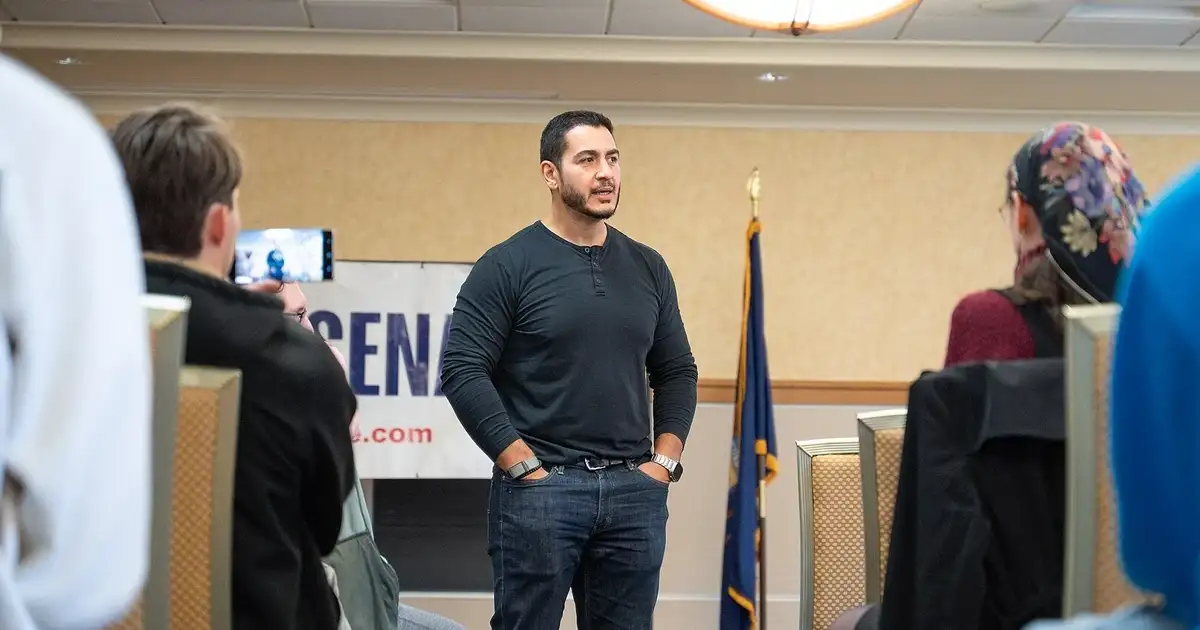

Michigan Democrats, it seems, are determined to snatch defeat from the jaws of a potential victory. The party is in a full-blown panic after Abdul El-Sayed barely clinched the nomination for the 10th Congressional District. This razor-thin victory on August 4th immediately sent shockwaves through party leadership, sparking fears they just handed a crucial battleground seat to Republicans on a silver platter.
El-Sayed, a progressive firebrand whose political star has long been watched by the left, secured the win against moderate State Senator Lena Hakim by a mere 527 votes. That’s a microscopic 0.8% margin in a total vote count of 68,607. Hakim, ever the pragmatist, conceded on August 5th, issuing the usual calls for unity. But the damage, many insiders contend, might already be done.

This bruising, divisive primary has left the Democratic Party fractured and profoundly vulnerable, a luxury they absolutely cannot afford in a district this volatile.
The Razor’s Edge: MI-10 and the National Stakes
This Michigan MI-10 district isn’t just a political tightrope walk; it’s a cliffhanger. Its Cook Partisan Voter Index of D+2 means it barely leans Democratic, making it less a ‘lean’ and more a ‘teeter.’ This isn’t merely a prime target for flips; it’s a political landmine, primed to detonate, a true battleground where national majorities are won and lost.
The district encompasses a complex mix of diverse suburban and exurban areas stretching from the fringes of Detroit. These aren’t monolithic liberal bastions; they’re home to the quintessential swing voters – often independent-minded, fiscally conservative but socially moderate, and deeply concerned with local economic issues – who ultimately decide elections.
This is precisely why national Democrats had, until now, poured considerable resources into holding it, viewing it as an essential bulwark against a resurgent GOP.
Now, they face a candidate whose platform is widely perceived as too far left for these crucial swing voters. It’s not just a gamble; it’s an existential bet with the House majority hanging precariously in the balance. Can El-Sayed, a physician and public health advocate, convince a skeptical electorate that his progressive vision aligns with their pragmatic concerns about jobs, inflation, and local infrastructure? The party, it seems, is holding its breath.
Marcus Thorne: The GOP’s Unexpected Gift
Republicans aren’t just optimistic; they’re practically popping champagne corks. Their nominee, former State Representative Marcus Thorne, is already on the offensive, seizing on El-Sayed’s primary victory as a gift from the political gods. Thorne is a known quantity in the district, a seasoned politician with deep local business ties that resonate with the area’s entrepreneurial spirit and working-class ethos.
Thorne’s political brand is a carefully cultivated moderate-conservative image, perfectly positioned to attract the very independent voters El-Sayed’s progressive platform might alienate. Thorne’s campaign wasted no time, quickly linking El-Sayed to what they characterize as “radical” national figures and policies, painting him as out of touch with Michigan’s pragmatic values. This isn’t just rhetoric; it’s a strategic move designed to define El-Sayed before he can define himself.
“El-Sayed’s radical agenda is out of step with Michigan values. Voters in the 10th District deserve a representative who will fight for common-sense solutions, not socialist pipe dreams that will only hurt our economy and our families.”
— Marcus Thorne, Republican Nominee, MI-10, in a statement to CNBC
The GOP sees this as a prime, perhaps even unmissable, opportunity to flip a seat that should, by all accounts, be a Democratic hold. They will relentlessly hammer El-Sayed as too extreme, too disconnected from the practical concerns of working-class Michigan voters. This narrative isn’t merely gaining traction; it’s already deeply embedded in the local political discourse.
Democrats’ Unity Crisis: A Fractured Front
The primary results lay bare a deep, festering split within the Democratic Party. El-Sayed’s ardent supporters hail his win as a clear mandate for bold progressive action, convinced he can energize the base, inspire new voters, and fundamentally shift the political conversation. They believe the party needs to stop playing defense and start offering a compelling, unapologetically progressive alternative.
“This victory belongs to the people of Michigan who are ready for real change, not incremental adjustments. We will take our fight for justice and equity to every corner of this district, because the status quo is simply unacceptable.”
— Abdul El-Sayed, Democratic Nominee, MI-10, speaking to The Guardian
However, moderate Democrats and those aligned with Hakim are sounding a deafening alarm. They view El-Sayed’s platform not as a strength, but as a significant liability, one that makes him an easy, almost inevitable, target for Republican attacks. Whispers from leaked internal Democratic polling aren’t just concerning; they’re outright terrifying: El-Sayed, by all accounts, is already trailing Thorne. For a party clinging to a slim House majority, this isn’t just a terrifying prospect; it’s a nightmare scenario unfolding in real-time.
Historically, divisive primaries like this one often lead to lower enthusiasm and turnout among the losing faction. Convincing Hakim’s supporters, many of whom feel disenfranchised and ignored, to enthusiastically rally behind El-Sayed is not just a monumental task; it’s a political tightrope walk without a safety net. El-Sayed doesn’t just need every single Democratic vote; he needs to inspire a level of unity that has proven elusive in recent cycles.
National Implications and the Resource Reallocation Dilemma
This Michigan primary isn’t merely a local skirmish; it’s a critical bellwether for the national Democratic Party. It exposes their ongoing struggle to balance their progressive and moderate wings, a struggle that is now playing out with high stakes in a crucial swing state. With a razor-thin majority in the House, losing MI-10 would be a devastating blow, forcing them to divert precious resources and fight even harder for other, potentially less winnable, seats across the country.
Publicly, party leaders are, predictably, calling for unity. Michigan Democratic Party Chairwoman Sarah Chen has publicly affirmed her commitment to the nominee.
“This race is going to be a tough fight, no doubt about it. But we are committed to providing Abdul with the resources he needs to win and keep this critical seat blue. We will not cede an inch.”
— Michigan Democratic Party Chairwoman Sarah Chen, in an interview with CNN
Privately, however, sources close to the Democratic Congressional Campaign Committee (DCCC) suggest significant anxiety, bordering on outright panic. Democratic strategists are reportedly reassessing their financial and organizational commitments, weighing the cost of a potentially unwinnable race against the need to shore up more secure districts. This means El-Sayed might not receive the full, unfettered support he desperately needs, potentially leaving him to fend for himself against a well-funded Republican machine.
His previous, unsuccessful run for Governor in 2018, where he lost the primary, isn’t just a historical footnote; it’s a flashing red light for strategists, a warning now amplified. This is his first successful federal primary, and he now faces a general election where his past political missteps and progressive stances will undoubtedly be weaponized by Thorne and the GOP.
For the average Michigander, this race isn’t abstract; it directly determines their representation in Washington. It will impact federal policy on everything from healthcare access and environmental regulations to economic development and infrastructure spending. The choice between El-Sayed’s ambitious progressive vision and Thorne’s more traditional, “common-sense solutions” is stark, reflecting a national ideological chasm.
The ongoing tension within the Democratic Party isn’t just a luxury they cannot afford; it’s a self-inflicted wound in a district that has notoriously flipped between parties repeatedly. Not in a state as crucial as Michigan, a perennial battleground that often dictates national electoral outcomes.
The Democratic Party gambled in MI-10, allowing a progressive candidate with perceived electability issues to squeak through. Now, they face the very real possibility of losing a critical seat, a loss that could derail their entire strategy for House control. The panic isn’t just justified; it’s a chilling harbinger of what’s to come.
Photo: Conlan Houston
Source: Google News