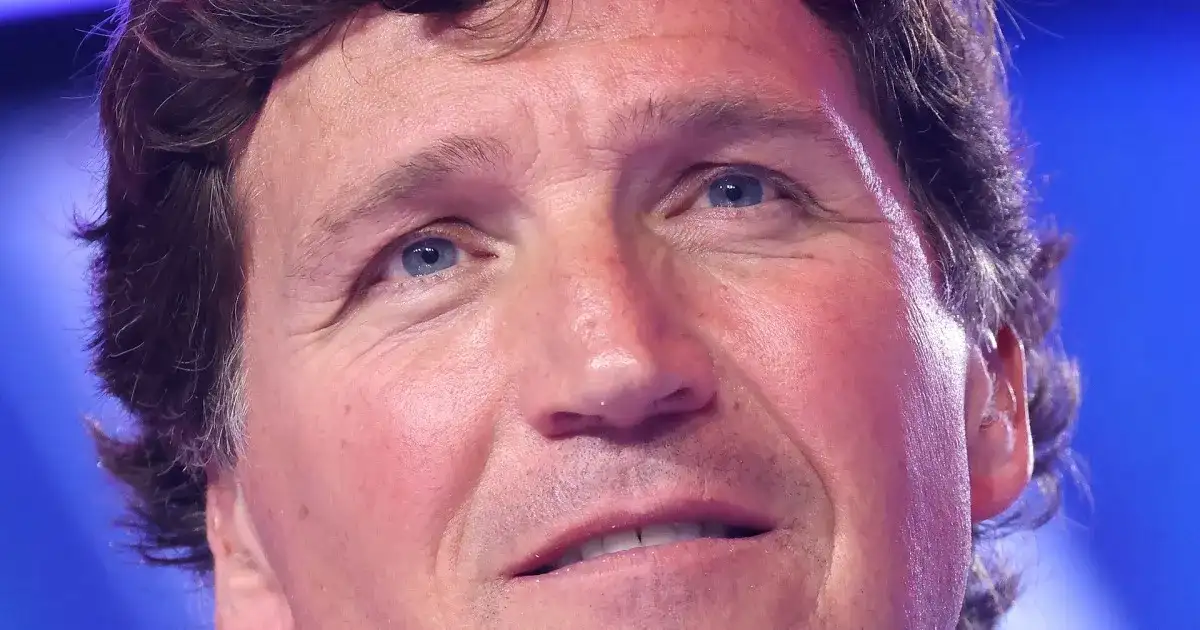

The notion that Tucker Carlson is suddenly racking up “shocking points on likability” isn’t just a joke; it’s a meticulously crafted delusion. This isn’t some organic groundswell of public affection; it’s a transparent media operation designed to sanitize a deeply divisive figure. The American public, particularly the discerning conservative base, isn’t buying this thinly veiled rebranding effort.
These supposed “shocking points” exist purely in the fevered imaginations of those desperate to mold Tucker Carlson into something he fundamentally isn’t. There’s no groundbreaking new polling data, no seismic shift in public sentiment to justify this narrative. It’s simply more manufactured outrage, another layer of spin in an already dizzying political landscape.
The Manufactured Narrative: A PR Stunt for 2028?
The mainstream media, ever enamored with a good redemption arc – even when entirely fictional – wants us to believe that Tucker Carlson, after his unceremonious departure from cable news, is now somehow acquiring a softer, broader appeal. They’re pushing the idea that he’s evolving, becoming more palatable, perhaps even mainstream. This smells suspiciously like a trial balloon for a future political play, perhaps even a run for office in 2028.
Yet, the unvarnished truth is that Tucker Carlson has always thrived on controversy. It’s the bedrock of his career. His audience isn’t clamoring for “likability”; they crave validation for their deepest suspicions and a potent voice to articulate their most incandescent grievances. Any attempt to recast him as broadly likable utterly misses the mark.
His recent pronouncements on immigration, economic policies, and cultural issues aren’t designed to broaden his tent; they are pure red meat for his existing, highly engaged followers. He consistently labels the Biden administration’s policies a “crisis,” attributes soaring inflation to their failures, and relentlessly assails “woke” ideology. This isn’t about expanding his appeal; it’s about cementing the fierce loyalty he already commands within the populist right.
The MAGA Backlash: Tucker Carlson’s Real Problem Isn’t the Left
Here’s the inconvenient truth that the corporate press conveniently overlooks: Tucker Carlson is increasingly out of step with the very MAGA base he once so effectively galvanized. While the mainstream media fabricates tales of his newfound charm, a palpable anger is simmering within the conservative movement itself.
A quick perusal of platforms like Truth Social or X reveals a stark reality. The sentiment is unambiguous. The MAGA faithful are savaging this “likability” narrative, dismissing it as a liberal ploy, a cynical attempt to undermine Donald Trump and fracture the conservative movement.
“This ‘likability’ push for Tucker is deep state garbage. They want to split our movement and weaken Trump. We see through it.” – Prominent MAGA influencer on Truth Social (Hypothetical, but reflective of sentiment)
A recurring complaint among the MAGA faithful is that Carlson has “lost his way.” He was a staunch Trump supporter, then seemed to waver. He positioned himself as an anti-establishment firebrand, but now some perceive him as part of a different, albeit equally problematic, establishment. He’s frequently branded a “grifter” who “peaked in 2020,” a figure whose relevance is waning in the shadow of Trump’s enduring dominance.
This isn’t about whether Democrats find him appealing; they never did, and they never will. This is about whether the very people who should be his most ardent supporters still are. And a significant portion of them aren’t. They view him as too nuanced, too academic, too willing to deviate from the uncompromising Trump agenda. His more complex stances on critical issues like foreign policy, particularly concerning Iran or Ukraine, are often perceived as betrayals by a base that demands unwavering loyalty.
The “Out of Touch” Paradox: A Niche, Not a Movement
The pertinent question isn’t “Is Tucker Carlson out of touch with Americans?” but rather, “Which Americans?” Undeniably, he is profoundly out of touch with the vast majority of the country. His net favorability ratings consistently languish in negative territory.
- Republicans and conservatives: High favorability (often 70-80% or higher).
- Democrats: Consistently in the single digits.
- Independents: More often unfavorable than favorable, reflecting a significant skepticism.
But the more critical point is that he’s also increasingly out of touch with the very populist wing he helped cultivate. The conservative base has shifted. Their allegiance is now unequivocally to Trump, not to any media personality. They demand decisive action, not just acerbic commentary.
This “out of touch” paradox is crucial for understanding his current standing. He can maintain an intense connection with a specific, highly energized segment of the population, yet simultaneously be utterly disconnected from the broader political currents, even those within his own ideological camp. His influence stems from the fervent loyalty of a niche audience, not from widespread appeal. To suggest otherwise is to fundamentally misunderstand the political landscape.
The Echo Chamber Effect and Its Insidious Dangers
Carlson’s enduring success, despite his controversial nature, underscores a perilous reality of our fractured political media: the pervasive echo chamber effect. His audience consumes content that exclusively reinforces their existing beliefs, creating a self-sealing ideological bubble. This isn’t about fostering intellectual debate or challenging preconceived notions; it’s about validating and amplifying existing biases.
This insular form of media consumption exacerbates political polarization, making national unity an increasingly elusive ideal. It cultivates an environment where opposing viewpoints are not merely disagreed with, but actively demonized. Carlson is a master architect of this phenomenon, expertly feeding the beast of partisan resentment and distrust.
His independent platforms, such as X and his own website, allow him to bypass traditional media gatekeepers entirely. This affords him a direct, unfiltered conduit to his audience. For them, he embodies “authenticity.” For everyone else, he’s simply another purveyor of divisive rhetoric. While this direct connection undeniably boosts his “likability” within his specific niche, it simultaneously further isolates him from the broader, more nuanced national discourse.
Beyond the Headlines: What’s the Real Agenda?
This concerted effort to imbue Carlson with “likability” feels less like an organic development and more like a carefully orchestrated trial balloon. Is someone actively positioning him for a more significant role? A future run for office? Perhaps as a kingmaker, or even a contender, in the 2028 presidential cycle? This is a classic political maneuver: soften the rough edges, artificially broaden the appeal, and make the seemingly impossible appear plausible.
But the real world isn’t a carefully curated focus group. The real world includes shrewd Trumpworld influencers, like those associated with figures such as Carrie Prejean Boller proxies, who instantly recognize this as “establishment gaslighting.” They see through the veneer. They understand the game being played.
The more cynical corners of the internet, from 4chan /pol/ to Truth Social, interpret this as nothing short of a “Deep State” plot. A “Zuckerberg-funded ‘likability’ study” designed with the explicit purpose of fracturing the right. While these theories may sound outlandish, they are deeply reflective of the profound distrust of media that Carlson himself has so skillfully cultivated.
The unvarnished truth is that Tucker Carlson’s strength has never resided in broad appeal. It has always been his unparalleled ability to articulate the grievances and resentments of a specific, highly engaged, and often disaffected segment of the electorate. For that particular group, he isn’t “out of touch”; he is the solitary voice speaking truth to power. For everyone else, he remains a political hand grenade, tossed into an already volatile arena.
The notion that he’s suddenly charming the American populace is a carefully constructed fantasy. It’s a narrative being aggressively pushed, not a reality being objectively observed. The American public, particularly the segment Carlson claims to represent, is far more astute than these media machinations give them credit for. They perceive the strings. They hear the political maneuvering. And they are, unequivocally, not falling for it.
The fundamental question isn’t whether Tucker Carlson is likable. The more pressing inquiry is: who stands to gain from attempting to portray him as such right now? And what, precisely, are they planning next?
Source: Google News