
The Pentagon’s unprecedented demand for Ford and General Motors to pivot to weapons manufacturing isn’t merely a patriotic call to arms; it’s a chilling admission of America’s military fragility under President Trump and a desperate gambit to rescue both depleted war chests and struggling auto giants.
Deputy Secretary of Defense Kathleen Hicks delivered this blunt ultimatum on April 15, 2026, speaking not from a secure briefing room but a virtual summit hosted by the National Defense Industrial Association (NDIA). Her message was stark: the U.S. defense industrial base, stretched thin by the ongoing US-Iran War and the relentless flow of aid to Ukraine, is teetering on the brink.

Hicks’s remarks weren’t subtle; they were a direct, unequivocal command to America’s industrial titans: re-orient your colossal manufacturing capabilities towards national security. This urgent directive arrived on the heels of a truly chilling Pentagon report, issued just a day prior on April 14, 2026, which laid bare critical, systemic shortfalls across the spectrum of essential military supplies.
The New Arsenal of Necessity
America’s fabled industrial might, once the envy of the world, now faces its most profound test since Pearl Harbor. This desperate call to automakers isn’t merely a historical echo; it’s a direct, urgent invocation of Franklin Roosevelt’s “Arsenal of Democracy.” In that era, Ford’s sprawling River Rouge complex famously transitioned from cars to B-24 bombers, while General Motors’ factories, from Flint to Detroit, churned out a relentless torrent of tanks, engines, and weaponry.
Today, the adversary may wear a different face, but the stakes in the brutal US-Iran War are no less existential. The stark truth is this: America’s current defense production lines are not just slow; they are catastrophically inadequate.
The grim details from the Pentagon report paint a stark picture:
- The report confirmed major shortfalls in critical areas, including munitions, precision-guided missiles, and air defense systems.
- Replenishing crucial assets like Javelin anti-tank missiles and Stinger anti-aircraft missiles will take an alarming 3-5 years at current, anemic production levels.
- The U.S. has sent over $75 billion in security assistance to Ukraine since 2022, a commitment that has significantly and dangerously drawn down existing domestic stocks.
The strategic imperative is undeniable, the threats facing the nation are profoundly real, and the capacity to both support allies and credibly deter adversaries demands an industrial base far more robust than what currently exists. While President Trump’s administration may have inherited a depleted arsenal, the onus is now squarely on his leadership to rebuild it.
This isn’t some abstract geopolitical exercise; we are in an active, grinding conflict. The volatile Strait of Hormuz remains a powder keg, and America’s fighting forces require a relentless, immediate flow of materiel, not promises or projections.
Detroit’s Double Duty
Why Ford and GM, titans of the automotive world? The answer is brutally pragmatic: their sheer scale and industrial prowess utterly dwarf the capacities of many traditional defense contractors. Consider the raw numbers: Ford’s 2025 revenue hovered around a staggering $180 billion, while GM’s wasn’t far behind, pulling in approximately $175 billion.
These aren’t just car companies; they are industrial behemoths commanding sprawling factory complexes, cutting-edge advanced robotics, and vast armies of skilled engineers and laborers. For them, a pivot to military production isn’t just a new revenue stream; it’s a potential lifeline, a politically potent public relations coup, and a chance to burnish their patriotic credentials.
Indeed, the timing for Detroit couldn’t be more opportune. The much-hyped electric vehicle (EV) market has decidedly failed to ignite as promised, leaving automakers grappling with stagnant sales and burgeoning inventories. This Pentagon request, therefore, isn’t just a potential lifeline; it’s a providential intervention, offering a critical new purpose and immense government capital for their vast, underutilized industrial infrastructure.
This gambit extends far beyond mere national defense. It is, at its core, a bold stroke of industrial policy, designed to inject a strategic shot in the arm for American manufacturing. The government isn’t simply asking; it’s actively engineering a massive new demand curve, reshaping the economic landscape for the benefit of domestic industry.
An unnamed Ford executive told Reuters on April 16, 2026: “We have the capacity, the engineering talent, and the patriotic spirit. The challenge is understanding the specific needs, the regulatory hurdles, and ensuring it makes business sense. We’ve done this before, but the landscape is different now.”
Make no mistake, the operational hurdles are formidable. Retooling sprawling automotive plants for precision defense manufacturing is an intricate, capital-intensive undertaking. Defense specifications are notoriously stringent, and the regulatory labyrinth is a beast unto itself. Yet, the allure of massive, long-term government contracts, guaranteed by the exigencies of war, represents an incentive so potent it can reshape entire corporate strategies.
Trump’s Industrial Gambit
This aggressive push emanates directly from President Trump’s Pentagon, a decisive maneuver to confront the gaping vulnerabilities laid bare by decades of chronic underproduction and brutally exacerbated by the relentless drumbeat of global conflicts.
This administration, under Trump, has never shied away from wielding industrial policy as a blunt instrument of national power, particularly in its fervent drive to resurrect “Made in America” manufacturing. This initiative isn’t merely a good fit; it’s the very embodiment of that vision, simultaneously bolstering domestic production, creating vital jobs, and, crucially, shoring up national readiness.
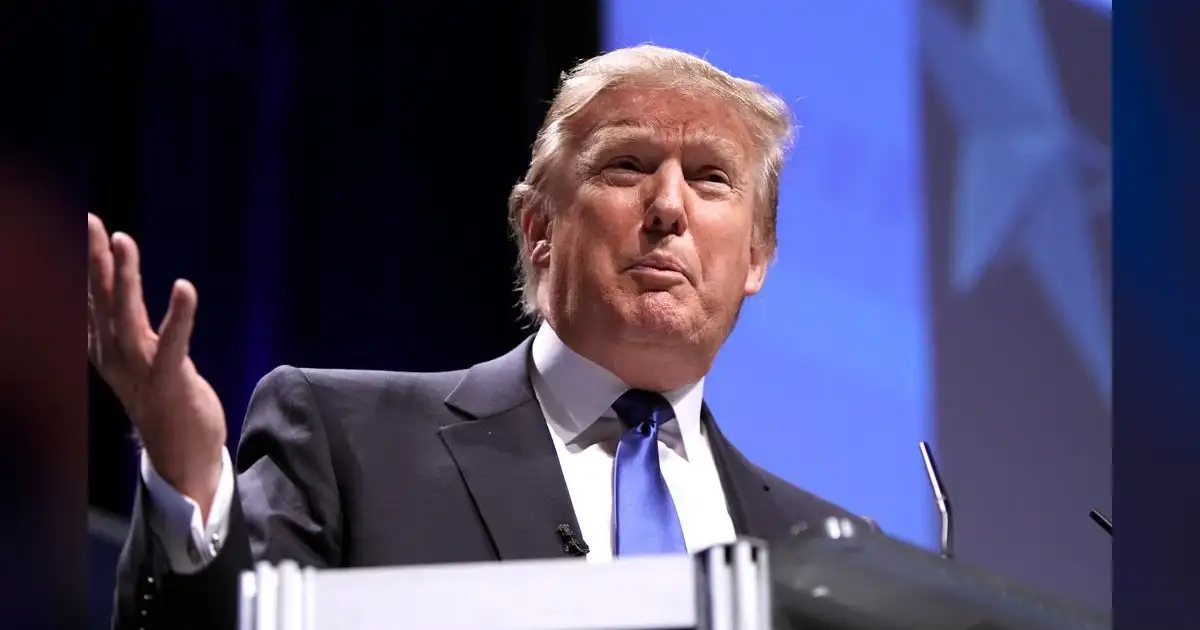
Photo: Photo by Gage Skidmore on Openverse (flickr) (https://www.flickr.com/photos/22007612@N05/25750371716)
Source: Google News