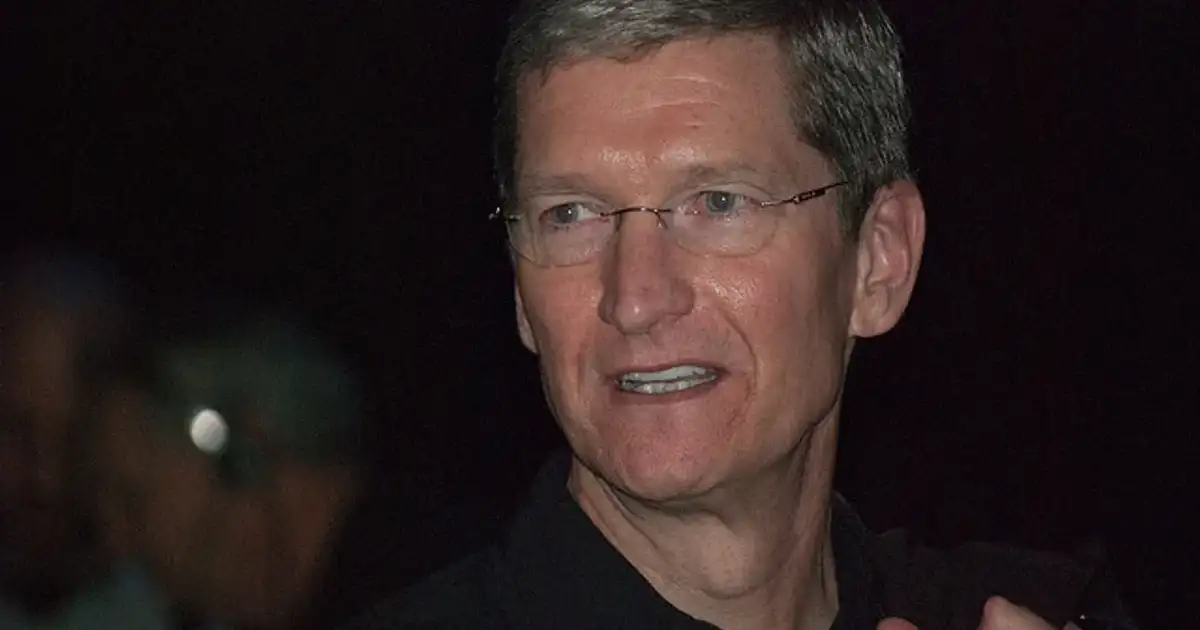

Beneath the polished veneer of Cupertino, a strategic maneuver is underway that speaks volumes about Apple’s future and its past. On September 1, 2026, Tim Cook will step down as Apple CEO, a move that is anything but a quiet retirement. Instead, it’s a meticulously calculated exit, positioning John Ternus squarely in the hot seat to confront the formidable challenges ahead.
Cook’s transition to Executive Chairman might appear a cushy perch, a ceremonial role designed for a triumphant farewell. Yet, the tech world isn’t buzzing with praise; it’s humming with cynical speculation. This isn’t merely a succession plan; it’s a meticulously choreographed dodge, an attempt to insulate a legacy from the storm clouds gathering on Apple’s horizon.

Cook’s Calculated Retreat
Cook’s nearly two-decade tenure, particularly his fifteen years at the helm, has been undeniably transformative for Apple’s market capitalization, witnessing an incredible 700% surge in stock value. This era saw the launch of wildly successful new product categories like the Apple Watch and AirPods, alongside the ambitious, albeit nascent, Vision Pro. His most ardent supporters laud him as a strategic genius, crediting aggressive stock buybacks and a relentless expansion into services for cementing Apple’s position as the world’s most valuable company.
But the once-unblemished shine is fading fast, revealing deep fissures beneath the surface of those impressive financial figures. Despite the astronomical valuation, Apple is struggling where it matters most for the future: innovation. The industry buzz isn’t about groundbreaking triumphs; it’s a cacophony of criticism surrounding Apple’s glaring AI blunders.
The recent “Apple Intelligence” rollout, particularly its much-touted Siri enhancements, was widely perceived as a disjointed mess. Critics across tech media, from The Verge to CNBC, decried its features as “premature” and woefully overhyped, especially when compared to the rapid advancements from competitors. Cook had promised a revolution in personal AI; what the market received was, at best, a hesitant whimper.
This departure screams of profoundly bad optics, arriving precisely on the heels of a cascade of high-profile executive departures. The exits of key figures like Andreas Adams, Sreeraman Jackson, John Giannandrea, and Eddy Dye within a relatively short period represent far more than a routine reshuffle. This isn’t a smooth transition; it’s a significant brain drain, eroding institutional knowledge and signaling deeper internal turmoil.
Compounding these internal woes, escalating global tariffs and geopolitical tensions are hammering Apple’s supply chain and, consequently, its shares. In this volatile climate, Cook’s carefully timed exit looks less like a triumphant victory lap and more like a tactical retreat, a calculated maneuver to outrun the gathering storm before it fully breaks.
The AI Accountability Dodge
The public, particularly the highly engaged communities across social media platforms like Reddit and X, isn’t buying into any heroic exit narrative. Instead, the digital sphere is ablaze with cynicism, with many users openly labeling Cook’s move a “masterstroke” designed to strategically dodge accountability for Apple’s increasingly apparent AI failures.
The question isn’t “if” but “how deliberately” Cook is escaping accountability. For over a decade, he steered the Apple ship. Now, as the colossal AI wave — arguably the most significant technological shift since the internet — threatens to capsize those who aren’t prepared, he conveniently steps aside. This timing is not merely coincidental; it is unequivocally intentional.
He wants to avoid the intense scrutiny that will inevitably accompany Apple’s next phase of AI development. He wants to escape the escalating fallout from persistent Trump-era trade tensions, which continue to complicate Apple’s global manufacturing footprint. Cook, ever the master strategist, is cutting ties with the operational hot seat precisely before these biggest, most unpredictable storms truly hit.
Let’s be clear: this isn’t primarily about burnishing a legacy. It’s about shrewd self-preservation, ensuring his reputation remains untarnished by the difficult, potentially messy, years ahead. He is, quite simply, leaving the most complex and strategically vital clean-up job to his successor.
Ternus Takes the Hot Seat
Enter John Ternus, the new CEO, previously Apple’s respected hardware chief. On paper, his promotion makes perfect sense: Apple’s legendary hardware division, under his stewardship, continues to deliver. The iPhone remains a cash cow, and other devices consistently keep the money flowing, underpinning the company’s immense profitability.
But software, particularly its critical AI capabilities, is a vastly different and far more concerning story. Many within the industry argue that Apple’s software innovation has been stagnating, if not actively “rotting,” for years, increasingly burdened by bloat and a lack of genuine breakthrough. Ternus inherits an AI division not just in limbo, but arguably adrift, lacking a clear, compelling vision. This isn’t merely a challenge; it is, without hyperbole, a poisoned chalice.
The entire maneuver feels like a masterclass in “choreographed chaos.” It’s not a panic-driven reaction, but rather a deliberate, controlled purge of the old guard, designed to grant Ternus unfettered authority. Consider the decisive, often ruthless, house-clearing tactics of Jack Welch at GE, aimed at preventing the all-too-common “shadow CEO” disasters that plague many corporate transitions.
Recall the protracted, public mess at Disney involving the awkward power struggle between Bob Iger and Bob Chapek? Apple, clearly, is determined to avoid such a debilitating scenario. Cook is clearing the deck completely, ensuring no lingering presence can undermine his successor’s mandate.
Indeed, whispers from Cupertino insiders suggest Ternus was anointed months ago, his path to the top meticulously paved. The carefully managed “leaks” to outlets like Bloomberg were likely nothing more than strategic theater, a public relations ballet designed to soften the news. This was a done deal, long planned, executed with typical Apple precision.
What’s Next for Apple’s Innovation?
Ternus now faces immense, almost existential, pressure. His immediate, non-negotiable mandate is to not just deliver, but revolutionize real AI innovation. Cook’s later era, while financially successful, largely focused on expanding services and delivering incremental hardware upgrades. That conservative, iterative approach simply won’t cut it in the current, hyper-competitive tech landscape.
The market no longer tolerates complacency; it demands disruption, not just refinement. Competitors like Google, Microsoft, and OpenAI are not just moving fast; they are setting the pace, rapidly deploying advanced AI capabilities across their ecosystems. Apple has demonstrably fallen behind in the critical AI race, and Ternus’s primary objective must be to not just catch up, but to leapfrog, and quickly.
He must fundamentally revitalize Apple’s software division, injecting it with the same innovative spirit that once defined its hardware. He must reignite the genuine passion for groundbreaking design and intuitive function that seems to have waned. The entire company, from its core engineering teams to its product visionaries, desperately needs a jolt, a return to its audacious roots.
This transition isn’t merely about a CEO changing seats; it’s about the very soul of Apple. Can this tech behemoth truly innovate with the visionary ghost of its founder, Steve Jobs, no longer a direct influence, and now with Cook’s powerful, but different, legacy receding? Or has Apple become irrevocably too corporate, too cautious, too focused on quarterly earnings to recapture its pioneering spirit?
The September 1, 2026, handover is more than a pivotal moment; it’s a reckoning. It unequivocally marks the end of an era defined by unprecedented financial growth but also by a creeping conservatism in innovation. It ushers in a new, profoundly uncertain chapter for the tech giant, one where its very identity as an innovation leader hangs in the balance.
Ternus has a monumental task: to prove he is far more than just Cook’s handpicked, loyal successor. He must demonstrate, unequivocally and swiftly, that he possesses the vision and the audacity to steer Apple into a truly new age of technological leadership. This means nothing less than a radical overhaul of Apple’s AI strategy, transforming it from a liability into a defining strength.
Cook is out, his legacy secured, at least for now. The blame game for Apple’s current innovation deficit is already underway. John Ternus is now in the hottest seat in tech, facing an unforgiving market and a skeptical public. He must deliver genuine, groundbreaking innovation, or Apple, once the undisputed titan of tech, risks not just falling behind, but truly starting to unravel.
Source: Google News