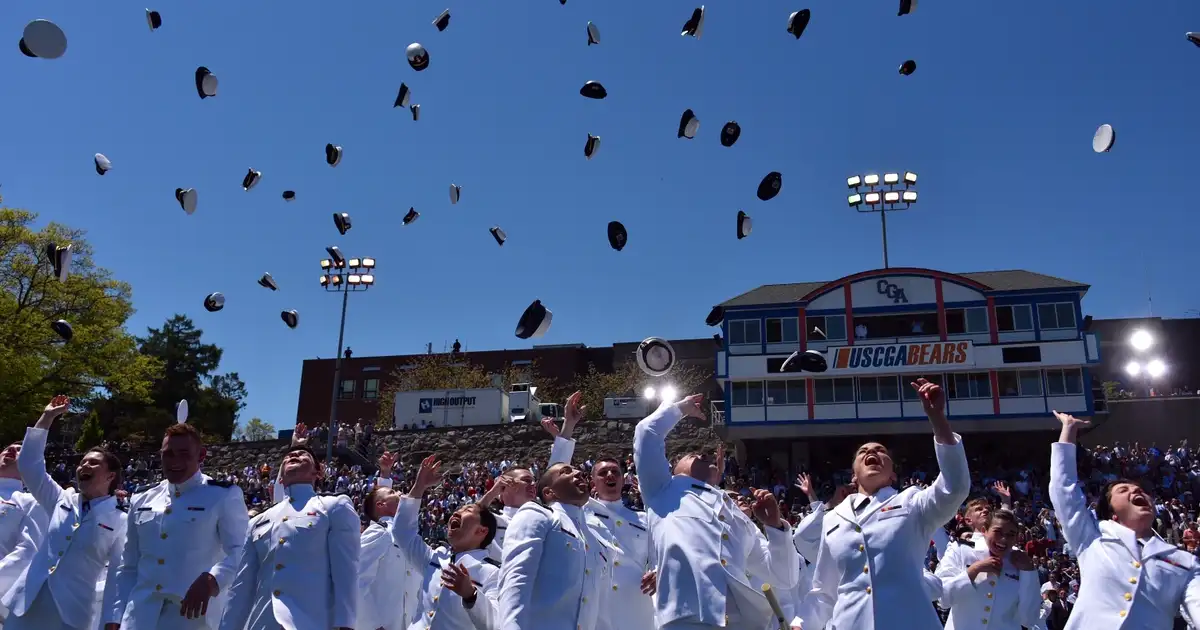

President Donald Trump delivered an unconventional commencement address at the U.S. Coast Guard Academy. He ran an offensive play that left many scratching their heads. He fawned over “hunky” graduates, gripped their biceps, and quipped, “I hate good looking men.” This high-risk, high-reward strategy either scored big or resulted in a major fumble.
The scene unfolded on Tuesday, May 19, 2026, in New London, Connecticut, during the 145th commencement exercises. Trump quickly veered off prepared remarks, making physical appearance and personal interaction the focus. This was a complete change of formation mid-play.

Eyewitness accounts and video footage confirm the President approached several male cadets. He complimented their “strength” and “good looks” with palpable enthusiasm. He then gripped their biceps, as if personally verifying their physical conditioning. The quip, “I hate good looking men,” drew nervous laughter and awkward silence. This moment underscored the stark contrast between traditional military solemnity and the Trump brand of unfiltered engagement.
A Coach’s Eye on Decorum: Analyzing the Play
Here’s the real score: Is this appropriate behavior from a sitting Commander-in-Chief at a military commencement? From a purely tactical standpoint, it’s a bold, even audacious, move designed to generate attention. But let’s be clear, it deviates significantly from the established game plan for such hallowed events.
Historically, military academy speeches are solemn and inspirational. They instill pride and reinforce the gravity of service. Trump’s actions—unsolicited physical contact and personal comments—shattered these norms. It felt less like a formal address and more like a locker-room pep talk. The message about the occasion’s seriousness is, at best, muddled.
Critics, as expected, were quick to flag this as a clear breach of traditional military protocol. One anonymous graduate, speaking to The New York Times, captured the sentiment perfectly: “It was… certainly not what I expected. A bit surreal.” This behavior shifts the focus from the graduates’ achievements, trivializing their moment of triumph. It turns it into a spectacle centered solely on the speaker’s antics, a dangerous play that risks alienating those being honored.
The Unwritten Rules of the Sideline: Impact on the Team
This behavior raises fundamental questions about professionalism and the chain of command. A President making such comments and physical interactions can undeniably undermine the military’s disciplined nature. It risks trivializing graduates’ immense dedication, rigorous training, and profound commitment. We’re talking about men and women preparing to put their lives on the line, not audition for a bodybuilding competition.
Think about the power dynamics at play here. A President holds immense, almost unparalleled, authority. Comments on physical appearance and unsolicited physical contact, even if intended as complimentary, can create significant discomfort. This is especially true in a professional military setting, where it can feel objectifying. This is absolutely not how you foster respect, discipline, and trust within the ranks. A leader’s actions must always project unwavering professionalism and respect for the institution.
“This isn’t just a gaffe; it’s a deliberate performance that speaks volumes about his disregard for institutional norms and his unique approach to public engagement.”
That’s what one astute political analyst on CNN observed, and it’s tough to argue with that take. This wasn’t a spontaneous slip of the tongue; this was a calculated move. It was a deliberate choice to engage in a manner he knows will generate buzz and resonate with his base. The question, then, becomes: at what cost to the institutions he leads?
For many, such conduct feels undignified, a stark contrast to the gravitas expected of a presidential address. It makes people question judgment, especially for someone who holds, or aspires to hold, military command. The armed forces demand a steady hand, a clear vision, and an unwavering commitment to decorum and respect, not a showman seeking to entertain. The stakes are simply too high for anything less.
Playing to the Crowd, or Off the Script? The Trump Strategy
President Trump has a well-documented history of off-the-cuff remarks and a theatrical approach to public speaking. His addresses frequently include personal observations, often veering significantly from prepared remarks. This incident, therefore, fits a consistent pattern of his unconventional approach to formal events. It’s part of his brand, a deliberate strategy to distinguish himself from traditional politicians.
His supporters, predictably, rallied to defend the speech. A political commentator on Fox News succinctly stated, “He’s just being himself. That’s why people love him. He connects with people on a real level.” For them, it humanizes the event, creating a direct, personal connection that a more conventional politician might never achieve. It’s a key component of his enduring appeal, demonstrating he’s not just another politician.
However, the official response from the Coast Guard Academy’s public affairs office was notably reserved. They declined to comment on the specifics of the President’s remarks. Instead, they emphasized the graduates’ immense dedication to service and the solemnity of the occasion. That silence speaks volumes about institutional discomfort. It’s a quiet but firm attempt to steer the narrative back to what truly matters.
This wasn’t an isolated incident, either. Trump has delivered other military academy addresses. Those speeches often included significant political commentary and personal anecdotes that diverged sharply from typical commencement rhetoric. This is his established brand, a consistent pattern of engagement that prioritizes personal connection and media impact over traditional protocol. He understands the power of a viral moment.
Indeed, the event quickly went viral online. Clips and commentary flooded social media platforms, making it a top trending topic for days. This ensures the incident will remain a talking point, influencing public opinion and shaping narratives about his political future. He knows precisely how to grab the spotlight, how to dominate the news cycle, and how to keep his base energized. It’s a masterclass in media manipulation, regardless of your take on the content.
For me, as an analyst, it boils down to one critical question: what kind of leadership does the military deserve? Authenticity and charisma cannot sacrifice decorum and respect for institutions. Coast Guard graduates earned their moment through rigorous training and unwavering commitment. They deserve respect for their immense dedication and service. Their commencement should be a profound honor, not a political sideshow. A true leader understands when to play to the crowd and when to uphold the game’s integrity. The President chose a risky, attention-grabbing play, and the debate over its wisdom will continue to echo.
Source: Google News