
The abyss has finally given up its secrets, and they are horrifying. The first images from inside the Maldives death cave—a watery tomb for five Italian divers—rip open more than just a debate; they expose the brutal reality of our hunger for the extreme. Will this gut-wrenching visual evidence finally drag global regulations for extreme diving out of the murky depths, or will it just be another forgotten tragedy?
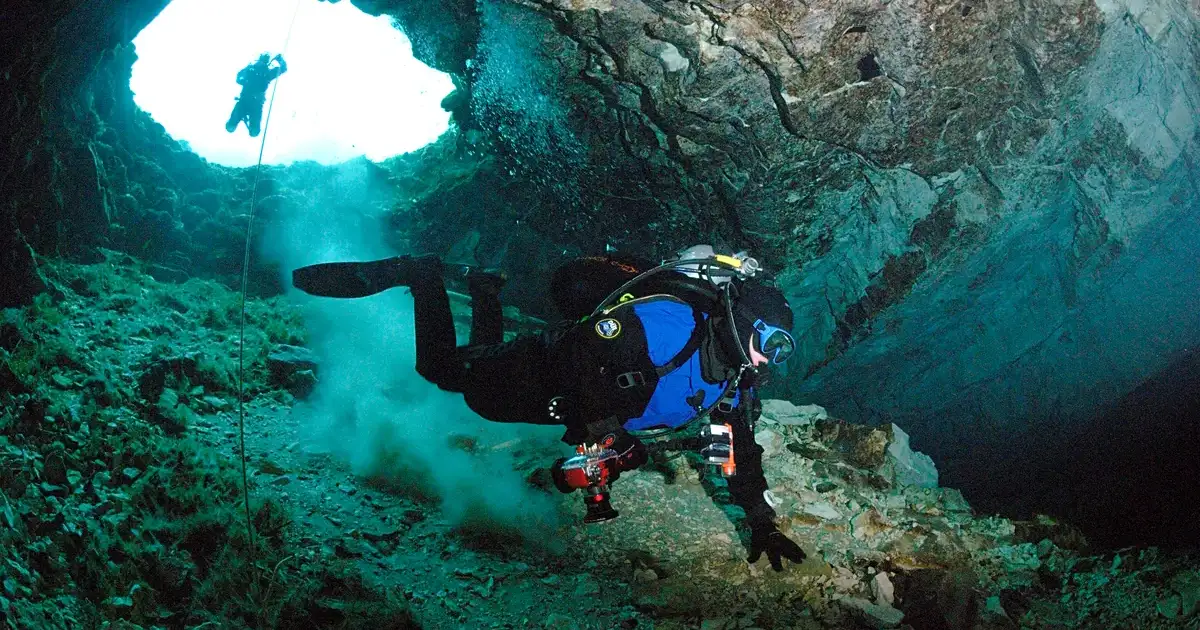
This week, the joint Maldivian-Italian rescue team released the photographs. Captured by remotely operated underwater vehicles (ROVs), these images offer an unflinching, brutal glimpse into the “Blue Abyss” cave system – the very maw where Dr. Marco Rossi, Isabella Bianchi, Luca Conti, Sofia Moretti, and Giancarlo Esposito met their end.

Their bodies, recovered weeks after their disappearance near Fuvahmulah Atoll, tell a silent, harrowing story. The pictures reveal unbelievably narrow passages, choked with severe siltation. Twisted, tangled equipment lies strewn amidst recent cave wall collapses.
Experts don’t just confirm; they underscore that the extreme visibility challenges and unforgiving, complex topography weren’t just factors – they were the executioners.
The Lure of the Deep, The Price of Risk
For the grieving families, these images are a cruel, double-edged blade. They demand answers, accountability, and closure. Yet, the raw, unvarnished truth of their loved ones’ final, terrifying moments is a torment no family should have to endure.
The global cave diving community watches, naturally, but with a predictable split. On one side, the hand-wringing: acknowledging the “inherent dangers” while pushing for “better training and equipment.” On the other, the purists and the thrill-seekers, defending the “autonomy” of highly experienced divers, almost as if death itself is merely a calculated risk they’re entitled to take.
“Marco and his team were among the best. These images confirm what we suspected: the ‘Blue Abyss’ is incredibly complex and unforgiving. This is a painful reminder that even the most experienced can be caught by the unexpected.” — Giovanni Ferrara, President of the Italian Cave Diving Federation
This incident isn’t just a reminder; it’s a brutal, unforgiving lesson in humility. The ultimate adversary isn’t a faulty valve or a misread gauge; it’s the environment itself. Nature’s raw power, indifferent and absolute, can swallow even the most meticulously prepared, rendering the best gear and training utterly useless.
Maldives’ Dilemma: Tourism vs. Safety
The Maldivian government and National Defence Force (MNDF) are, predictably, playing the transparency card. Releasing these images isn’t just about “clearing doubt”; it’s a strategic move to preempt accusations of negligence, to control the narrative before it spins out of their hands.
Let’s not mince words: the stakes here are colossal. Diving tourism isn’t just a “cornerstone”; it’s the very bedrock of the Maldivian economy.
Any whisper of unsafe conditions, any lingering doubt, could devastate this incredibly lucrative industry. We’re talking about millions of dollars, livelihoods, and the nation’s reputation hanging in the balance.
“These images are released with the utmost respect for the victims and their families, and in the interest of full transparency regarding the challenges faced by the recovery teams. They provide crucial insights into the conditions that led to this unfortunate event.” — Captain Ali Zahir, MNDF Spokesperson
The initial multi-national search and recovery operation alone reportedly drained several million dollars from national coffers. That’s a staggering burden, a stark illustration of the financial fallout that accompanies these extreme pursuits. Someone, always, pays the bill – and it’s rarely the thrill-seekers themselves.
The Regulation Battle Ahead
The big question, the one everyone’s dodging, is whether this tragedy will spark real change, or just a performative shuffle. The Maldivian Ministry of Tourism and the MNDF are, of course, “reviewing permits” and “looking at safety protocols.” Uncharted cave systems are now, conveniently, “under the microscope.” But will any of it truly matter?
Italian and Maldivian authorities are already talking about “joint international guidelines” – the classic bureaucratic response. This grand plan “could involve” a panel of experts to “review expedition plans and diver qualifications.”
It sounds impressive on paper, a significant step, if it actually happens. And that’s a very big “if”.
“Our thoughts remain with the families of Dr. Rossi, Ms. Bianchi, Mr. Conti, Ms. Moretti, and Mr. Esposito. We continue to work closely with Maldivian authorities to ensure the investigation is thorough and that all lessons learned contribute to preventing future tragedies.” — Dr. Elena Mancini, Italian Ministry of Foreign Affairs
But don’t expect smooth sailing, or any sailing at all, on the calm waters of consensus. The diving industry, predictably, has its own entrenched agenda.
Professional explorers, often driven by ego as much as discovery, fear “overly stringent rules” will “stifle scientific discovery.” They conveniently forget that dead scientists discover nothing.
Their core argument? Experienced divers “understand and accept the risks.” As if accepting risk somehow inoculates you from the consequences.
Discussions also invariably drift to new technologies: “advanced real-time mapping systems” and “enhanced emergency beacons.” The hope is these could become mandatory – a less restrictive alternative to outright bans. It’s the classic compromise: a way to appear proactive, to look like they’re doing something meaningful, without actually killing the golden goose of adventure tourism or curbing the insatiable human desire to push boundaries, even to a fatal degree.
So, what’s the actual takeaway? The Maldives will undoubtedly tighten some rules, if only for optics. International cooperation will be lauded in press releases.
But let’s be brutally honest: the allure of the unknown, the intoxicating freedom of adventure, will always clash with bureaucratic oversight and the inconvenient truth of human mortality.
The real regulations won’t be born from the memory of those five lost souls, nor from some grand international humanitarian gesture. They’ll be hammered out in the boardrooms of insurance companies and dictated by the cold, hard tourist dollar.
Because in the end, money always talks the loudest, even over the silence of the deep.
Source: Google News