
President Donald Trump just launched a Hail Mary pass directly into his own end zone, and the blowback is immediate, brutal, and entirely self-inflicted. His stalwart Republican allies, Senators Ted Cruz and Lindsey Graham, are not just disagreeing with his potential Iran deal; they’re calling it a “disastrous mistake” – a public broadside that signals a full-blown political turf war erupting live on the national stage. This isn’t merely a policy debate; it’s a strategic misstep by the Commander-in-Chief, a high-stakes gamble that has fractured his own team at a critical juncture.
Trump, the current, sitting 47th President of the United States, unveiled a new Iran nuclear “framework” over the weekend. This proposed framework, as I understand it, offers phased sanctions relief to Tehran. In return, Iran would commit to freezing uranium enrichment and re-engaging in direct talks. On paper, it sounds like a classic Trumpian “deal.” But the devil, as always, is in the tactical execution and the potential for catastrophic blowback.
The GOP’s Defensive Line Cracks
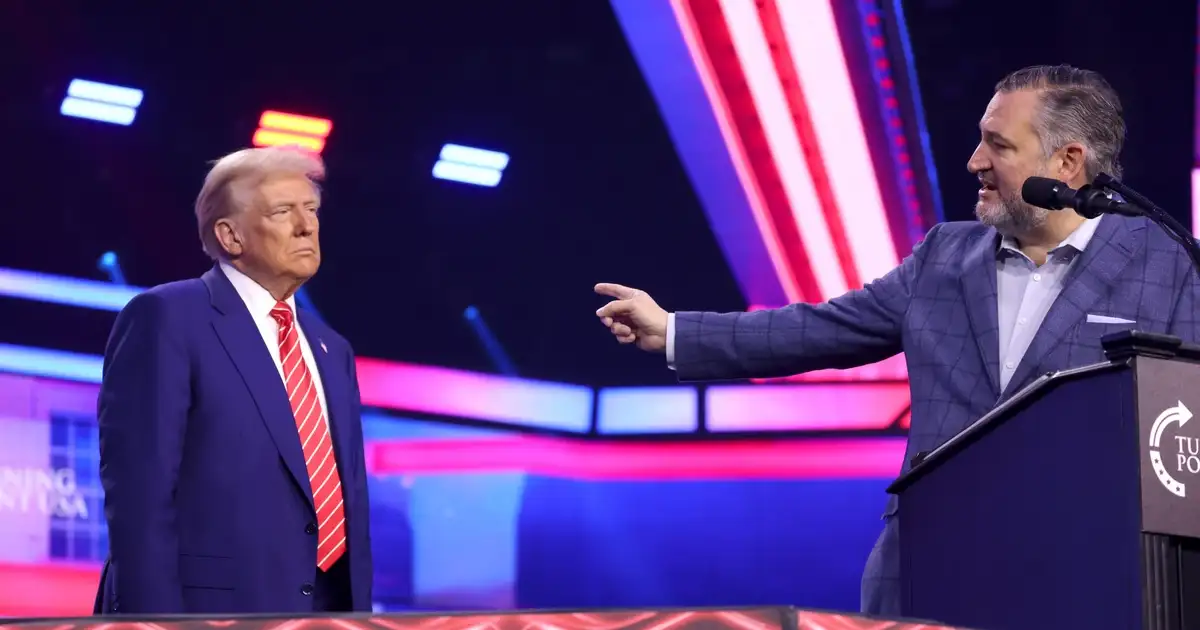
The mere whisper of sanctions relief sent seismic shockwaves through the Republican foreign policy establishment, rattling the very foundations of their long-held Iran strategy. Senator Ted Cruz (R-TX), known for his unyielding hawkish stance, wasted zero time in the huddle. He immediately declared any deal with the Mullahs a “catastrophic error,” arguing with characteristic fervor that it directly jeopardizes both Israel and American security interests. For Cruz, this isn’t just a bad play; it’s a fumble at the goal line.
Senator Lindsey Graham (R-SC), another seasoned player in the foreign policy arena, quickly joined the chorus of dissent. His concern over any concessions to Iran was palpable, insisting that the Iranian regime simply cannot be trusted. Graham, ever the advocate for a robust, aggressive posture, demanded “maximum pressure” – a strategic playbook he and Cruz have run with unwavering consistency for years. To them, Trump’s new framework looks less like a winning strategy and more like a concession to an untrustworthy opponent.
President Trump, however, is no stranger to a good political dogfight. He wasn’t about to let his former allies dictate the narrative. He immediately unleashed a torrent of counter-attacks, using his preferred social media platform, Truth Social, to blast his critics. He labeled Cruz and Graham as “warmongers” and “establishment relics,” effectively attempting to sideline them from his new game plan.
Trump’s argument is simple: his “America First” approach is the only way to genuinely prevent Iran from obtaining nuclear weapons. He’s positioning himself as the ultimate dealmaker, a maverick willing to buck party orthodoxy and rewrite the rules of engagement. But in doing so, he’s creating a schism that could have profound consequences for the Republican Party’s unity and strategic direction.
Deconstructing the “Disastrous Mistake” Play
So, why are these two staunch Trump loyalists suddenly turning on their own quarterback? This isn’t a sudden change of heart; it’s a deeply ingrained foreign policy philosophy clashing head-on with a new, unexpected strategy. Cruz and Graham aren’t just reacting to this specific proposal; they are defending a long-standing, hawkish stance on Iran that they view as non-negotiable. Their objections stem from a well-established tactical playbook:
- Historical Hawk Stance: Both senators have championed maximum pressure for years, believing in stringent sanctions and zero concessions. For them, any deal, regardless of its terms, legitimizes a dangerous adversary. It’s like shaking hands with the opposing coach after a dirty play – it sends the wrong message.
- Trust Deficit: Their core objection is a fundamental, unshakeable distrust of the Iranian regime. They argue any agreement, particularly one involving sanctions relief, provides funds for Iran’s regional destabilization and its continued pursuit of nuclear weapons, regardless of the stated terms. To them, Iran’s promises are as reliable as a trick play from an opposing team.
- Security Concerns for Allies: Cruz and Graham are fierce advocates for U.S. alliances, especially prioritizing the security of partners like Israel and Saudi Arabia. These nations view a nuclear-capable Iran as an existential threat, and any perceived softening of the U.S. stance is a direct threat to their defensive strategy.
- Perceived Weakness: From their perspective, offering concessions signals weakness, not strength. This could embolden Iran and other adversaries, encouraging illicit activities rather than deterring them. It’s like showing your hand in a high-stakes poker game – it gives your opponent an advantage.
This isn’t just about Iran’s nuclear program; it’s about a clash of philosophies within the GOP itself. It pits traditional interventionist conservatism against Trump’s transactional “America First” approach, a strategic conflict that will define the party’s future foreign policy.
“The warmongers and globalists like ‘Lyin’ Lindsey’ and ‘Cryin’ Cruz want endless wars. I want PEACE through STRENGTH. My Iran deal will be the best ever, preventing nukes and saving American lives, unlike the disastrous Obama-Biden giveaway. They’re establishment relics, I’m America First!”
Trump’s broadside is a classic offensive maneuver, aiming to discredit his critics by painting them as out-of-touch relics. He’s attempting to redefine the game, but his own team isn’t buying the new playbook, at least not yet.
“Any deal with the Mullahs that provides them a single dollar of relief is a catastrophic error that jeopardizes Israel and American security. We cannot trust this regime, and any attempt to legitimize their nuclear ambitions through a ‘framework’ is a disastrous mistake.”
Cruz’s statement leaves no room for ambiguity. For him, any financial lifeline to Iran is a direct threat, a strategic blunder that undermines years of effort to contain the regime.
“I’m deeply concerned by any talk of a new Iran deal that offers concessions. We’ve seen this movie before. Iran cannot be trusted. Our leverage is maximum pressure, not appeasement. This would be a profound miscalculation.”
Graham echoes the sentiment, highlighting the historical context and the perceived futility of negotiating with a regime he views as inherently untrustworthy. His “profound miscalculation” is a tactical warning shot, suggesting Trump is making a critical error in judgment.
The Irony of the New Offensive
The historical context here is a mind-bending reversal of field. President Trump famously pulled the U.S. out of the 2015 Joint Comprehensive Plan of Action (JCPOA), the Obama-era Iran nuclear deal. He then aggressively reimposed and expanded sanctions, a move cheered wildly by Cruz and Graham as a strategic masterstroke.
Now, in a stunning pivot, he’s seeking his own version of a deal. This forces his former allies to criticize a diplomatic approach they once celebrated him for rejecting, a tactical U-turn that has left many observers scratching their heads, wondering if Trump is playing 4D chess or simply improvising.
Adding another layer of brutal complexity is the ongoing US-Iran War of 2026, an armed conflict that has raged since February 28, 2026. The Strait of Hormuz has been a major flashpoint in this conflict, a choke point for global oil supplies, and a constant reminder of the volatile stakes. Against this backdrop of active hostilities, any deal carries immense weight, potentially impacting the lives of American service members and the stability of the entire region. Negotiating with an active adversary while troops are engaged is a high-risk, high-reward strategy that few coaches would endorse.
This internal Republican fight reveals deep fissures within the party’s defensive line. It questions the GOP’s coherence on foreign policy and highlights a desperate struggle for the party’s very soul. Will the traditional hawkishness of figures like Cruz and Graham win out, or will Trump’s transactional “America First” approach fundamentally redefine the Republican Party’s strategic vision on the world stage?
The Real Playbook: Political Theater and Power Plays
Let’s be clear: this isn’t just about foreign policy minutiae. This is pure, unadulterated political theater, a power play unfolding in plain sight.
President Trump, the ultimate dealmaker and master of the political spectacle, is flexing his power, demonstrating that he can operate independently, even against his closest allies. He’s sending a message that his strategic vision transcends traditional party lines, and he’s willing to challenge anyone who stands in his way.
For Cruz and Graham, this isn’t merely an ideological disagreement; it’s about maintaining their long-held positions and, crucially, their own influence within the Republican Party. The “disastrous mistake” isn’t just about Iran’s nuclear ambitions; it’s about Trump potentially undermining years of their advocacy, the political capital they’ve invested, and their very standing as foreign policy heavyweights. This is a high-stakes game of chicken, with each side daring the other to back down. Who will blink first in this internal GOP showdown, and what will be the lasting impact on the party’s strategic direction? The game clock is ticking, and the consequences of this internal battle could be far more impactful than any deal with Tehran.
Source: Google News