
Miami International Airport suffered a catastrophic fumbled snap this Memorial Day weekend. It brought a major travel hub to its knees, stranding thousands and turning holiday dreams into a security nightmare. This full-blown crisis exposed the raw vulnerability of our air travel system.
Two of MIA’s busiest terminals were cleared out, grinding operations to a halt and leaving a trail of shattered plans in its wake. The final score? Disaster, plain and simple.

Opening Drive: Chaos at MIA
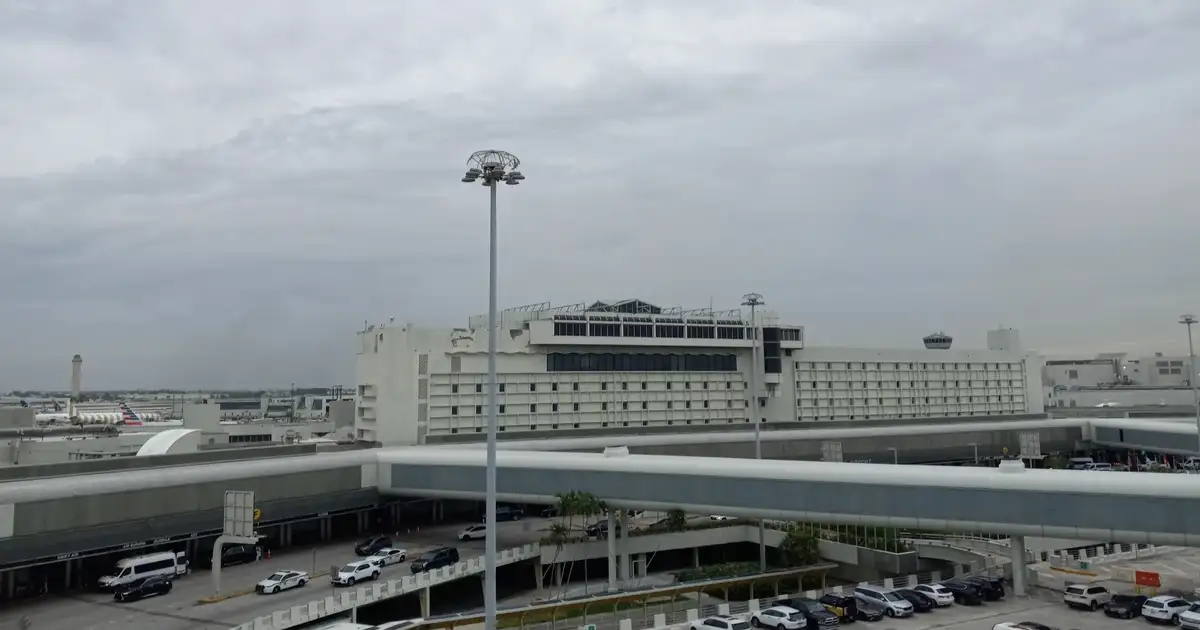
The scoreboard read disaster on Sunday, May 24, 2026. Miami International Airport’s Concourse D, the bustling American Airlines hub, and Terminal J, handling a multitude of international carriers, were summarily evacuated. A security threat, vague yet potent, brought everything to a grinding halt, proving that even the most meticulously planned holiday travel can unravel in an instant.
The chain of events began around 10:30 AM EDT when an anonymous call reported a suspicious package near a ticketing counter in Concourse D. Airport police and the TSA didn’t hesitate; they cleared the terminal with the speed of a blitzing linebacker. Then, an unconfirmed report of another device in Terminal J forced a second evacuation, compounding the chaos. Was this a coordinated attack, or simply a cruel twist of fate?
Bomb squads, K9 units, and federal agents swarmed the area, their presence a stark reminder of the gravity. Passengers, including families with young children and the elderly, were shuffled to designated “safe zones,” left to bake under the unforgiving Miami sun.
It was a brutal scene, highlighting the human cost of a system on high alert. This wasn’t a smooth handoff; it was a fumbled snap at the worst possible moment, leaving everyone scrambling.
After three agonizing hours, the “all clear” finally came at 1:45 PM EDT. The verdict? No package, no device. Just a whole lot of wasted time, shattered plans, and frayed nerves. The collective sigh of relief was palpable, but it was quickly replaced by a simmering frustration. The threat was unsubstantiated, but the disruption was undeniably real and widespread.
The Playbook Breakdown: What Went Wrong
The ripple effect was immediate and devastating, far beyond the initial three-hour standstill. Over 25,000 passengers felt the sting of this security scare, their travel itineraries shredded. By Sunday evening, the damage was clear: 70 flights were cancelled—40 departures and 30 arrivals. Hundreds more faced delays stretching an agonizing 2-4 hours, turning quick trips into overnight ordeals and missed connections into lost opportunities.
This wasn’t a minor blip; it was a catastrophic failure of anticipation and response, hitting MIA at its most vulnerable. The airport was gearing up for an estimated 1.5 million passengers during the Memorial Day travel period, with Sunday projected as a peak day. Instead, it became a prime example of systemic vulnerability, a glaring hole that allowed a single, unverified threat to penetrate deep into airport operations.
Airlines, especially American Airlines, took a massive hit. They scrambled to rebook passengers, manage displaced crews, and absorb the financial fallout. Economic losses easily ran into the millions of dollars, impacting the entire travel ecosystem.
Taxis were overwhelmed, car rental agencies faced impossible backlogs, and local hotels saw a surge of unexpected, often desperate, guests. The domino effect was immediate and costly, a stark reminder of how interconnected our travel infrastructure truly is.
Ralph Cutié, the Director and CEO of the Miami-Dade Aviation Department, attempted to put a brave face on the situation, delivering the standard corporate line:
“Passenger safety is always our top priority. We understand the frustration, especially during a holiday weekend, but we must take every threat seriously,” stated Ralph Cutié.
But for travelers like Maria Rodriguez, a sentiment echoed by thousands, these words did little to ease the pain of a ruined holiday.
“This is just ridiculous. We’ve been standing here for three hours, missed our connecting flight, and now we don’t know when we’ll get to see our family,” lamented Maria Rodriguez, a traveler heading to Orlando, her voice thick with exhaustion and disappointment.
An American Airlines spokesperson offered the usual corporate comfort, a statement designed to soothe but ultimately failing to address the core issue:
“Our teams are working tirelessly to re-accommodate affected customers and minimize further disruptions. We appreciate our customers’ patience and understanding,” an American Airlines spokesperson said in a statement.
Patience wears thin when your holiday is ruined, your plans are in tatters, and you’re left wondering if the system is truly working. Even the Miami Dolphins, with their roster of speed demons like De’Von Achane, couldn’t outrun this kind of gridlock. This was a defensive scheme that backfired, leaving everyone on the field confused and frustrated.
Fourth Down: The Cost of Vigilance
This incident at MIA isn’t an isolated event; it’s part of a larger, ongoing game of cat and mouse, a constant battle between security and disruption. The question isn’t if these security threats happen, but how often. Major U.S. airports see hundreds of security incidents every year.
The TSA reported over 2,500 “security incidents” in U.S. airports in 2025. Most don’t lead to a full-blown evacuation, but every single one requires a response, diverting resources and creating potential delays.
This is the inherent cost of living in a post-9/11 world, a defensive strategy where authorities are forced to err on the side of extreme caution. Every anonymous tip, every misplaced bag, every suspicious movement gets the full treatment. It’s a defensive scheme that often causes more disruption than the actual threat itself, leaving travelers to wonder if the cure is sometimes worse than the potential disease. Is this truly effective security, or simply a reactive posture that punishes the innocent?
The economic cost is staggering. Lost revenue for airlines and businesses, passenger compensation, and operational expenses add up fast, easily reaching into the tens of millions annually across the industry. It’s a heavy price tag for what often turns out to be nothing more than a false alarm or a malicious hoax.
But what’s the alternative? Ignoring a credible threat is a gamble no one wants to take, a risk that could have truly catastrophic consequences. The public demands safety, but often balks at the price of vigilance, both in terms of money and convenience.
Defensive Adjustments: Mitigating Future Meltdowns
So, what’s the playbook for dealing with this recurring problem? Airports and the TSA are constantly tweaking their game plans, trying to fortify their defenses. They review emergency response protocols, including implementing better communication strategies to keep the public informed.
They run drills, attempting to simulate the chaos of a real event to improve their reaction time and coordination. Yet, as the MIA incident proves, theory often breaks down in the face of real-world pressure.
Technology is often touted as the ultimate answer. Airports are pouring money into advanced screening tech: next-generation CT scanners for carry-ons, sophisticated facial recognition for identity checks, and AI-powered threat detection systems. The goal is clear: catch threats faster, identify potential dangers with greater accuracy, and reduce false alarms. It’s like upgrading your defensive line, hoping to get to the quarterback quicker and prevent the big play. But technology, however advanced, is only as good as the humans operating it and the protocols governing its use.
Inter-agency coordination is also key. The FBI, local law enforcement, and airport security are supposed to operate as a well-oiled machine, sharing intelligence, combining resources, and aiming for quicker resolution. It’s a team effort, but sometimes the communication breaks down, just like a botched play call on the field, leading to confusion and delayed responses. The seamless flow of information is critical, yet often elusive.
Then there’s the “If You See Something, Say Something™” campaign. It’s a powerful tool for public vigilance, encouraging everyone to be an active participant in security. But it also means more reports, more investigations, and, inevitably, more potential false alarms that still demand a full, resource-intensive response.
It’s a double-edged sword, creating a higher volume of “suspicious activities” that, by their very nature, demand a full and immediate reaction, regardless of their ultimate veracity.
The Final Whistle: A Tough Call
This Memorial Day debacle at Miami International Airport is a stark reminder of the fragile nature of air travel. A single, unsubstantiated threat can bring a major hub to its knees, shattering holiday plans and costing millions.
It sends anxiety soaring through thousands of travelers. This is a tough pill to swallow for the everyday passenger, who simply wants to get from point A to point B safely and efficiently.
The real issue isn’t whether security is important; it’s about finding the critical balance. We need security that’s effective, intelligent, and proactive, without constantly punishing the innocent with overreactions and systemic inefficiencies. The current system often feels like a penalty flag thrown on the entire game, even when there’s no foul, grinding the momentum to a halt. Is the comfort of security worth the constant disruption, or are we simply accepting a flawed defensive scheme as the new normal?
Until a better system comes along—one that can discern genuine threats from false alarms with greater precision and respond with surgical accuracy—travelers will continue to pay the price, both financially and emotionally. This wasn’t a win for anyone. It was just another frustrating reminder of the high stakes in the ongoing battle for secure, efficient travel. The game clock keeps running, and the public is still waiting for a real solution, not just another timeout.
Source: Google News