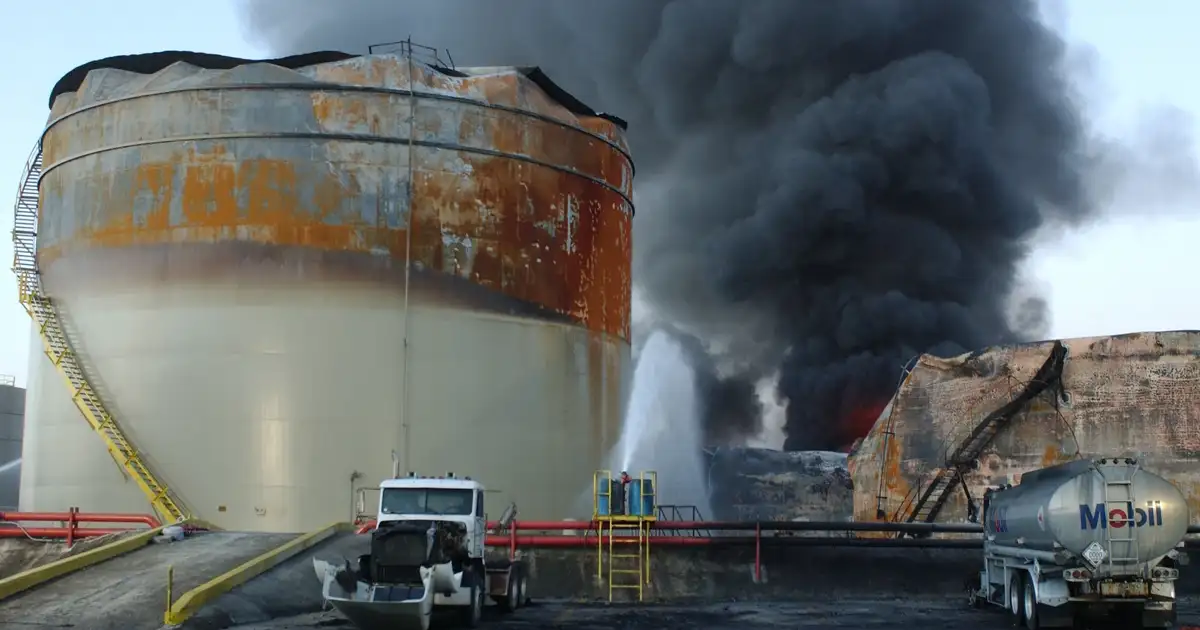

The clock is ticking on a catastrophe. Fifty thousand American lives have been uprooted, their homes abandoned, schools shut down, all because a toxic chemical tank, now visibly fractured, teeters on the brink of an explosion. This isn’t some drill; it’s a full-blown crisis, playing out in real-time across a vital U.S. industrial zone.
Let’s be clear: the chemical container isn’t just compromised; it’s a ticking bomb threatening a catastrophic blast. Local and state authorities didn’t just declare a danger zone; they painted a bullseye on this entire community. Emergency responders didn’t just ‘find’ a crack; they discovered a gaping, critical wound in the tank’s integrity within the last 48 to 72 hours, triggering this desperate scramble to avert disaster.

The Battle Against the Clock: A Gridiron Playbook
Make no mistake: This isn’t merely an accident waiting to happen. It’s a glaring, unforgivable indictment of industrial hazards. A cracked tank holding highly toxic chemicals is not a warning; it is a ticking time bomb.
The potential for widespread devastation is undeniably real. Consider the raw, unbridled force of an explosion, then add highly dangerous chemicals to that volatile mix. The air, the water, the very ground could be poisoned for generations.
This isn’t just a local problem. It’s a national catastrophe in the making, a deafening wake-up call to every corner of our industrial landscape.
Evacuating 50,000 people isn’t just ‘no small feat.’ It’s a logistical nightmare, highlighting the extreme, immediate danger officials perceive.
Families are uprooted, businesses halted, lives put on hold indefinitely. All because of one critical structural failure – a failure that should never have occurred.
Emergency crews are battling relentlessly, assessing the immediate threat with surgical precision. Their mission is clear: contain the damage, prevent total disaster. This isn’t a drill; it’s a high-stakes play-by-play, where every inch gained is a victory against unimaginable odds.
“Our priority is the safety of the residents,” stated a senior emergency operations commander, speaking off the record due to the ongoing volatility. “We are taking every precaution. This situation is extremely volatile.”
Such a blunt assessment from the front lines cuts through the noise. They’re not sugarcoating the risk. This chemical tank isn’t just a serious threat; it’s an existential one for the community it looms over.
Who Dropped the Ball? A Systemic Failure
A crack in a toxic chemical tank doesn’t just materialize out of thin air. This is not an act of God; it’s a failure of man. This is a systemic breakdown, a gaping hole in maintenance protocols and regulatory oversight.
Who, precisely, dropped the ball? Who was on the clock for inspecting this powder keg? We need to ask hard questions, and we demand unflinching answers.
Were safety protocols merely suggestions? Was the bottom line prioritized over human lives? These facilities, handling materials that can wipe out communities, demand constant, unwavering vigilance.
The fallout from this incident will echo for years, rewriting the playbook for industrial safety regulations nationwide. Every plant manager in America should be sweating bullets right now, scrambling to inspect their own aging infrastructure. The cost of this negligence is not just immense; it’s staggering.
Emergency services are expensive, evacuation logistics are complex, and the economic hit to the evacuated community will be severe – and that’s before any explosion even happens. And what about the long-term trust, the social contract shattered?
Residents now live in fear, wondering if their homes are truly safe. This kind of event doesn’t just erode confidence; it shatters the public’s faith in industry and government oversight alike.
This situation exposes a critical, inexcusable vulnerability. Many industrial zones sit uncomfortably close to residential areas. This proximity creates inherent, magnified risks, ensuring that the consequences of an accident are always catastrophic. We must address this proximity with the urgency it demands.
The Fallout Zone: Beyond the Blast Radius
The immediate danger is a cataclysmic explosion. But the fallout, the true cost, extends far beyond the blast radius.
Environmental damage won’t just ‘could be’ catastrophic; it will be devastating. Long-term health effects for nearby residents are not just a major concern; they are a looming specter, a silent threat that could haunt generations.
Envision the multi-generational cleanup efforts. Picture the legal battles, stretching for decades, as communities seek justice and compensation. This isn’t a multi-million dollar problem; it’s a billion-dollar disaster waiting to unfold, all because of one critical, overlooked crack.
This incident demands a national reckoning. How do we prevent these man-made disasters? Are our regulations merely suggestions? Is enforcement a patchwork quilt of inconsistency across states, or a unified front of protection?
This isn’t about one tank in one town; it’s about a deadly, unacceptable pattern. We witness industrial accidents with sickening regularity, repeatedly putting ordinary Americans in the crosshairs. This cycle of negligence must be broken, and broken now.
Regulators must not just ‘step up their game’; they must overhaul their entire approach. Companies must be held accountable, without exception. The financial penalties for negligence must be so severe they make any cost-cutting measure look like a child’s folly.
This crisis is not just a harsh lesson; it’s a brutal, unforgiving education. Safety cannot be an afterthought. It must be the first, last, and only priority. The lives of 50,000 people hang in the balance, and their safety is non-negotiable.
Looking Downfield: Securing the Perimeter
Once the immediate danger is contained, the real, gritty work begins. A full, uncompromising investigation is not just needed; it’s mandatory. Every rivet, every weld, every maintenance log must be scrutinized under a microscope.
We need to unearth exactly what went wrong, then implement fixes that are ironclad, not just cosmetic. New mandates for tank inspections aren’t just ‘likely’; they are an absolute certainty, a non-negotiable requirement. Tougher penalties for non-compliance aren’t just essential; they are the only language corporate boards truly understand. This cannot, will not, be allowed to happen again. The stakes are simply too high for American families.
Companies operating these facilities must invest heavily, proactively, in modern infrastructure. They must prioritize maintenance schedules as if lives depend on them – because they do. They cannot gamble with public safety; the chips are too high, the consequences too dire.
This isn’t about scapegoating individuals; it’s about dismantling and rebuilding a broken system. When a chemical tank cracks, it’s not the disease; it’s a symptom of a deeper, more pervasive illness in industrial oversight. We need to diagnose and aggressively treat that illness.
The 50,000 evacuated residents don’t just ‘deserve’ answers; they demand them. They deserve unwavering protection. They deserve to know their leaders are not just talking, but fighting for their safety.
This is a defining, make-or-break moment for industrial policy in America. The crack in that tank is more than a structural failure; it’s a gaping, bleeding wound in our national defenses. We must shore them up, not tomorrow, but today.
Because if we fail to learn from this near-catastrophe, the next blast won’t just be a warning shot – it will be a devastating, unforgivable final judgment.
Source: Google News