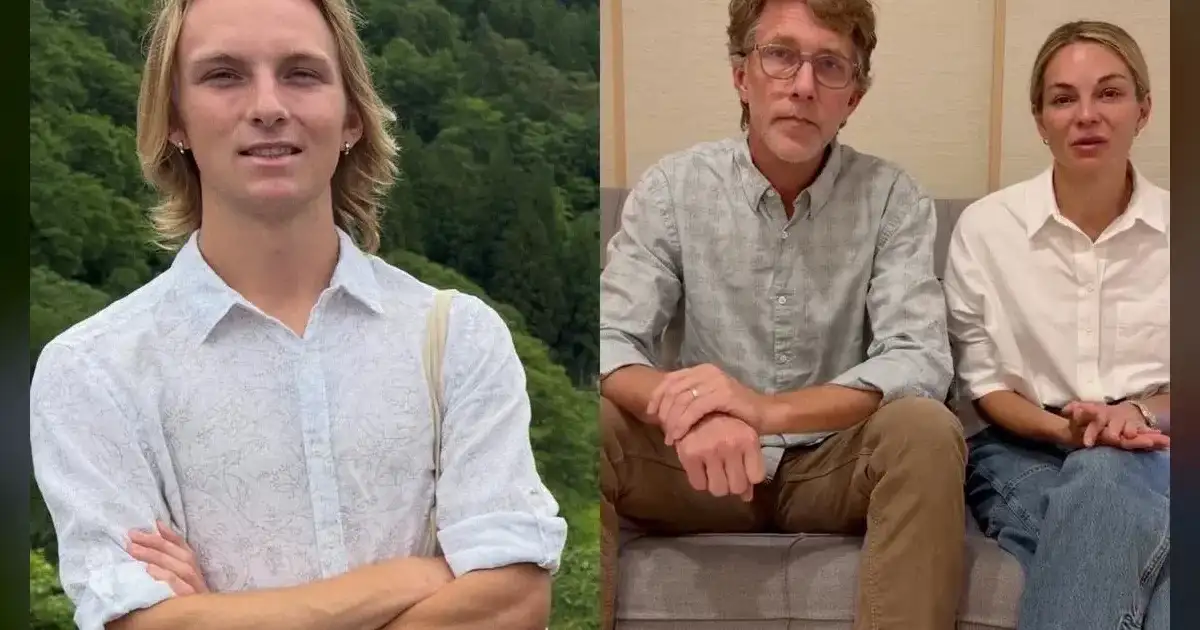

Every parent’s deepest, most visceral fear has just been realized for Carla Higginbotham: her 23-year-old son, James ‘Weston’ Higginbotham, the Alabama student who vanished into the neon labyrinth of Tokyo, has been found dead. The devastating news, confirmed by his heartbroken mother, rips through the illusion of safety, leaving behind not just a gaping void, but a terrifying chasm of unanswered questions.
This isn’t just a headline; it’s the cold, hard reality that shatters the dreams of countless families who send their children into the world, expecting them to return. Higginbotham, a University of Alabama in Huntsville (UAH) student, was living the quintessential study abroad experience – until May 28, 2026. That was the last time anyone saw him, swallowed by the electric pulse of Tokyo’s Shibuya district.

One moment, he was out with friends, enjoying the vibrant Tokyo night. The next, he was alone, separating from his group, never to return to his accommodation. His mother, Carla Higginbotham, launched a desperate, agonizing public appeal, a mother’s primal scream across continents. Now, that desperate hope has been extinguished, replaced by an unbearable certainty.
The Torture of the Unknown: A Family’s Agonizing Quest
The raw, immediate pain of loss is an open wound. But for the Higginbotham family, that grief is compounded, twisted by a suffocating silence surrounding Weston’s final moments. This isn’t just about mourning; it’s about the torture of the unknown. What exactly happened to him? Where did he go after leaving his friends? Who was he with? These aren’t minor details; they are the anchors a family needs to even begin to process such profound sorrow.
Carla Higginbotham delivered the devastating confirmation on June 4, 2026: Weston’s body had been recovered. But the official statements offered no balm, no clarity. No cause of death. No location where he was found. Just the chilling, bare fact of his demise, leaving a vacuum where answers should be.
Japanese authorities are, predictably, investigating. The U.S. Embassy in Tokyo is, predictably, providing ‘consular assistance.’ But these bureaucratic assurances offer cold comfort when the official answers, the truth of what happened, remain hermetically sealed, hidden from the very family who deserves them most.
“My heart is shattered into a million pieces. My sweet Weston has been found, but he is no longer with us. We are devastated beyond words.”
— Carla Higginbotham, mother, via social media (June 4, 2026)
Let’s be clear: this isn’t just another fleeting news cycle. This is a real family’s raw, agonizing quest for truth, a desperate plea for closure in the face of unimaginable loss. Was it a tragic accident, a misstep in a foreign city? Or was there something darker, more sinister at play? They don’t just ‘deserve’ those answers; they are owed them, unequivocally.
The Peril of Distance: Shattering the Illusion of Safety
Japan, for all its meticulous order and low crime rates, is often lauded as one of the safest nations on Earth. The U.S. Department of State even advises “Exercise Normal Precautions.” This incident, by all metrics, should be an outlier. Yet, it brutally rips through the comforting illusion of perfect safety, exposing the fragile reality beneath.
Parents send their children across oceans, not just for academic enrichment, but with an implicit trust: trust in the institutions, trust in the foreign nation’s safety, trust in the invisible safety nets. This case doesn’t just dent that trust; it shatters it into a thousand pieces, leaving parents everywhere questioning the very premise of ‘study abroad.’
The University of Alabama in Huntsville, caught in the wake of this tragedy, offered its ‘profound sadness’ and pledged support – to the family, to other students. But how do you truly support a community grappling with such a senseless loss? This kind of trauma doesn’t just echo; it reverberates, a chilling bell tolling for every parent, every student, every institution involved in the global exchange of young lives.
“The UAH community is profoundly saddened by the tragic news of James ‘Weston’ Higginbotham’s passing. Our deepest sympathies go out to his family and friends during this incredibly difficult time. We are committed to supporting our students and staff and will continue to assist the family in any way we can.”
— University of Alabama in Huntsville Spokesperson (June 5, 2026)
For any family contemplating the adventure of study abroad, this isn’t just a news item; it’s a gut punch. It forces agonizing questions: Are emergency protocols robust enough? Are support systems truly adequate when a student disappears into the anonymity of a foreign metropolis? It rips bare the terrifying reality of the vast, unforgiving distance that can separate a child from home when the unthinkable happens.
International Investigations: A Bureaucratic Purgatory
The official line is, invariably, “the investigation is ongoing.” It’s a phrase designed to reassure, to signal due process. But for a grieving family, it’s a hollow echo, a bureaucratic wall. What does ‘ongoing’ truly mean when every passing hour without answers deepens the agony?
Forensic examinations, toxicology reports – these are not quick processes, especially when processing the intricate, often opaque labyrinth of international law and procedure. Cultural nuances, linguistic barriers, jurisdictional quagmires – they don’t just complicate matters; they stretch timelines into agonizing eternities for those desperate for clarity.
Higginbotham was last seen in Shibuya, a district teeming with millions. Japanese authorities will undoubtedly launch a painstaking, granular effort to trace his movements, to reconstruct his final, fateful hours. It’s a meticulous process, yes, but for a family caught in this limbo, ‘not quick’ feels like a cruel understatement, an unending purgatory.
“We can confirm the death of a U.S. citizen in Japan and are providing consular assistance to the family. Out of respect for the family’s privacy during this difficult time, we have no further comment.”
— U.S. Embassy in Tokyo (Statement, June 5, 2026)
The Higginbotham family is trapped, suspended in a cruel holding pattern. They’ve received the worst news imaginable, a parent’s ultimate dread, yet they’re denied the crucial details that might offer a sliver of understanding. How can they even begin to process this seismic loss when the narrative of Weston’s final moments remains officially redacted, withheld until the glacial pace of international bureaucracy grinds out its reports?
Ultimately, this tragedy isn’t just a ‘stark reminder’; it’s a gut-wrenching demonstration of the fragility of life, a brutal illustration of how quickly the vibrant promise of youth can be extinguished. A young man, with his entire future laid out before him, is gone. His family is left with an abyss of unimaginable pain, and a world that feels suddenly, terrifyingly unsafe.
It forces us, as a society, to confront the uncomfortable vulnerabilities inherent in sending our young, often naive, adults into unfamiliar worlds. They are far from their primary support networks, processing new cultures, new challenges. Their mental health and well-being aren’t just ‘paramount’; they are a sacred trust, a responsibility that institutions and host countries must uphold with unwavering diligence.
This isn’t merely a statistical anomaly or a footnote in international relations. This is about the raw, searing human cost. It’s about the fear that grips every parent’s heart, the gaping void left in a family, the dreams that will never be realized. James ‘Weston’ Higginbotham deserved to come home. His family deserves the truth. And until those answers emerge, this tragedy will remain a chilling indictment of the silence that surrounds it.
Source: Google News