
President Donald Trump delivered a chilling ultimatum to Iran this week. He declared Tehran must “make a deal or we’ll bomb the s–t out of them tomorrow.” This is not mere rhetoric; it signals a dangerous escalation in an already volatile region.
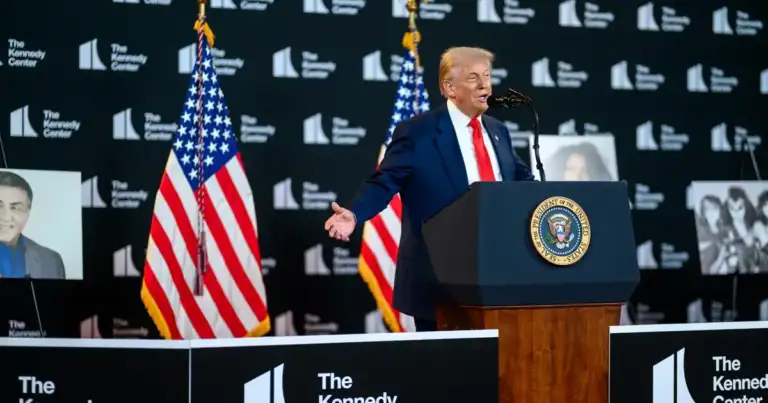
Trump’s stark warning came Tuesday, June 9, 2026, during a rally in Phoenix, Arizona. It followed a weekend of attacks attributed to Iranian-backed militias. These groups targeted U.S. and allied forces in eastern Syria and northern Iraq.

The aggression included a drone attack on a U.S. base near al-Omar oil field in Deir ez-Zor, Syria, on Saturday. Three American service members sustained minor injuries.
A separate rocket barrage hit near Erbil International Airport in Iraq on Sunday, targeting an international coalition facility. While no U.S. casualties occurred in Erbil, Washington condemned these as clear provocations.
Trump’s Hard Line and Regional Fallout
This aggressive stance mirrors President Trump’s previous “maximum pressure” campaign. His words carry immense weight as the sitting President. They put immediate pressure on his own administration’s diplomatic efforts.
Trump’s supporters see his statement as vital strength. They believe “peace through strength” is the only path.
They argue that any perceived leniency only emboldens Iran and its proxies. Only a credible threat of force will compel Tehran to negotiate seriously, applying to Iran’s nuclear program and its regional destabilizing actions.
Iranian officials, predictably, rejected Trump’s threats. Foreign Minister Hossein Amir-Abdollahian spoke to state media on Wednesday.
He called the remarks “belligerent and irresponsible rhetoric designed for domestic consumption.” He warned of a “crushing and immediate response” to any aggression.
Iran maintains its regional activities are defensive. It blames the U.S. military presence for instability.
Foreign Minister Hossein Amir-Abdollahian stated, “belligerent and irresponsible rhetoric designed for domestic consumption” and warned that any aggression against Iran would be met with a “crushing and immediate response.”
The White House and State Department have not directly addressed President Trump’s specific remarks. However, they reiterated their commitment to protecting U.S. personnel and interests. They still pursue a diplomatic path to de-escalation.
A State Department spokesperson emphasized on Wednesday that “reckless rhetoric only serves to inflame tensions.” The administration focuses on “calibrated responses” to deter aggression and protect U.S. forces without triggering a wider conflict.
European allies expressed concern over the escalating rhetoric. They are involved in stalled negotiations over the Joint Comprehensive Plan of Action (JCPOA).
An EU spokesperson urged “maximum restraint” from all parties, stressing prioritizing diplomacy to prevent a dangerous spiral of violence.
Regional actors, like Saudi Arabia and Israel, watch closely. Their support for a firmer U.S. stance varies.
The Immediate Economic and Military Realities
The immediate implications are stark. Global oil benchmarks, specifically Brent crude, saw a modest uptick.
Prices rose nearly 1.5% on Wednesday, reaching $83.75 a barrel. This surge is directly linked to heightened geopolitical risk in the Middle East.
President Trump’s comments and the recent strikes fueled this market reaction.
U.S. troop presence remains significant in the region. Approximately 900 U.S. troops are in Syria, primarily focused on counter-ISIS operations.
Around 2,500 U.S. troops are stationed in Iraq as part of the international coalition. These forces are frequent targets for Iranian-backed militia groups.
Iran’s nuclear program continues its alarming trajectory. The International Atomic Energy Agency (IAEA) reported last month on Iran’s growing enriched uranium stockpile. Some enrichment levels now reach 60%. This is significantly beyond the 3.67% limit set by the JCPOA. This fact gives Tehran leverage, and fuels international worry.
A Pattern of Pressure: What Comes Next?
This is not an isolated incident. President Trump has a history of issuing strong warnings to Iran. During his previous terms, he often threatened military action. These threats typically followed attacks on U.S. interests or perceived Iranian provocations.
- In 2019, after Iran shot down a U.S. drone, Trump famously called off retaliatory strikes at the last minute.
- In 2020, the assassination of Iranian Quds Force commander Qasem Soleimani in Baghdad was a direct military response. It followed escalating militia attacks on U.S. forces.
- Trump unilaterally withdrew the U.S. from the JCPOA in 2018. This initiated a “maximum pressure” campaign. It used sanctions to cripple Iran’s economy and force new negotiations.
This historical context shows a consistent pattern in Trump’s approach. He prioritizes overt threats and economic pressure over multilateral diplomacy.
The question now is whether this rhetoric will translate into immediate military action, or is it a tactical move to push Iran to the negotiating table?
For ordinary people, President Trump’s renewed aggression carries significant implications. The Middle East remains a tinderbox.
Escalating rhetoric from the U.S. President increases the risk of wider conflict. It can disrupt global oil supplies and destabilize economies worldwide.
The immediate follow-up is clear: Will Iran blink, or will the region explode?
Source: Google News