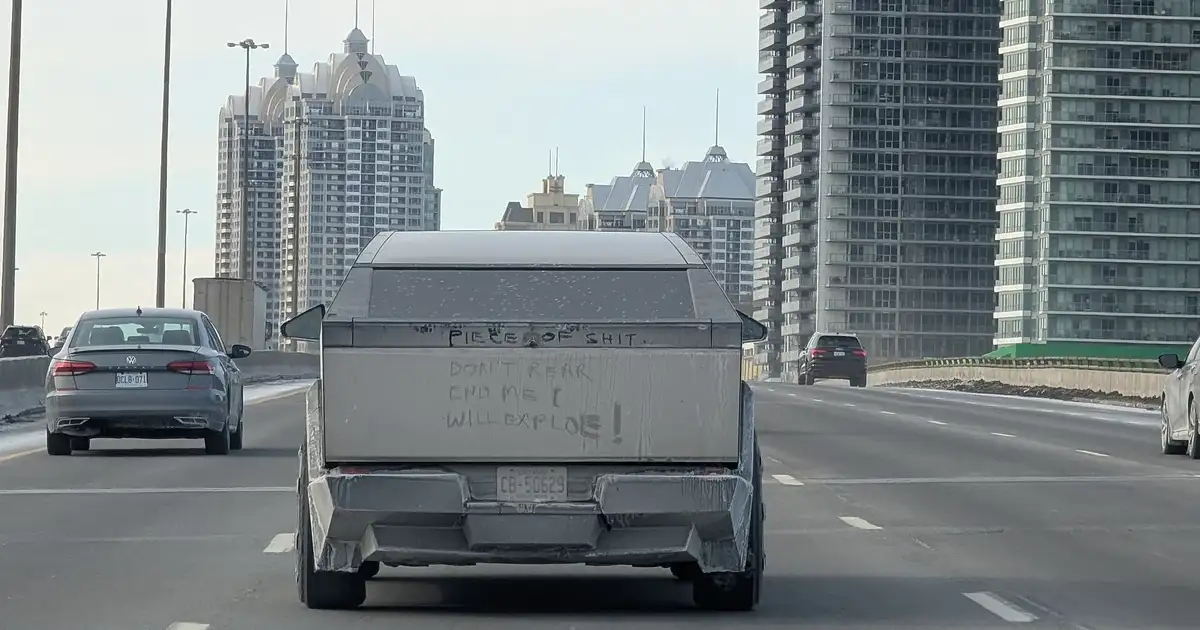

An elderly man filmed fast asleep behind the wheel of a hulking Tesla Cybertruck on a California highway is more than just a viral moment. It’s a glaring neon sign pointing to the dangerous game we’re playing with advanced driver-assistance systems.
This incident, captured in late 2023 or early 2024, showed a driver completely checked out. The Cybertruck was reportedly barreling down the road. The man’s apparent deep sleep sparked outrage and disbelief.

This wasn’t a one-off. Similar incidents involving other Tesla models have been reported. Drivers are misusing or misunderstanding the tech.
The Illusion of Automation
People love the idea of technology doing the heavy lifting. Tesla’s Autopilot and Full Self-Driving (FSD) promise exactly that. They promise convenience. They promise a glimpse into the future.
But these systems are not truly autonomous. They require constant driver supervision. The company itself states this clearly. Yet, the human element consistently fails.
The allure of hands-off driving is powerful. Too powerful for some drivers to resist. They treat their vehicles like personal chauffeurs. This is a fatal flaw in the system.
The “background discourse” online screams frustration. People are baffled by such reckless behavior. They question the common sense of drivers.
Others point fingers at the tech itself. Is it too good at making drivers complacent? Does it give a false sense of security?
Who’s Really at Fault?
The blame game here is complex. On one hand, you have the driver. This elderly man made a conscious choice to sleep. That is pure negligence. It puts everyone on the road in danger.
No amount of advanced tech excuses this level of irresponsibility. Basic human judgment is still paramount. The steering wheel is not a pillow.
On the other hand, the tech companies bear some weight. They market these systems with futuristic names. “Full Self-Driving” sounds like it needs no human input. This can be deeply misleading.
The terminology itself creates a dangerous expectation. It blurs the lines. It makes drivers think the car has it all handled. It does not.
Regulators are also asleep at the wheel. The National Highway Traffic Safety Administration (NHTSA) has been investigating Tesla’s Autopilot. They are looking into crashes linked to these systems. But progress feels slow. Action feels even slower.
The rules for these powerful systems are still catching up. This regulatory vacuum is a disaster waiting to happen. It leaves everyone vulnerable.
The Cost of Complacency
The true cost of this complacency is human lives. These aren’t just viral videos. They are near-misses. They are previews of potential tragedies.
Every time a driver trusts a machine too much, the risk skyrockets. The tech isn’t perfect. Roads are unpredictable. Other drivers are human.
This incident with the Cybertruck should serve as a wake-up call. It’s not just about one old man. It’s about a widespread problem. It’s about the culture of tech reliance.
We’re building incredible machines. But we’re forgetting to train the humans who use them. Or, perhaps, we’re training them to trust too much.
The “background discourse” shows a public divided. Some demand stricter laws. Others want better driver education. Everyone agrees something needs to change.
This isn’t just about Tesla. It’s about every automaker pushing ADAS. It’s about the entire future of driving. It’s about safety.
The Reality Check
The promise of autonomous vehicles is exciting. But the reality is far from it. Today’s systems are driver-assistance, not driver-replacement.
Drivers need to stay alert. They must be ready to take control. This isn’t a suggestion. It’s a requirement. It’s a matter of life and death.
The Cybertruck incident highlights a critical failure. It shows a failure of personal responsibility. It shows a failure of clear communication. And it shows a failure of timely regulation.
We cannot afford to let these issues fester. The road ahead demands vigilance. Both from drivers and from those who build and regulate these powerful machines.
The dream of fully self-driving cars is still a dream. For now, the driver remains the most important safety feature. Period.
Source: Google News