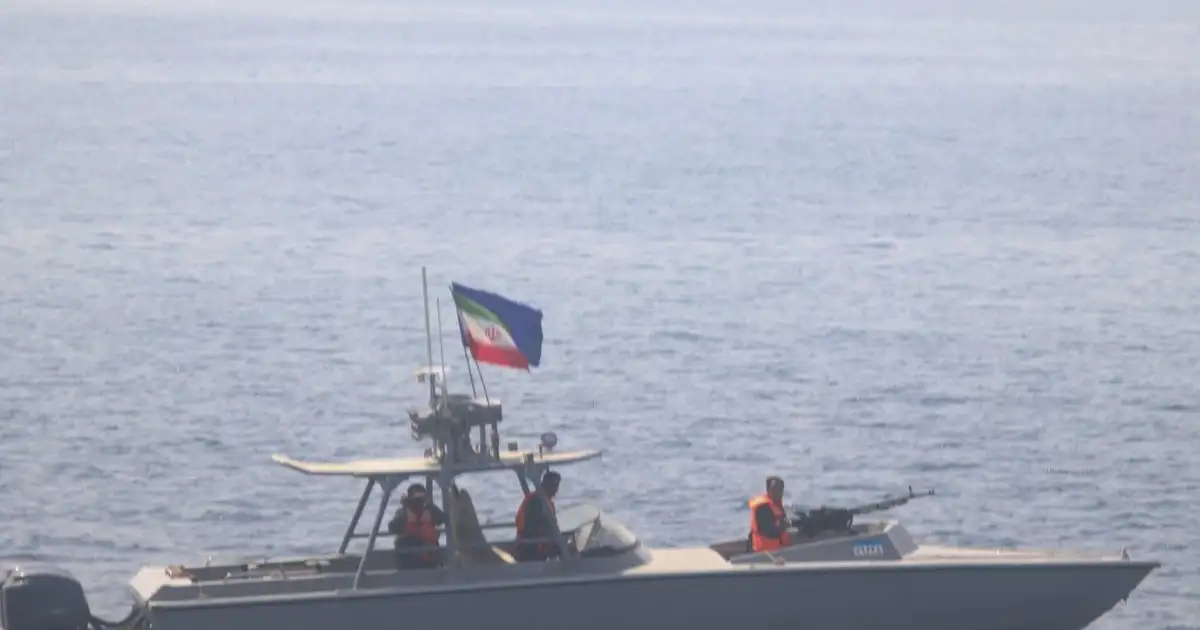

Just weeks after American and Israeli bombs rained down on Iranian targets, shaking the foundations of Middle Eastern stability, Washington and Tehran have abruptly declared a “deal in principle.” The stakes? The reopening of the strategic Strait of Hormuz and, far more critically, Iran’s commitment to relinquish its uranium. This isn’t merely a policy adjustment; it’s a breathtaking reversal that leaves seasoned observers scrambling to piece together the true cost of this sudden ‘peace.’
The ink is barely dry on reports of US and Israeli military strikes against Iran on February 28, 2026, yet here we are, witnessing the improbable spectacle of both sides negotiating peace. The Strait of Hormuz, for months a global flashpoint, a maritime powder keg threatening to ignite world markets, is now slated for reopening. A stunning pivot, or a calculated maneuver?

This supposed agreement isn’t some organic blossoming of goodwill; it’s the product of an intense, almost clandestine diplomatic scramble. Its stated goals are clear: defuse the ticking time bomb in the world’s most critical oil chokepoint and, perhaps more ambitiously, finally rein in Iran’s nuclear ambitions. But what truly drove this sudden rush to the table?
The War’s Shifting Sands: A Geopolitical Magic Trick?
President Donald Trump’s administration, ever the master of geopolitical theatrics, has indeed conjured a remarkable illusion. Only a short time ago, US and Israeli warplanes were pounding Iranian infrastructure, pushing the region to the precipice of a full-blown conflagration. The world held its breath, bracing for the inevitable, wider conflict.
Now, however, we are presented with a dizzying pathway to de-escalation. The Strait of Hormuz, through which a staggering 20% of the world’s total oil supply and 25% of its liquefied natural gas traverses daily, is not just vital; it is the economic jugular of the global economy. Its closure or disruption doesn’t just send ‘shockwaves’; it triggers seismic market collapses. Reopening it isn’t merely ‘stabilizing’ a volatile region; it’s pulling the global economy back from the brink.
But Iran’s promise to ‘give up uranium’ – a phrase loaded with historical baggage and skepticism – is, if genuine, a truly monumental development. It directly confronts the existential proliferation fears that have haunted the international community for decades, removing a nuclear sword of Damocles that has fueled generations of tension and proxy wars.
Sources intimately involved in the grueling negotiations, speaking on condition of anonymity due to the extreme sensitivity of the talks, paint a picture of immense, relentless pressure. “No sane actor wanted to see this war expand beyond its initial skirmishes,” one senior State Department official confided to Reuters. “This deal, if it holds, isn’t just about preventing regional chaos; it’s about averting a global economic catastrophe and slamming the brakes on a potential nuclear arms race in the Middle East.”
Who Profits From This Deal? The Usual Suspects and Unexpected Beneficiaries
First and foremost, global oil markets stand to reap immediate, substantial rewards. The assured, stable passage of crude through Hormuz translates directly into stable, predictable prices. From Riyadh to Rotterdam, energy companies, traders, and consumers alike will collectively exhale, their anxieties over supply disruptions temporarily assuaged.
Second, the Trump administration will undoubtedly trumpet this as a colossal foreign policy triumph. To end a nascent war, secure a critical global trade route, and seemingly curb a rogue nation’s nuclear ambitions in one fell swoop? That’s not just a powerful trifecta; it’s a political masterstroke, one that will be framed as decisive leadership bringing peace from the jaws of conflict.
Third, and perhaps most critically for its beleaguered populace, Iran’s economy could finally glimpse a lifeline. The promise of sanctions relief, the resumption of critical trade, and the potential for foreign investment are almost certainly on the table. This could significantly alleviate the crushing economic burden on everyday Iranians, offering the regime a much-needed reprieve from internal dissent and bolstering its precarious hold on power.
Yet, in the labyrinthine world of international diplomacy, no deal arrives without its attendant shadows and unseen costs. The devil, as the adage goes, is always in the excruciating details. What precisely did Washington concede behind those closed doors to secure Tehran’s ‘agreement in principle’?
The Unseen Costs and Political Maneuvers: A High-Stakes Chess Match
This “deal in principle” is, by its very nature, a skeletal framework. The real, excruciatingly hard bargaining is only just beginning. What does “give up uranium” truly mean in practice? Will international inspectors, specifically those from the International Atomic Energy Agency (IAEA), be granted unfettered, intrusive access to all declared and undeclared sites? The history of Iranian nuclear negotiations is littered with promises unfulfilled and access denied.
The very phrase “deal in principle” signals that the specifics – the clauses, the timelines, the verification mechanisms – will be painstakingly hammered out over weeks, if not months. This protracted process provides ample fertile ground for political maneuvering, strategic delays, and, inevitably, renewed brinkmanship from both sides.
Consider the immediate domestic political dividends. In the United States, President Trump can bask in the glow of a ‘peace dividend,’ swiftly pivoting from military action to diplomatic triumph. This narrative, crafted for maximum impact, will undoubtedly strengthen his hand, both domestically and on the global stage, presenting him as a statesman capable of both force and finesse.
In Iran, the hardline regime, often portrayed as isolated and intransigent, gains a crucial measure of international legitimacy simply by engaging with the United States. It offers a vital pressure release valve for its own restive populace, buying precious time and, crucially, the prospect of economic relief from crippling sanctions. It’s a strategic concession, perhaps, but one designed for survival.
As a seasoned Washington insider, with decades spent navigating the treacherous currents of foreign policy, bluntly put it to CNN:
“This isn’t just about oil and nukes; it’s fundamentally about leverage. Both sides are playing a high-stakes game, desperately trying to gain an advantage for the next, even more brutal, round of negotiations. Trump wants to project unassailable strength, while the Iranian regime, perpetually under siege, wants to secure its very survival.”
The initial, devastating strikes on February 28, 2026, now appear less like a punitive measure and more like a brutally effective, perhaps even cynical, negotiation tactic. Was the US bombing Iran simply to drag them, battered and bruised, to the negotiating table? The timing is not merely suspicious; it screams of calculated coercion.
The Price of Peace: What Did Washington Really Pay?
The American taxpayer, already weary from endless Middle Eastern entanglements, will rightly demand to know the true, unvarnished cost of this sudden peace. What financial incentives, what tangible aid packages, what long-term security guarantees were secretly offered to Tehran? These details, often buried in annexes and side letters, will eventually surface, and they will matter immensely.
And what of accountability? Will Iran’s leadership, responsible for decades of regional destabilization and human rights abuses, simply be granted a clean slate, a diplomatic reset designed to conveniently sweep past transgressions under the rug in the name of avoiding further conflict? These are not rhetorical questions; they are fundamental demands that require transparent, unequivocal answers.
This deal also sends tremors through the region, particularly among America’s stalwart allies like Israel and Saudi Arabia. Israel, a direct participant in the recent strikes, now finds itself confronted with a sudden, dramatic pivot to diplomacy with its existential foe. How do they truly view this rapprochement? Will their profound security concerns, particularly regarding Iran’s ballistic missile program and its network of regional proxies, be genuinely addressed, or merely sidelined for the sake of a headline-grabbing deal?
A deal, however promising its rhetoric, can easily be perceived as weakness if not meticulously managed. Washington must not only ensure that Iran truly disarms and adheres to its commitments but also that regional stability is not inadvertently undermined by perceived American concessions. The tightrope walk is perilous.
The ongoing, seemingly interminable conflicts in the Middle East have already drained trillions from the American treasury – estimates suggest over $8 trillion since 9/11 – destabilizing entire nations and fueling a generation of resentment. A deal that genuinely promises to end a significant front in this protracted struggle is, on the surface, profoundly welcome. But the devil, as always, resides in the microscopic print, and the political machinations that underpin it.
One need only glance at the fraught history of US-Iranian relations to understand the deep-seated skepticism. What promises has Tehran made in the past, only to renege? The historical ledger is not merely ‘not reassuring’; it’s a testament to a pattern of evasion and broken commitments. Robust, verifiable enforcement mechanisms are not just ‘key’; they are the absolute bedrock upon which any hope of lasting peace must be built. Trust, but verify, indeed – but with a magnifying glass and an army of skeptical experts.
What Happens Next? The Unfolding Drama
Expect a flurry of intense, almost frantic, diplomatic activity. Special envoys, often operating in the shadows, will shuttle between capitals. Technical teams, composed of nuclear experts and arms control specialists, will begin the arduous, often thankless, task of attempting to hash out the precise details of Iran’s uranium surrender and the modalities of international verification.
The world, holding its collective breath, will watch every subtle movement, every pronouncement, every gesture. Any misstep, any perceived slight, any violation of trust, could instantly reignite the smoldering embers of tension, plunging the region back into chaos. The stakes, to put it mildly, are astronomically high.
President Trump, never one to shy away from a grand pronouncement, will undoubtedly trumpet this ‘deal in principle’ as a monumental achievement, a testament to his unique brand of ‘Art of the Deal’ diplomacy. He will frame it as bringing stability to a chaotic world, a bold stroke of statesmanship. His loyal base, eager for victories, will undoubtedly cheer the move as a triumph of American power.
But his critics, already wary of the administration’s unpredictable foreign policy, will demand absolute transparency. They will scrutinize every concession, every detail, every potential loophole. Is this merely a temporary truce, a fleeting respite from conflict, or does it genuinely lay the groundwork for a lasting, verifiable peace? The questions will be relentless, and the answers, if they come at all, will be fiercely debated.
The immediate impact on global markets, however, is likely to be unequivocally positive. Oil prices, particularly Brent crude and WTI, will almost certainly stabilize or even experience a welcome drop, easing inflationary pressures worldwide. Shipping costs through the now-open Strait of Hormuz will decrease, providing a tangible economic benefit to global trade.
This is not merely a negotiation; it is a precarious, high-wire dance on the global stage, with profound geopolitical implications. A deal of this magnitude doesn’t just reshape alliances; it fundamentally redraws the lines of power, creating new winners and losers, new friends and foes in the Middle East and beyond.
Ultimately, the grandiose pronouncements of ‘peace’ and ‘de-escalation’ will be judged by one unforgiving metric: enforcement. Can Iran, a nation with a long, documented history of strategic ambiguity and broken pledges, truly be trusted to uphold its end of the bargain? Or is this merely a tactical pause, a strategic retreat before the next, inevitable confrontation? That, in the treacherous game of Middle Eastern power politics, is the billion-dollar question that will define the coming years, and perhaps, the fate of the region itself.
Source: Google News