
President Donald Trump just ripped up the fragile Middle East ceasefire with two devastating blows: a volley of U.S. strikes on Iranian-linked targets and a chilling ultimatum that Iran “will no longer exist” if it dares to retaliate. This isn’t merely saber-rattling; it’s a direct, calculated escalation that shatters any illusion of regional stability, pushing the world precariously closer to a full-blown conflagration. The fragile peace, painstakingly pieced together by diplomats, now hangs by the thinnest of threads, threatening to unravel into an abyss of conflict.
The Escalation: Facts on the Ground and Presidential Firepower
In a move that reverberated across global capitals, US Central Command (CENTCOM) forces executed what they termed “precision self-defense strikes” against three facilities in western Iraq and eastern Syria. These targets, identified as weapons depots and command centers, were not random; they were carefully selected nodes within Iran’s regional proxy network, a clear message delivered with military force.
These strikes were purportedly a direct response to a drone attack on June 25 that injured U.S. service members in northeastern Syria. While the U.S. administration insists these actions are “defensive and proportionate,” the timing and severity suggest a deliberate shift in posture, moving beyond mere deterrence to a more aggressive stance.
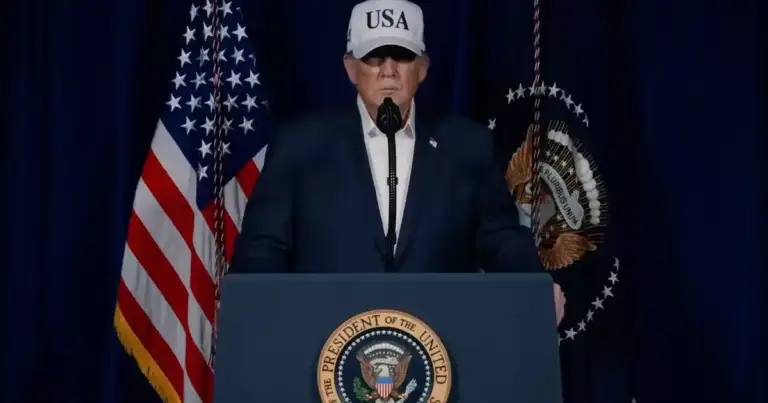
The very next day, June 26, President Donald Trump delivered a fiery speech in Ohio that left no room for ambiguity. His stark warning to Iran was not just tough talk; it was a presidential decree, a terrifying declaration from the most powerful office on Earth. “If they start anything, if they do anything, Iran as a country will no longer exist. They will be obliterated.” Such rhetoric is not simply a diplomatic tool; it is a direct threat of existential annihilation, a red line drawn in the sand with potentially catastrophic consequences.
Behind the scenes, diplomatic corridors are now buzzing with frantic whispers, confirming that the recently brokered ceasefire isn’t merely “under severe strain”—it’s actively disintegrating. The U.S. strikes, coupled with President Trump’s aggressive language, are ripping apart the delicate fabric of regional stability, threatening to unleash a torrent of chaos that few are prepared to contain. The question isn’t if stability is crumbling, but how quickly it will collapse entirely.
The Inevitable Cycle of Retaliation Grinds On
The U.S. administration maintains these strikes are designed to deter further attacks and protect American interests. Yet, history screams that every “defensive” action in this volatile region guarantees an equal and often more brutal reaction. Is deterrence truly achieved when every blow invites a counter-blow, escalating the stakes with each exchange?
Unsurprisingly, Iranian state media and its myriad proxy militias have already condemned the strikes as acts of aggression, promising swift and decisive retaliation. This isn’t just a cycle; it’s a self-perpetuating vortex, dragging the region—and potentially the world—into an abyss of endless conflict. The illusion of control is just that: an illusion.
The financial markets, ever sensitive to geopolitical tremors, reacted immediately. Global oil prices jumped by a significant 1.5-2% on June 28, a clear indicator of growing anxiety. Traders are justifiably worried about the Strait of Hormuz, the critical choke point through which a fifth of the world’s oil supply passes. Should conflict erupt or intensify, the Strait could easily be disrupted, sending oil prices—and by extension, global economies—into a tailspin.
With 3,000 to 5,000 troops still stationed in Iraq and Syria, American forces remain highly vulnerable targets. These troops have already endured dozens of attacks from Iranian-backed groups, making their presence a constant flashpoint. This isn’t just a “situation”; it’s a strategically placed powder keg, primed to explode with the smallest spark, igniting a wider regional war.
“These precision self-defense strikes are a direct response to a series of attacks against U.S. personnel and facilities. We will not hesitate to take necessary action to protect our forces.” – CENTCOM spokesperson, June 27
President Trump’s Iron Fist: A Blueprint for Confrontation
President Trump’s declaration is not a casual remark thrown into the political ether. It comes from the sitting President of the United States, and his words don’t just “carry weight”; they are a hammer blow, a clear, unvarnished message to Tehran that brooks no misinterpretation. This is a deliberate policy statement, not a rhetorical flourish.
This aggressive stance echoes his previous “maximum pressure” campaign, a period defined by crippling sanctions and overt military threats. That era famously culminated in the 2020 assassination of IRGC Quds Force commander Qasem Soleimani, an event that pushed both nations to the very precipice of war. The memory of that near-catastrophe still haunts diplomatic circles, serving as a stark reminder of how quickly rhetoric can transform into kinetic action.
His approach is unequivocally clear: no perceived leniency, no diplomatic niceties. President Trump firmly believes that only an iron fist and unwavering resolve can effectively counter Iranian aggression. This strategy, while undeniably popular with a segment of his political base, sends shivers down the spines of seasoned diplomats and military strategists alike. It systematically eliminates diplomatic wiggle room, leaving little to no space for de-escalation, effectively painting all parties into a corner where conflict becomes the only perceived option.
“If they start anything, if they do anything, Iran as a country will no longer exist. They will be obliterated.” – President Donald Trump, June 26
The Unthinkable Cost: What Full-Scale War Means for Americans
The most terrifying question now looms large: will this relentless brinkmanship inevitably lead to a full-scale war? And, perhaps more crucially for every American taxpayer and family, what would be the true cost? The answer, upon closer examination, is grim, bordering on catastrophic.
- Direct Conflict Risk: The U.S. may claim it doesn’t want war, but direct strikes on IRGC facilities, combined with President Trump’s “obliteration” rhetoric, dramatically increase the probability of miscalculation. A single errant missile, an misinterpreted intelligence report, or an unauthorized proxy action could easily trigger an unintended, yet irreversible, escalation. This isn’t just a threat; it’s a highly plausible pathway to disaster, where the fog of war blinds all parties to the consequences.
- Economic Impact: A full-scale war with Iran would not merely disrupt; it would devastate the global economy. Oil prices would not just “skyrocket”—we are talking about an astronomical surge to $150-$200 per barrel, or even higher, eclipsing historical highs. This translates directly to insane gas prices at the pump, making every commute a financial burden. It means severe, runaway inflation across the board, impacting everything from your weekly groceries to your monthly utility bills. A global economic downturn of unprecedented scale would not just hit American households hard; it would fundamentally reshape our financial landscape, wiping out savings and crushing aspirations.
- Military Commitment: Such a war would demand a massive, sustained commitment of U.S. military resources on a scale not seen in generations. Hundreds of thousands of troops would be deployed to a hostile, complex theater of operations. Casualties would be significant, not just in numbers but in the profound human cost to families and communities. This would not be a swift, surgical operation; it would be a prolonged, grinding engagement, reminiscent of past Middle East conflicts but potentially far more brutal, draining our national treasury for decades and diverting critical resources from pressing domestic needs.
- Regional Destabilization: A war with Iran would not just shatter the Middle East; it would pulverize it. Every regional power, every proxy group, every simmering sectarian tension would be drawn into the maelstrom. New, unimaginable refugee crises would erupt, dwarfing previous humanitarian disasters. Extremist groups, always opportunistic, would thrive in the ensuing chaos, exploiting power vacuums and further destabilizing an already fragile world. This creates long-term security threats for the U.S. that extend far beyond the initial conflict, guaranteeing decades of instability.
- Domestic Political Fallout: A major war would not just consume U.S. foreign policy; it would utterly dominate and fracture domestic politics. Presidential elections, congressional priorities, public trust—all would be irrevocably impacted, leading to deep, visceral divisions that would tear the country apart. Protests would become commonplace, civil discourse would evaporate, and the nation’s focus would be hijacked by an endless, costly conflict, leaving little room for addressing critical internal challenges.
An unnamed senior State Department official, speaking on background to Reuters, voiced the growing, palpable concern within Washington’s diplomatic circles. “The current situation is extremely precarious,” the official warned on June 28. “The ceasefire is hanging by a thread, and all parties must exercise extreme restraint.” But does anyone truly believe restraint is still an option when the President himself issues threats of annihilation?
“The current situation is extremely precarious. The ceasefire is hanging by a thread, and all parties must exercise extreme restraint.” – Unnamed senior State Department official, June 28 (as reported by Reuters)
This isn’t some abstract game of geopolitical chess played by distant politicians. This is about your wallet. This is about our sons and daughters in uniform. This is about the very stability of the world, teetering on the edge of a precipice.
The Real Cost of This Dangerous Brinkmanship
The Beltway establishment, ever eager to justify military muscle-flexing, invariably frames these actions as “necessary deterrence.” But let’s be brutally honest: who truly pays the price for this supposed deterrence? It’s the everyday American, struggling with rising costs. It’s the global economy, perpetually on the verge of collapse. It’s the families who lose loved ones to a conflict few understand or support. The cost is borne not by those who declare war, but by those who fight and fund it.
This isn’t an “endless cycle” in a vacuum; it’s a deliberate, dangerous path that leads inevitably to more bloodshed, cratering global markets, and a world perpetually on the brink. We are not just witnessing history; we are being dragged into a future defined by conflict, a future where the only certainty is more uncertainty and greater sacrifice.
The time for tough talk and military posturing needs to end, and it needs to end now. The cost is simply too high, the stakes too profound. Can this nation truly afford another endless war, fueled by ego, unyielding rhetoric, and a dangerous disregard for the consequences? Or will we finally demand a path that prioritizes peace over provocation, before the obliteration President Trump threatens becomes a grim reality for us all?
Source: Google News