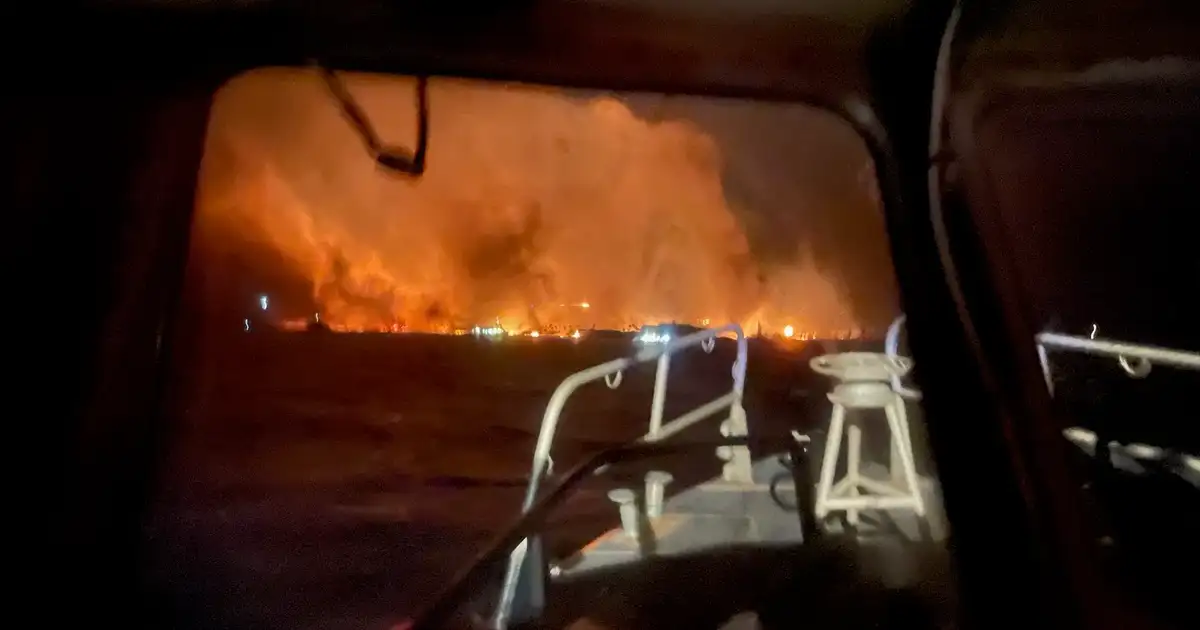

Miami’s idyllic waters, often a playground for the oblivious, became a war zone this past Wednesday. A 35-foot cabin cruiser, “The Sun Chaser,” detonated near Haulover Beach at 2:30 PM EDT on Wednesday, May 7, 2026, transforming a routine afternoon into a horrific spectacle of fire and human suffering. Fifteen souls were pulled from the inferno and the water, hurled into a fight for their lives, proving that complacency is the deadliest adversary on the open sea.
The Blast Zone: Tactical Nightmare Unfolds
The detonation wasn’t merely ‘chaos’; it was a tactical nightmare unfolding in real-time. A deafening concussion ripped through the calm, followed by a mushroom cloud of smoke and fire visible for miles, half a mile offshore. This wasn’t just an accident; it was an explosive failure of protocol, a preventable catastrophe that turned a vessel into a weapon against its own occupants.

First responders, a unified front of Miami-Dade Fire Rescue (MDFR), the U.S. Coast Guard, and Miami Beach Ocean Rescue, executed a textbook rescue operation. They pulled victims from the burning wreckage and the churned waters.
Imagine the terror: one moment you’re basking in the sun, the next you’re engulfed in a flash fire, your world reduced to pain and panic. “One minute we were enjoying the sun, the next it was a fireball,” an anonymous passenger told a local news affiliate from his hospital bed. That’s a direct hit, a life-altering trauma. As of Friday, May 9, 2026, while twelve have been discharged, three individuals remain locked in a desperate battle for survival at Ryder Trauma Center at Jackson Memorial Hospital, their bodies ravaged by severe second and third-degree burns.
The Coast Guard’s investigation, though ongoing, has already zeroed in on the most probable culprit: fuel vapor ignition. This points to a fundamental breakdown, likely a faulty fuel line or an electrical spark post-refueling. The charred remains of “The Sun Chaser” are no longer a pleasure craft; they are a crime scene, a grim consequence of ignored warnings.
“Our marine units were on scene within minutes, and the collaboration with the Coast Guard and ocean rescue was crucial in saving lives,” stated MDFR Chief Alan Smith.
The Real Question: How Often Do Vessels Become Bombs?
This isn’t some statistical anomaly; it’s a grim, predictable pattern. You want to know how often boats become bombs? Often enough to demand your undivided attention. The U.S. Coast Guard’s 2024 Recreational Boating Statistics lay it bare: fuel system fires and explosions, though ‘only’ 7% of reported accidents, are disproportionately lethal.
They are not random acts of God; they are the direct consequence of volatile chemistry and human negligence.
Gasoline vapors are insidious, heavier than air, they lurk in the bilge, a silent, invisible assassin waiting for its cue. A single, errant spark – that’s all it takes to unleash hell. The critical window of vulnerability? The moments immediately following refueling.
Spilled fuel, an overfilled tank, or the cardinal sin of failing to ventilate the bilge with blowers for a full four minutes before ignition – these aren’t minor oversights. These are tactical blunders that guarantee catastrophic failure. Every boater should understand: your vessel is a controlled explosion, and you are the safety engineer.
Electrical shorts, static discharge, even a misplaced tool creating a spark – the potential ignition sources are legion. Propane leaks from onboard cooking systems add another layer of risk. This isn’t a ‘minefield’; it’s a live ordnance range, and you’re walking through it blindfolded if you’re not meticulous.
“Fuel vapor is incredibly volatile. Any spark – from a bilge pump, an electrical short, or even a static discharge – can turn a boat into a bomb if proper ventilation isn’t ensured,” explained maritime safety analyst Captain Mark Jensen to CNN.
The Crushing Cost of Complacency
This isn’t merely a ‘brutal reminder’; it’s a damning indictment of widespread negligence. Florida, the supposed boating paradise, consistently tops the nation in marine mishaps, a dubious distinction that speaks volumes. In 2024 alone, the state reported 735 boating accidents, resulting in 43 fatalities and 360 injuries.
These aren’t abstract statistics; these are families torn apart, futures incinerated.
The financial fallout is staggering, a catastrophic ripple effect. A single severe burn injury can cripple a family financially, running anywhere from tens of thousands to over a million dollars. That’s a long-term burden on families and the healthcare system. And “The Sun Chaser”? A quarter-million-dollar vessel, easily $200,000+, reduced to scrap, a total loss. But the true cost is measured in agony, in the irreversible trauma inflicted.
This isn’t a new phenomenon. We saw it in 2022 near Fort Lauderdale – six injured in an identical fuel vapor explosion, also linked to refueling. How many more times must history repeat itself before the message penetrates?
The Coast Guard’s directives are clear, unambiguous: ventilate, sniff for danger, inspect your lines. Yet, the human element, the fatal flaw, consistently emerges. Laziness, overconfidence, a cavalier attitude toward established safety protocols – these are the real enemies. They gamble with their lives, and too often, the house wins, leaving behind only wreckage and regret.
“We heard a boom, and then just screams. It was terrifying. We just grabbed our kids and ran for cover on the beach,” an unnamed eyewitness on Haulover Beach recounted.
The Game Plan for Survival: Non-Negotiable Safety Protocols
There is no magic bullet, no miracle cure for explosive negligence. Prevention is the only viable defense, the non-negotiable strategy for survival on the water. Here is the operational playbook, the bare minimum for anyone who values their life and the lives of those on board:
- Check for Leaks: Before every engine start, perform a meticulous ‘sniff test.’ Any hint of fuel odor is a red alert, a direct threat.
- Ventilate: This is non-negotiable. After refueling, run your bilge blowers for a minimum of four minutes. Those fumes are heavier than air; they don’t just ‘disappear.’
- Inspect Lines: Conduct regular, thorough inspections of all fuel lines and connections. Cracks, chafing, or corrosion are not minor issues; they are ticking time bombs.
- Fire Extinguishers: Not just present, but charged, accessible, and understood. Knowing how to use them is as vital as having them.
Miami-Dade County Mayor Daniella Levine Cava’s call for caution rings true, but it’s a hollow echo if boaters ignore the fundamental truths of marine safety. “Our thoughts are with those recovering from this horrific incident. We urge all boaters to exercise extreme caution and adhere to all safety protocols,” she stated. Noble words, but action, not platitudes, saves lives.
Petty Officer First Class Sarah Jenkins of U.S. Coast Guard Sector Miami reinforced the critical message: “The investigation is ongoing, but preliminary findings point towards a fuel system malfunction. We urge all boaters to follow pre-departure checklists diligently, especially after fueling.” This isn’t optional advice; it’s a mandate for survival.
The Final Score: Complacency’s Bloody Tally
The final score is in: this wasn’t an unforeseen tragedy; it was a predictable failure of discipline, a catastrophic breakdown in command responsibility – the responsibility each boater holds for their vessel and crew. Florida’s waterways are not merely busy; they are a high-stakes arena where too many treat safety protocols as suggestions, not ironclad rules of engagement. The public’s casual dismissal of these events as ‘sandbar idiocy’ is precisely the toxic complacency that fuels them.
Forget the conspiracy theories whispered in the darker corners of the internet; the enemy here isn’t some shadowy cabal. It’s the brutal, undeniable reality of human error, the seductive lure of cutting corners, and an industry that often prioritizes profit over stringent, uncompromising safety. It’s the individual conviction that ‘it won’t happen to me’ – a delusion that costs lives.
Until we elevate boat safety from a casual suggestion to an absolute mandate, until every boater understands the profound gravity of their responsibility, the sirens will continue to wail, and Ryder Trauma Center will remain a grim monument to our collective inaction. The price of complacency isn’t just paid in destroyed vessels; it’s paid in shattered lives, in the agonizing currency of flesh and blood.
Photo: Petty Officer 3rd Class Melissa McKenzie
Source: Google News