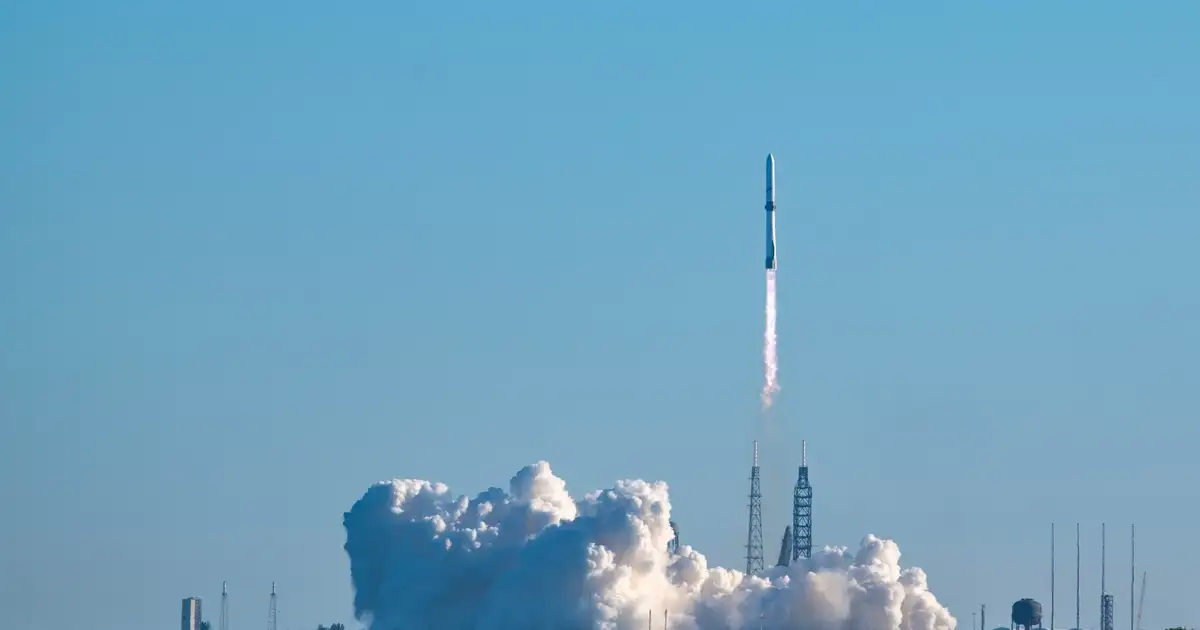

The roar of aspiration turned into the searing agony of failure at Cape Canaveral. A Blue Origin rocket, the very symbol of their orbital ambitions, didn’t just explode; it immolated in a giant fireball on the launch pad during a critical integrated systems test. This wasn’t a minor setback; it was a catastrophic, program-shattering inferno that blasts a massive, gaping hole in Blue Origin’s high-stakes race to space. The private space sector just felt a seismic shockwave.
This was no mere hiccup in a testing sequence. This was a total loss, a fiery obliteration of hardware and hopes, occurring precisely when engineers were pushing the New Glenn heavy-lift orbital rocket to its absolute limits under simulated launch conditions. The stakes were already sky-high for Jeff Bezos’s ambitious venture, but this incident doesn’t just halt progress; it forces a complete program reset, demanding an immediate investigation of the smoldering wreckage to uncover what went catastrophically wrong. When you drop the ball this spectacularly on the opening drive, you’re not just losing yardage; you’re losing the game’s momentum, potentially for good.

New Glenn’s Nightmare Scenario: A Crushing Blow
This explosion is a brutal, gut-wrenching punch for the New Glenn program, a project Blue Origin has poured years and billions into. Their objective was clear: to stand toe-to-toe with established giants like SpaceX and ULA, carving out their share of the lucrative national security and commercial satellite launch markets. They weren’t just building a rocket; they were building an empire, brick by painstaking brick, and this blast just leveled a significant portion of the foundation.
The company was reportedly in the final, crucial stages of integration and testing at their sprawling Cape Canaveral facilities. Reports had consistently highlighted extensive, meticulous testing of key components, including the powerful BE-4 engines.
These aren’t just any engines; they are the beating heart of not only New Glenn but also ULA’s Vulcan Centaur rockets. This makes them a single point of failure that could ripple across the entire American space launch ecosystem.
A failure of this magnitude means intense, unavoidable scrutiny on the engine’s design, manufacturing processes, and quality control. This isn’t just about Blue Origin’s delays; it casts a long shadow over ULA’s schedule and reliability, forcing both companies into an uncomfortable shared risk scenario.
SpaceNews.com, a respected industry voice, had recently celebrated Blue Origin’s march towards launch readiness, noting that the company was “Paving Way for Launch Readiness” after completing “Key Structural Test for New Glenn First Stage.” That readiness is now a distant memory, replaced by a grim reality. Every system, every component, every line of code will be re-evaluated, re-tested, and potentially redesigned. This isn’t a tweak; it’s a complete, painful reset for New Glenn’s highly anticipated debut, pushing its maiden flight further into the uncertain future. The clock on their competitive edge just didn’t stop; it shattered.
The Crushing Weight of Expectation and Economic Fallout
Blue Origin’s long-term vision is monumental: to deploy satellites, build orbital infrastructure, and eventually carry humans to space, enabling a future where millions live and work beyond Earth. The success of New Glenn isn’t merely a corporate ambition; it is a matter of profound national interest, directly impacting US capabilities in independent space access, exploration, and geopolitical influence. Relying on a single provider for heavy-lift capabilities is a strategic vulnerability the nation cannot afford, and this incident only exacerbates that concern.
The company’s extensive facilities in Kent, Washington, where much of the design and manufacturing takes place, and the launch complex in Florida, represent significant economic engines, employing countless highly skilled engineers, technicians, and support staff. This incident casts a dark, foreboding shadow over those jobs and the economic activity in both regions. The ripple effect extends to a vast network of suppliers and contractors, all of whom now face uncertainty and potential contract delays.
The aerospace industry operates under constant, intense public and regulatory scrutiny, and for good reason. Safety is not just paramount; it is the bedrock upon which all space endeavors are built. An explosion like this fuels every worst fear about rocket reliability and the inherent dangers of spaceflight.
Regulatory bodies like the FAA will undoubtedly launch their own exhaustive investigations, demanding answers and robust corrective actions before any further launch attempts. Ars Technica had previously highlighted the ramping up of BE-4 engine production, a clear sign of impending launch activity. Now, that production will almost certainly slow, if not halt entirely, as the focus shifts from assembly lines to accident investigation and redesign.
This explosion forces a harsh, undeniable reality check: the meticulous, excruciatingly slow, and incredibly expensive process of building a heavy-lift rocket just got a lot slower, and exponentially more expensive. There’s no fast-tracking perfection when lives and billions are on the line.
A Setback for the Space Race: Handing the Ball to Competitors
This incident transcends Blue Origin’s corporate balance sheet; it’s a significant setback for American space ambitions as a whole. When one of the major players stumbles so dramatically, it affects the entire ecosystem, shaking confidence and altering the competitive landscape. The competition against SpaceX is not just fierce; it’s a full-contact, no-holds-barred brawl for dominance. Every delay for Blue Origin hands Elon Musk’s company a wider, more entrenched lead in launch cadence, market share, and technological perception. This explosion isn’t just a misstep; it’s like fumbling the ball on the goal line in the Super Bowl, handing your fiercest rival an uncontested touchdown.
Florida Today had captured the palpable buzz around Cape Canaveral in anticipation of New Glenn’s debut, a hub of excitement and renewed purpose. That buzz is now a grim, unsettling silence, replaced by the somber reality of a devastating failure. The Verge, a publication that closely tracks the space industry, often detailed the myriad challenges inherent in the road to orbit. That road, for Blue Origin, now has a massive, smoldering crater in it, demanding extensive, costly repairs before any forward movement can resume.
This isn’t just about hardware or launch schedules. It’s about confidence: investor confidence, public confidence, and, perhaps most critically, the confidence of the brilliant engineers and technicians who pour their lives into these projects. Rebuilding that trust, both internally and externally, is a monumental task that will require transparency, demonstrable progress, and an unwavering commitment to safety and reliability. It’s a psychological battle as much as an engineering one.
The Unforgiving Reality of Rocket Science
Rocket engineering is arguably the most brutal sport on Earth, demanding an almost divine level of perfection. One microscopic flaw, one overlooked detail, one momentary lapse in judgment can lead to utter catastrophe. This explosion is a stark, fiery reminder of that unforgiving truth, a harsh lesson etched into the launch pad itself. There are no participation trophies in this arena; only success or failure, life or death.
Blue Origin faces immense, crushing pressure to pinpoint the exact, root cause of this fiery failure. Was it an engine anomaly? A structural weakness? A software glitch? A human error? The investigation will be exhaustive, painstaking, and likely protracted.
They must then implement fixes that not only address the immediate problem but guarantee, with absolute certainty, that such a disaster never happens again. This will demand immense time, colossal financial investment, and an unwavering, almost fanatical resolve from every level of the organization.
The company’s noble mission to make space accessible and open to humanity just hit a massive, immovable wall. Their competitors, already aggressive, will undoubtedly capitalize on this misstep, widening the gap and seizing market opportunities. The space race just got a lot more intense, a lot more competitive, and for Blue Origin, a lot more dangerous. The clock is ticking, and the world is watching to see if they can pick themselves up, dust off the wreckage, and get back in the game before their championship window slams shut for good.
Photo: Wikimedia Commons (query: Blue Origin rocket)
Source: Google News